Practice Marveling
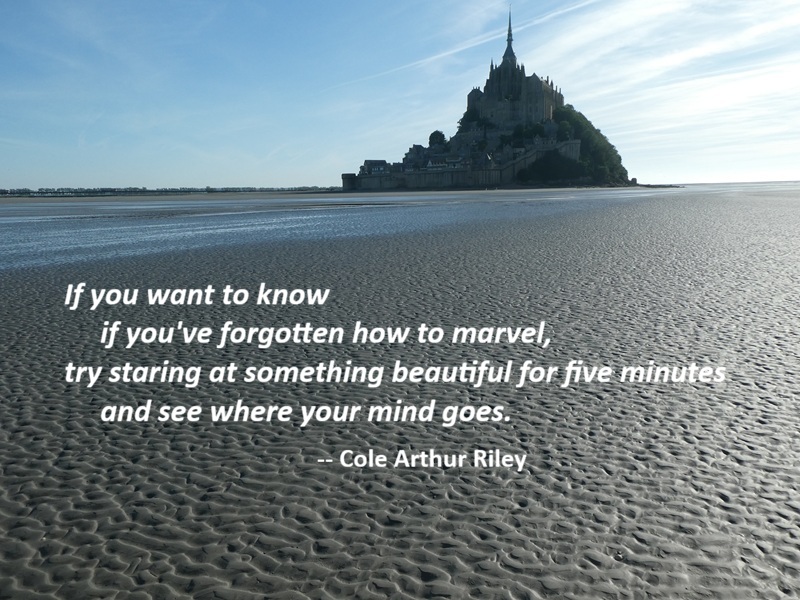
If you want to know if you’ve forgotten how to marvel, try staring at something beautiful for five minutes and see where your mind goes.
— Cole Arthur Riley, This Here Flesh, p. 35
Photo: Mont Saint-Michel, France, June 17, 2026
If you want to know if you’ve forgotten how to marvel, try staring at something beautiful for five minutes and see where your mind goes.
— Cole Arthur Riley, This Here Flesh, p. 35
Photo: Mont Saint-Michel, France, June 17, 2026
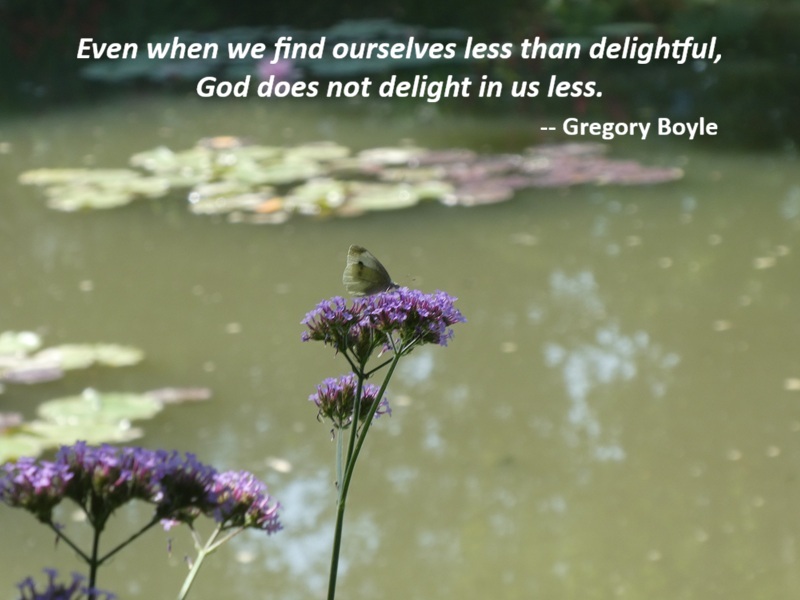
I suspect we sometimes insist that “God is my co-pilot” so we don’t have to fly the plane. “Aqui mando yo” (I call the shots here) is what the stern father or strict husband says tirelessly. Clearly, we need to sidestep what Mirabai Starr calls the “Abusive Father God” and, indeed, replace it with the ceaselessly delighting and sustaining One. The prophet Hosea would say that God wounds us, then heals us. God strikes us, Hosea maintains, then binds our wounds. When God is the cause of everything, it allows for the abusive father who beats our ass, then wipes our tears. A reset is in order. For even when we find ourselves less than delightful, God does not delight in us less.
— Gregory Boyle, Cherished Belonging, p. 17-18
Photo: Monet’s Garden, Giverny, France, June 22, 2026
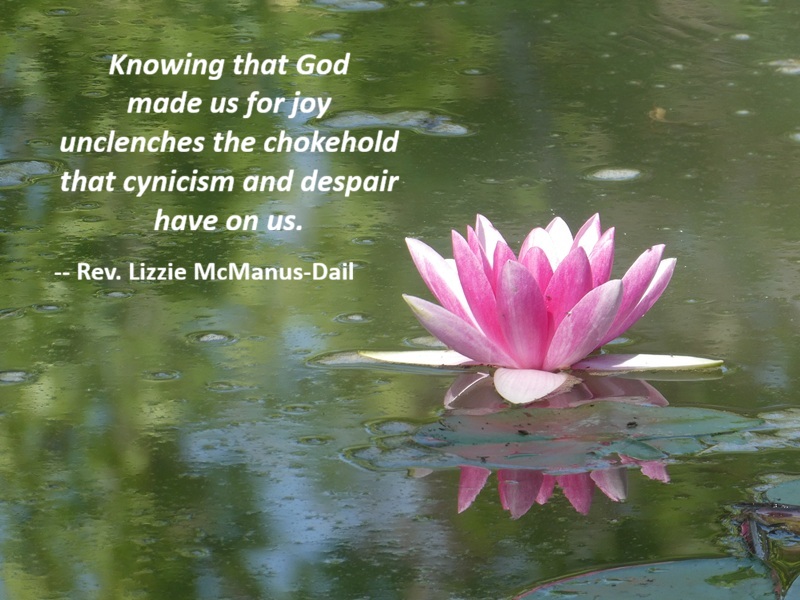
I am deeply convicted that God’s heart for us is and always has been to live with us. God made us for and out of joy. As my best friend Nora said the day my daughter was baptized: being naked in the Garden was the original plan. This is a key that unlocks so much bad theology, but even more important, knowing that God made us for joy unclenches the chokehold that cynicism and despair have on us.
If God made us – all of us, with tummies and wrinkles and libido and hearts that break and burst with life – for joy, then imagine how joyful life with God could be. If we fully accept this godly delight, who might we become? Who are we already if we let ourselves meet ourselves without malice or intent to harm? What freedom is already here? And what might be even more beautiful than it already is?
— Rev. Lizzie McManus-Dail, God Didn’t Make Us to Hate Us, p. xv
Photo: Water lily from Monet’s Garden, France, June 22, 2026
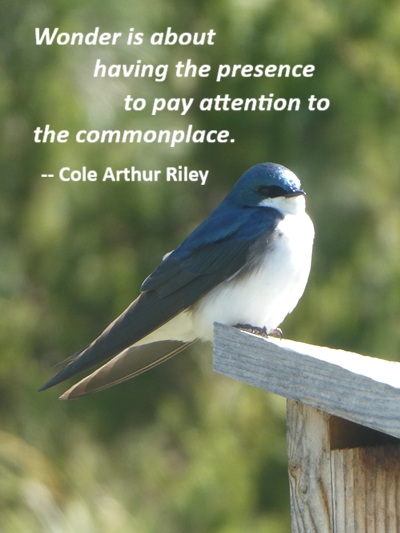
When I speak of wonder, I mean the practice of beholding the beautiful. Beholding the majestic – the snow-capped Himalayas, the sun setting on the sea – but also the perfectly mundane – that soap bubble reflecting your kitchen, the oxidized underbelly of that stainless steel pan. More than the grand beauties of our lives, wonder is about having the presence to pay attention to the commonplace. It could be said that to find beauty in the ordinary is a deeper exercise than climbing to the mountaintop.
— Cole Arthur Riley, This Here Flesh, p. 32
Photo: Tree Swallow, South Riding, Virginia, April 21, 2026
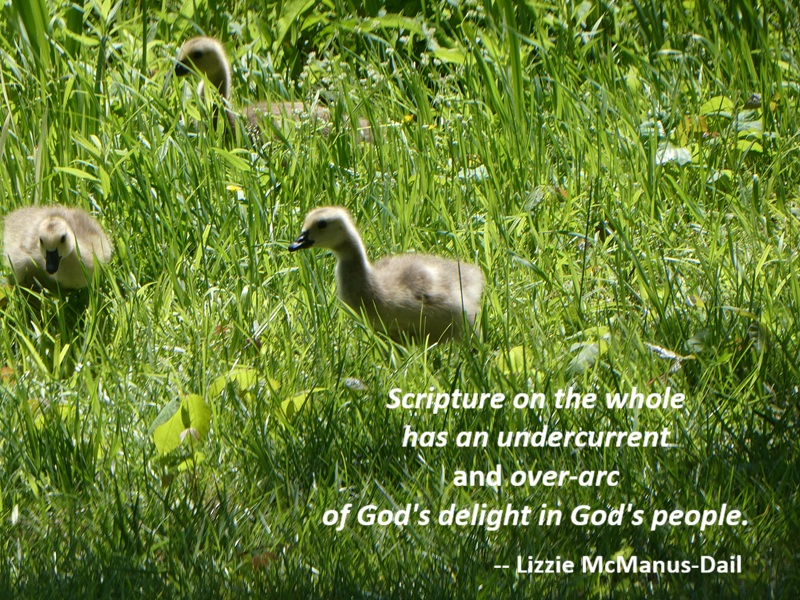
God is not so small-minded or vindictive as to make people in order to just . . . hate them. I mean, look at the sheer multitude of galaxies in the universe. The membranes of butterfly wings. The way a toddler’s teeth make the most crooked and sublime smile when they laugh. The dreamer-upper of these things isn’t an asshole. I just don’t buy it. The Bible doesn’t sell it, either; while full of challenging and complex stories that do dip into the lament and wrath of God, scripture on the whole has an undercurrent and over-arc of God’s delight in God’s people.
— Rev. Lizzie McManus-Dail, God Didn’t Make Us to Hate Us, p. xii-xiv
Photo: Goslings, South Riding, Virginia, May 8, 2026
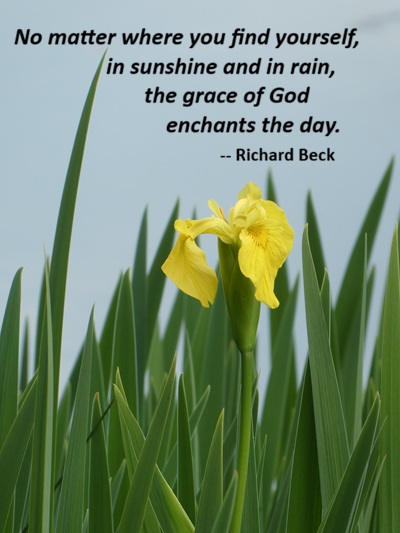
Here’s our problem: it’s easy to experience enchantment on vacation. Anyone can feel a bit Celtic visiting Ireland or Wales. Anyone can feel closer to God on a beach or hiking in a national park. I don’t want to dismiss the restorative, spiritual magic of these beautiful places. We need these natural wonders and how they help us find God in nature. Redwood forests are life changing, inspiring, and holy. So is Llanddwyn Island. But if we only experience the enchantment of the natural world on vacation, I think we’ve missed the lesson the Celtic saints were teaching us. West Texas, where I live, is a long way from Wales. And way less enchanted, in the opinion of many people. Tumbleweeds aren’t as magical as shamrocks, I guess. But no matter where you live, the encouragement of the Celtic saints is this: enchant the place where you find yourself, right where you are standing. “Lord of all places,” the Celtic Christians prayed, “how good you are to praise.”
This is an enchanted world. God is the “Lord of all places.” In West Texas, in Wales, and where you are sitting right now. So let’s all declare, like Jacob, that our place – right here, right now – is the gateway to heaven. No matter where you find yourself, in sunshine and in rain, the grace of God enchants the day.
— Richard Beck, Hunting Magic Eels, p. 194-195
Photo: Yellow iris, South Riding, Virginia, April 24, 2026
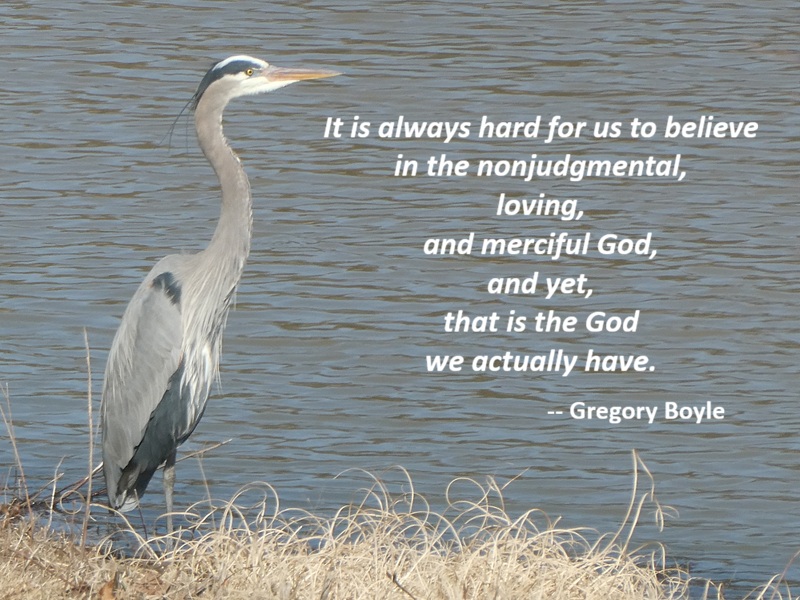
My friend Mirabai Starr, a mystic who writes about mystics, says, “Once you know the God of Love, you fire all the other gods.” It is always hard for us to believe in the nonjudgmental, loving, and merciful God, and yet, that is the God we actually have.
Joel, a man who did considerable time in prison, told me, “When my toes hit the floor in the morning, I’m on the lookout.”
“On the lookout for what?” I asked him.
“For God,” he said. “God is always leaving me hints. He’s dropping me anonymous tips all the time.” This is the God of love trying to break through. This God will not be outdone in extravagant tenderness. Leaving hints as “deep as the nether world or high as the sky,” as the prophet Isaiah reminds us. We get to choose: the god who judges and is embarrassed, or the One who notices and delights in us.
— Gregory Boyle, Forgive Everyone Everything, p. 23
Photo: Great blue heron at lake side, March 1, 2026
So how do we melt away the fear?
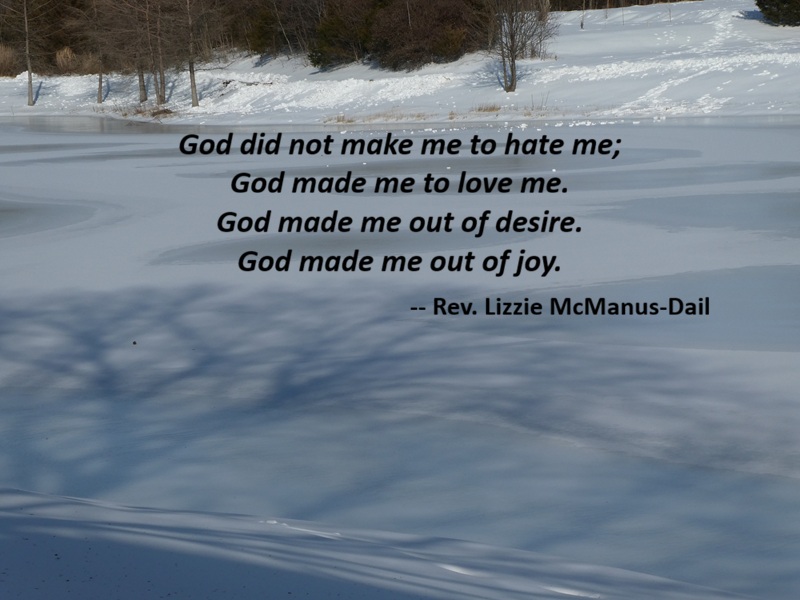
I believe it begins here: by looking at the heavens, and looking at the dandelion in the cracks, and looking at scripture, and looking at God, and trying an older and wilder way of trust. It begins by saying: God did not make me to hate me; God made me to love me. God made me out of desire. God made me out of joy.
— Rev. Lizzie McManus-Dail, God Didn’t Make Us to Hate Us, p, xiii
Photo: Shadows of tree branches on frozen lake, South Riding, Virginia, January 30, 2026
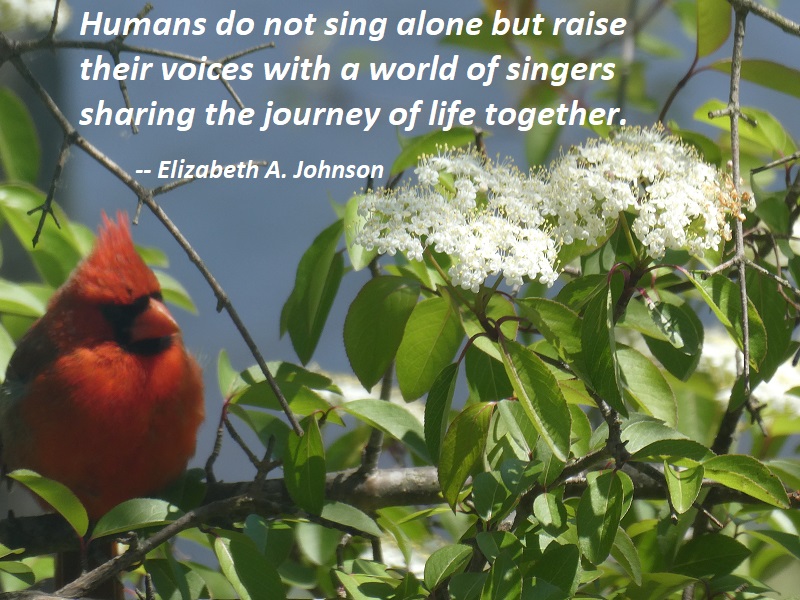
The shared capacity to sing points to the many deep genetic connections that link humans to other living beings. In a beautiful article Rhodora Beaton eloquently states, “The image of singing as we go invites a broader vision of the journey song, one that includes the duets of gibbons, the beat-keeping dances of parrots, and the elaborate and distinctive calls of whales and other aquatic mammals.” Humans do not sing alone but raise their voices with a world of singers sharing the journey of life together.
— Elizabeth A. Johnson, Creation and the Cross, p. 221
Photo: South Riding, Virginia, April 22, 2020

As I examined the reasons for my joy in the midst of the most ordinary days, I realized that joy loves ordinary life best of all. Joy thrives on what all the rest of the world overlooks. The smaller, the plainer, the more lowly the circumstances, the happier joy is.
Of course joy can also thrive in exotic and thrilling situations. Joy itself does not inhere, however, in the exotic and the thrilling, which are rare, but in the ordinary, which is everywhere. As I ride on a roller coaster with my daughter, what produces joy is not the roller-coaster but the fact of sharing an experience with my daughter, which I could also do at home. Or maybe it’s watching the people in the car ahead that brings me joy, or noticing the way the sun shines on the rooftops around. Without the enjoyment of such ordinary things, a roller-coaster ride falls flat.
Those who think of joy as flashy and exciting will also find it fickle, for not much of life is glitzy. True joy, far from being loud and capricious, is by nature just the opposite — quiet and faithful.
— Mike Mason, Champagne for the Soul, p. 139-140
Photo: South Riding, Virginia, April 5, 2019