Curiosity

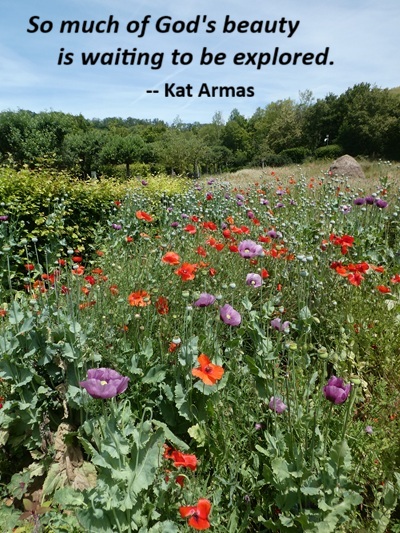
Curiosity is suspect in many Christian circles where people are convinced our faith rests only on following rules. It’s a slippery slope, some of us have been told. When it came to my spirituality, I was taught to seek answers over and above the sacred discipline of asking questions, and this proved detrimental when I became afraid to wonder and dream about God for fear of “straying from the faith.” I’m still not sure what that means. Curiosity has since become a great companion, a trusted friend who meanders along with me in kinship – in both the familiar and the unknown. We both know, Curiosity and I, that so much of God’s beauty is waiting to be explored. These are the paths of discovery that take root in us and eventually become passions, callings, and vocations. In this way, curiosity sometimes even saves us, enlivening us with purpose.

“Questioning is just as vital to awareness as using all our senses,” notes Haines. Questions are a direct reflection of our curiosity, inviting us to keep paying attention and to live as active characters in our own story. Too many have stopped noticing the Spirit because they believe they already have the answers they need. But a holistic and robust faith is a faith that is engaged – a faith that remains curious.

— Kat Armas, Sacred Belonging, p. 84-85

Photo: Field at Giverny, France, June 16, 2026
Wonder

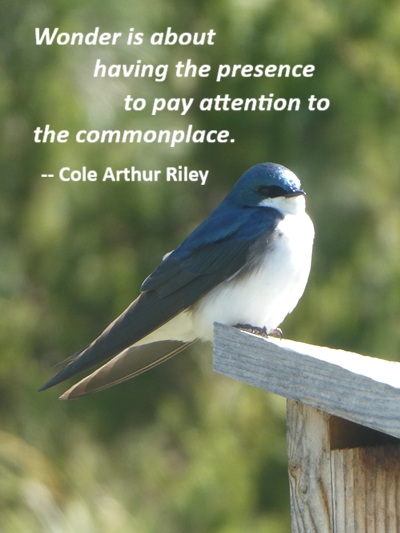
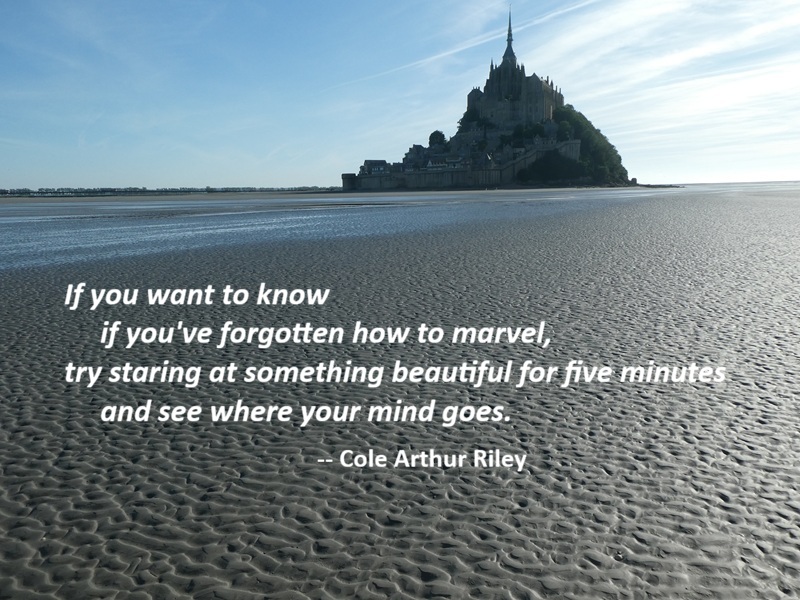
When I speak of wonder, I mean the practice of beholding the beautiful. Beholding the majestic – the snow-capped Himalayas, the sun setting on the sea – but also the perfectly mundane – that soap bubble reflecting your kitchen, the oxidized underbelly of that stainless steel pan. More than the grand beauties of our lives, wonder is about having the presence to pay attention to the commonplace. It could be said that to find beauty in the ordinary is a deeper exercise than climbing to the mountaintop.

— Cole Arthur Riley, This Here Flesh, p. 32

Photo: Tree Swallow, South Riding, Virginia, April 21, 2026

God Didn’t Make Us to Hate Us

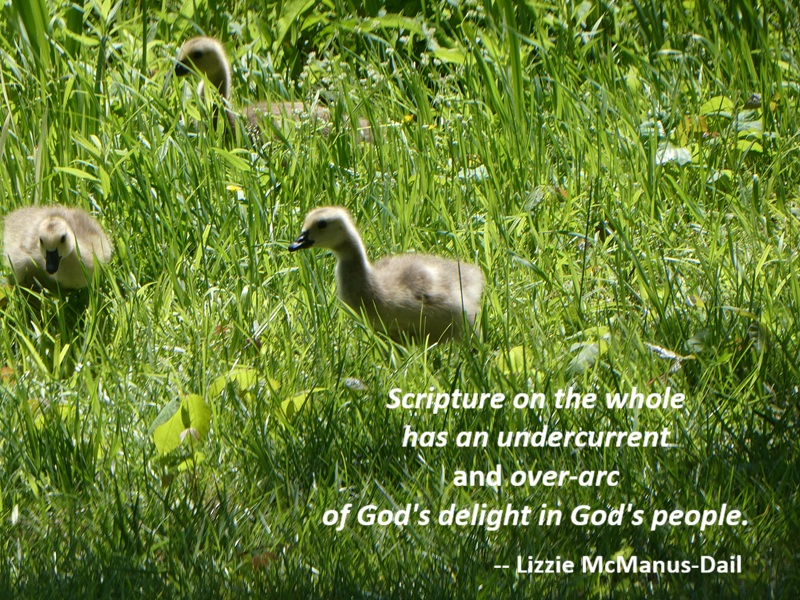
God is not so small-minded or vindictive as to make people in order to just . . . hate them. I mean, look at the sheer multitude of galaxies in the universe. The membranes of butterfly wings. The way a toddler’s teeth make the most crooked and sublime smile when they laugh. The dreamer-upper of these things isn’t an asshole. I just don’t buy it. The Bible doesn’t sell it, either; while full of challenging and complex stories that do dip into the lament and wrath of God, scripture on the whole has an undercurrent and over-arc of God’s delight in God’s people.

— Rev. Lizzie McManus-Dail, God Didn’t Make Us to Hate Us, p. xii-xiv

Photo: Goslings, South Riding, Virginia, May 8, 2026

Finding Enchantment Here

Here’s our problem: it’s easy to experience enchantment on vacation. Anyone can feel a bit Celtic visiting Ireland or Wales. Anyone can feel closer to God on a beach or hiking in a national park. I don’t want to dismiss the restorative, spiritual magic of these beautiful places. We need these natural wonders and how they help us find God in nature. Redwood forests are life changing, inspiring, and holy. So is Llanddwyn Island. But if we only experience the enchantment of the natural world on vacation, I think we’ve missed the lesson the Celtic saints were teaching us. West Texas, where I live, is a long way from Wales. And way less enchanted, in the opinion of many people. Tumbleweeds aren’t as magical as shamrocks, I guess. But no matter where you live, the encouragement of the Celtic saints is this: enchant the place where you find yourself, right where you are standing. “Lord of all places,” the Celtic Christians prayed, “how good you are to praise.”

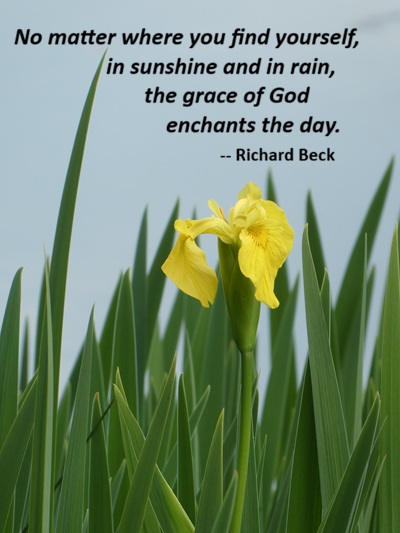
This is an enchanted world. God is the “Lord of all places.” In West Texas, in Wales, and where you are sitting right now. So let’s all declare, like Jacob, that our place – right here, right now – is the gateway to heaven. No matter where you find yourself, in sunshine and in rain, the grace of God enchants the day.

— Richard Beck, Hunting Magic Eels, p. 194-195

Photo: Yellow iris, South Riding, Virginia, April 24, 2026

Wonder and Awe

People who truly know how to wonder don’t expend a great deal of energy talking about it; they are off catching snowflakes on hot tongues. They’re folding themselves in half to smell the sweet potatoes in the oven just one more time. I no longer try to convince someone of the delight of soup dumplings; I take them to Dim Sum Garden on Race Street in Philly and let them watch me slurp. I let the steaming miracle broth run down my face and lap it up in remembrance.

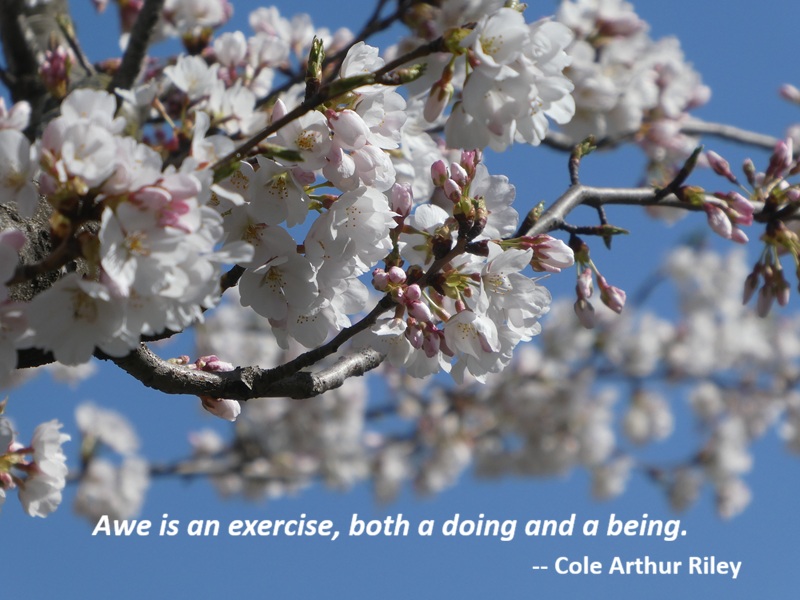
I think awe is an exercise, both a doing and a being. It is a spiritual muscle of our humanity that we can only keep from atrophying if we exercise it habitually. I sit in the clearing behind Wisewood listening to the song of the barn swallows mix with the sound of cars speeding by. I watch the milk current through my tea and the little leaves dance free from their pouch. I linger in the mirror and I don’t look away. I trace the shadows hugging my lips and I don’t look away. Awe is not a lens through which to see the world but our sole path to seeing. Any other lens is not a lens but a veil. And I’ve come to believe that our beholding – seeing the veils of this world peeled back again and again, if only for a moment – is no small form of salvation.

— Cole Arthur Riley, This Here Flesh, p. 31

Photo: Cherry blossoms, South Riding, Virginia, March 24, 2026

God Did Not Make Us to Hate Us.

God did not make us to hate us.

God did not dream up the color yellow and craft the scientific art of making butter from milk and whimsically birth cumulus clouds just to . . . disdain a little girl who misunderstood the cosmic structure.

God did not count the hairs on our heads or the stars that would hang in the sky over billions of years just to resentfully accept desperate people begging to be spared from brutal torment.

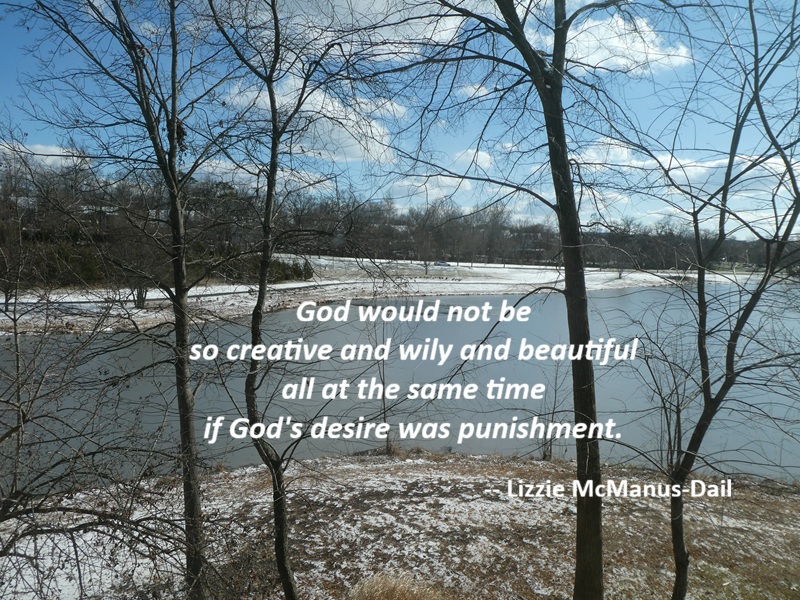
I know this because maybe heaven isn’t a pit stop between Raleigh and LA, but heaven is all around us. Breaking in and barreling down walls and peeping up like dandelions in the asphalt. God would not be so creative and wily and beautiful all at the same time if God’s desire was punishment.

— Lizzie McManus-Dail, God Didn’t Make Us to Hate Us, p. xi

Photo: South Riding, Virginia, December 14, 2025

Look at the World

So clean your windows. Take a look again at the world and see it, this time, the way you were meant to see it. Recover your sacramental wonder and be shocked anew by the color green. Become like a child and enter the kingdom of heaven. Count your blessings and rejoice. Always rejoice. Look to the horizon in hope, even in the Valley of Dry Bones. And remember why you matter. You are a child of God.

–Richard Beck, Hunting Magic Eels, p. 116

Photo: Blackwater River Valley, West Virginia, October 8, 2025

Hear the Forest Sing

Every early teacher who had me in her class – and most of them were very kind and patient – wrote the same comment on my twice-yearly reports: “Margaret is a well-meaning girl, but her head is always out the window.”

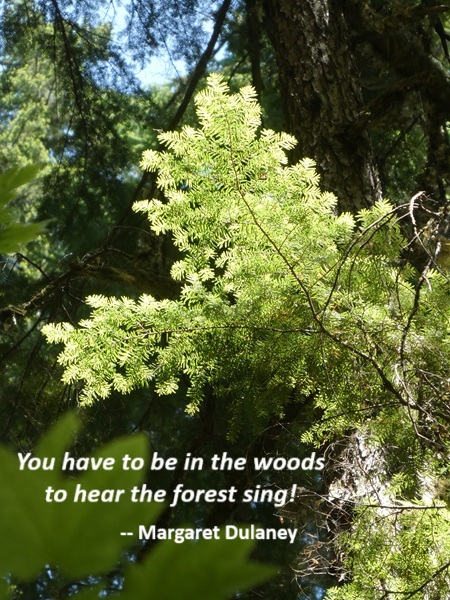
“Oh, but it makes so much more sense out there!” I would answer in retrospect now, if I could, “Trees don’t confuse, birds don’t baffle. Give me simple, clear things to learn like the roll of the hills, the turning of the seasons, and I will be as learned as the rest of them. Give me a field, a patch of woodland to read and I will unlock the wisdom of the ages, break the shackles of ignorance! Of course my head is out the window! You have to be in the woods to hear the forest sing!”

— Margaret Dulaney, To Hear the Forest Sing, p. xviii

Photo: by Falls Creek Falls trail, Washington

The Image of God

For this reason, I disagree with those who say we bear the image of God only, or even primarily, by living out our faith in our labor. The thought is reductive, and it evidences that we are content to exclude those who will never work, who may never speak, who no longer make or do. Their image-bearing is not dispensable; it is essential.

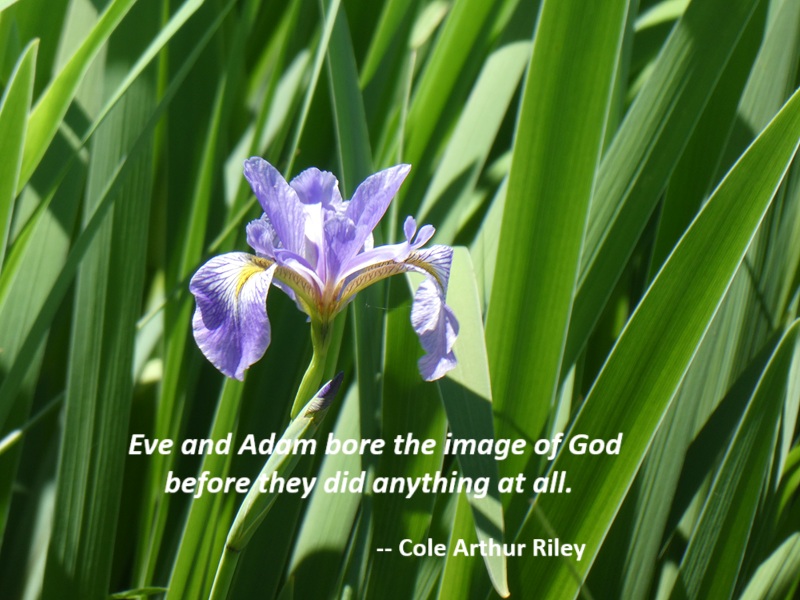
Our dignity may involve our doing, but it is foremost in our very being – our tears and emotions, our bodies lying in the grass, our scabs healing. I try to remember that Eve and Adam bore the image of God before they did anything at all. This is very mysterious to me, and it must be protected.

— Cole Arthur Riley, This Here Flesh, p. 12

Photo: Purple Iris, South Riding, Virginia, May 17, 2025