Learning from Mistakes
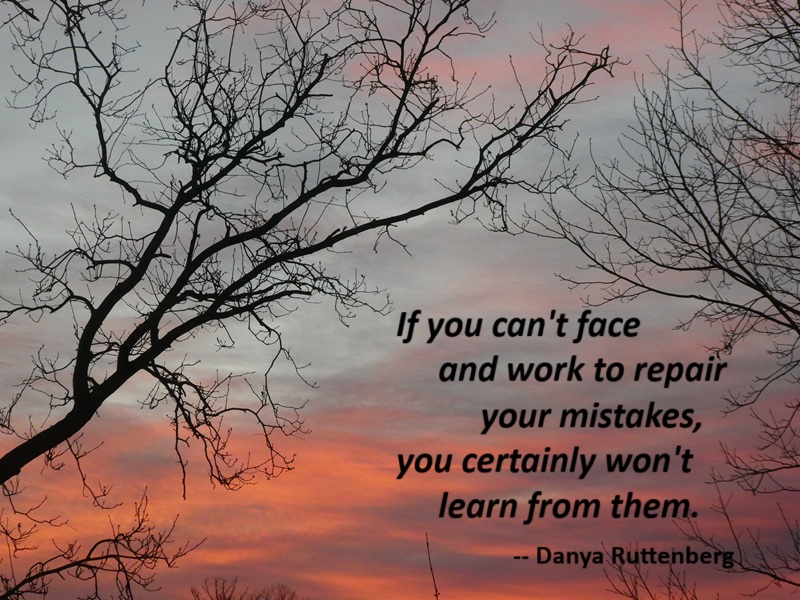
Many times, when people are told that they have caused harm, a defensive, self-protective impulse kicks in. We often deny either our actions or their impact, particularly if we have caused great harm — or if we believe that doing a harmful thing is the same thing as being a bad person. If someone interprets the statement “You said something racist” to mean “You are an irredeemably racist person,” they might well resist the critique, seeing it as a condemnation of their whole self. But walking the path of antiracism is riddled with mistakes and new learning; acknowledging the mistake of saying something racist does not mean we are irrevocably racist, doomed to this fate. It’s rather the opposite, no? Doubling down and getting defensive makes it much more likely that you’ll just keep doing the thing. If you can’t face and work to repair your mistakes, you certainly won’t learn from them.

— Danya Ruttenberg, On Repentance and Repair, p. 51-2

Photo: Bare branches and sunrise, South Riding, Virginia, February 18, 2025
Finding the Lost

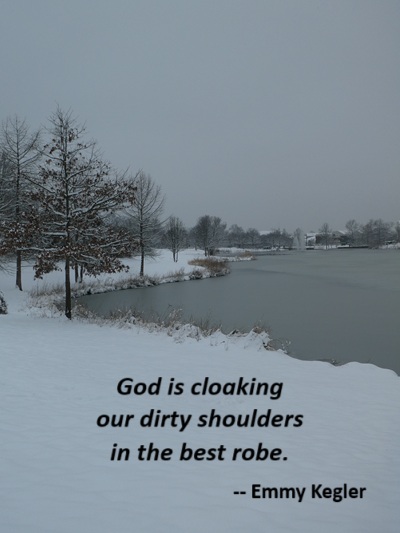
We have been unwanted, rejected, sent away with anger or with sadness at our rebellious streak. We have seen both glory and starvation, both beauty and pig pens, and we are coming home footsore and heartbroken. And before the words are out of our mouth, before our perfect speech is performed, God is cloaking our dirty shoulders in the best robe, slipping a ruby ring on our work-worn fingers, cleaning off the pig slobber to slip sandals on our feet, and declaring: I am so sorry you had to go, and I am eternally glad to have you back again.

— Emmy Kegler, One Coin Found, p. 8-9

Photo: Snow and lake, South Riding, Virginia, February 12, 2025

Restorative Justice

Jesus’s ministry is not to gather the so-called good into a private country club and punish the outsiders, but to reach out to those on the edge and on the bottom, those who are last, to tell them they might just be first! That is almost the very job description of the Holy Spirit and, therefore, of Jesus. Some call it God’s unique kind of justice or “restorative justice.” God justifies things by restoring them to their true and full identity in himself, as opposed to retributive justice, which seeks only reward and punishment. To receive unearned love is their only punishment.

— Richard Rohr, Yes, And…, p. 220

Photo: Frozen lake, South Riding, Virginia, February 1, 2025

Free Forgiveness

But if we look at the life and teachings of Jesus we see a vastly different image of God. We see a God of love and peace, who freely forgives sin without first balancing the cosmic accounts. As the fullest revelation of God, Jesus never demands retribution. He never talks about his offended honor. He forgives and heals and saves unconditionally. He is the Prince of Peace who reveals to us the true nature of God and tells us so when he says, “whoever has seen me has seen the Father” (John 14:9).

— Sharon L. Baker, Executing God, p. 73

Photo: View from Burg Montfort, Germany, June 19, 2024

Repair Work

A person who does harm is not irrevocably a sinner. Being someone who caused harm is not a fixed identity — or at least it does not have to be. We have free will, and we can always choose to clean up whatever mess we have made, to the fullest extent that we can, and change for the better.

— Danya Ruttenberg, On Repentance and Repair, p. 50

Photo: Karlstalschlucht, Germany, June 17, 2024

God of Second Chances

If God desires to continue the work of reconciliation up to the last second, how can we protest? A sermon I heard as a new Christian put forth one of my favorite images of God as a God of second chances, a God who never gives up on us, who pursues us like a hound of heaven, always offering opportunities for repentance and reconciliation. Why wouldn’t God offer that same invitation on that final day? Why would God’s work of salvation end just because someone’s body dies? The work of Jesus must still be effective after the end of time or even after time runs out.

— Sharon L. Baker, Razing Hell, p. 123

Photo: Iggelbach, Germany, June 20, 2024

Lost Coins

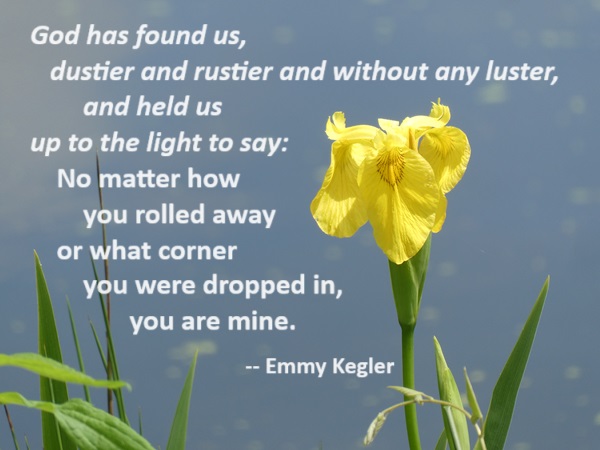
We too are lost and dusty coins. We have gone unnoticed, rusted from others indifference, misspent and misused, and our friends and leaders did not see our neglect. But God, in big and little ways, has picked up a woman’s broom and swept every corner of creation. God, in big and little ways, has tucked up her skirts and flattened herself on the floor, dug through dust bunnies and checked every dress pocket. God has found us, dustier and rustier and without any luster, and held us up to the light to say: No matter how you rolled away or what corner you were dropped in, you are mine.

— Emmy Kegler, One Coin Found, p. 8

Photo: South Riding, Virginia, May 7, 2024

God’s Goodness

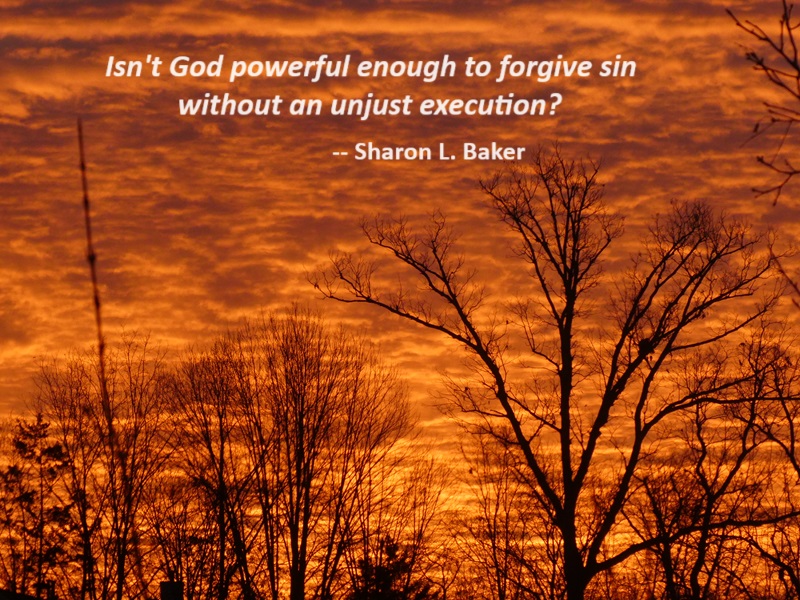
If God required the execution of an innocent man before God could save us, then what does that say about God’s power? Or God’s goodness? Isn’t God powerful enough to forgive sin without an unjust execution? Isn’t God good enough to desire to use divine power to save us without violence? If we think in terms of “ransom,” in which Jesus pays God for our release from eternal death, then Go saves through bribery. These thoughts about God’s actions should upset our moral equilibrium — the morality that God instilled in us. When we hold to our traditional theories of atonement we choke out God’s compassion, grace, and power to heal and save us and compromise love with the divine necessity for retribution.

— Sharon L. Baker, Executing God, p. 70

Photo: South Riding, Virginia, February 8, 2024

Why Limit God?

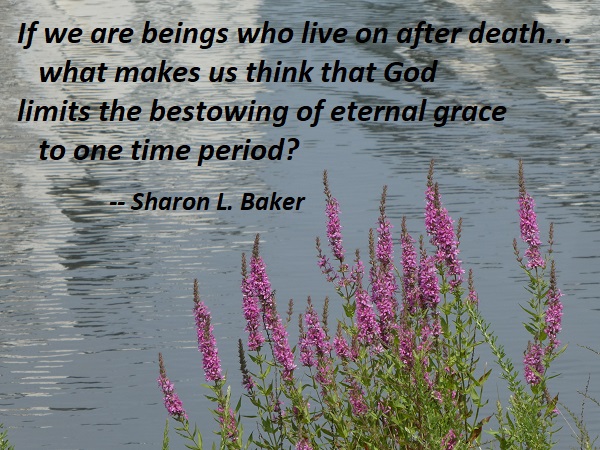
But does the defeat of sin within the person take place only in the temporal realm, within time itself, while we live in this body? Why should it? If we are beings who live on after death, like the Bible seems to say, what makes us think that God limits the bestowing of eternal grace to one time period? Why can’t God extend the offer of grace, forgiveness, and reconciliation through Jesus even at judgment — when all will be laid bare, when all persons will see the extent of their sin and the extravagance of God’s love? If the effectiveness of Jesus’ work on our behalf extends even beyond the grave, that means that no one is ever beyond grace.

— Sharon L. Baker, Razing Hell, p. 107

Photo: South Riding, Virginia, August 5, 2023

Lost Sheep

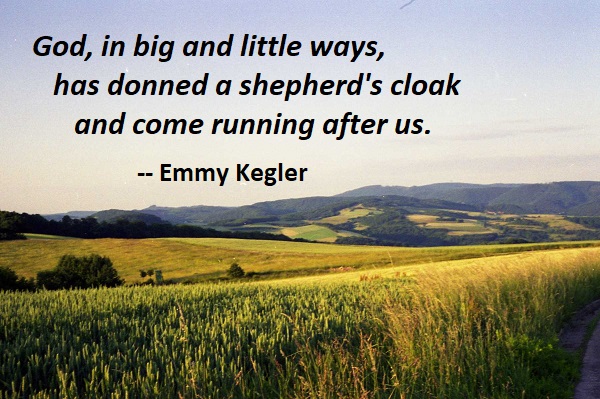
What I think, my fellow second sons, is that we were told the truth. This story is for us. We are the prodigal son. But we are also the lost and hungry sheep. We have gone unfed, walked without rest, been chased by wolves, and our friends and leaders did not see our pain. But God, in big and little ways, has donned a shepherd’s cloak and come running after us. God, in big and little ways, has clambered over rocks and climbed down cliffs. God has found us, hungrier and more hurt and terrified, and cradled us close to say: No matter why you left or where you went, you are mine.

— Emmy Kegler, One Coin Found, p. 8

Photo: Above Gundersweiler, Germany, June 14, 1998