Review of Liturgies for Resisting Empire, by Kat Armas

Liturgies for Resisting Empire

Seeking Community, Belonging, and Peace in a Dehumanizing World

by Kat Armas

Brazos Press, 2025. 205 pages.
Review written January 24, 2026, from my own copy, purchased via Amazon.com
Starred Review

I’ve been reading this book slowly, a section at a time, as part of my devotionals over the last several weeks. I’m not sure I grasped everything, but I like the way it opened up my thinking and showed me how much of the way I look at the world is shaped by empire-building.

At the front and back of the book, there’s a liturgy, with an Invocation and Benediction – and prayers, reflections, and readings in between. Each chapter begins with an Invocation and Reflection – a folk tale from an indigenous people group – and ends with a Prayer of Resistance and a Benediction. Each chapter is about something in Empire to reject, and something in Christianity to embrace. For example: “Rejecting Lies, Embracing Reality,” “Rejecting Hierarchy, Embracing Kinship,” “Rejecting Dualism, Embracing Paradox,” “Rejecting Sameness, Embracing Wholeness,” “Rejecting Dominance, Embracing Connection,” and “Rejecting Violence, Embracing Peace.”

This is another book I’ve marked up with quotes for Sonderquotes. It’s full of food for thought, challenging assumptions I’d carried and didn’t even realize I was holding. Let me type out a few examples to give you the flavor, rather than trying to summarize:

But the Bible itself reveals a truth often overlooked: Divine wisdom is not confined to one culture or people. Many of the sayings in the Bible’s wisdom literature echo the insights of neighboring ancient societies. Take Proverbs 22:17-24:22, which parallels the Instruction of Antenemope, an Egyptian wisdom text dating back to at least the twelfth century BCE that offers guidance on how to live with humility, integrity, and care for the vulnerable. The Hebrew authors did not reject these principles but instead wove them into their sacred texts.

In doing so, they remind us that wisdom transcends boundaries, that truth can be found in unexpected places, even beyond our own traditions. This is a quiet decentering of exclusivity, a recognition that knowledge belongs to no single people. Instead, it is a gift to be shared and honored across cultures. Perhaps this is the heart of wisdom itself: an openness to learning from the “other,” without fear, in a sacred exchange that resists the grasping hand of empire.

The last chapter especially shows us how Jesus brought the opposite of empire.

When empire used the cross to subdue, Jesus used it to restore. This is restorative justice: healing through relationship and repair. In Christ, justice is not the hammer of empire but the mending of what is broken – the gathering of the lost, the lifting of the fallen, the restoration of dignity where it has been stripped away. The cross does not demand allegiance through fear but invites transformation through love.

And in this sacred reversal, reconciliation finds its true meaning. Enemies are no longer enemies; the estranged are drawn into belonging, woven into a community where love breathes life into existence. Christ’s self-giving redefines our very identity, calling us into a peace that heals and binds and makes whole. Here, in the shadow of the cross, we step into divine reality – a place where love transforms empires and grace redraws the boundaries of what it means to belong. Here, we find shalom.

I’m going to hold onto this book to read again – hoping more will sink in each time I read it. This book acknowledges that the Way of Christ is not the Way of Empire and helps us see the difference.

katarmas.com

Buy from Amazon.com

Find this review on Sonderbooks at: www.sonderbooks.com/Nonfiction/liturgies_for_resisting_empire.html

Disclosure: I am an Amazon Affiliate, and will earn a small percentage if you order a book on Amazon after clicking through from my site.

Disclaimer: I am a professional librarian, but the views expressed are solely my own, and in no way represent the official views of my employer or of any committee or group of which I am part.

Subscribe for more reviews and talk about books.

Join the conversation: What did you think of this book?
Review of The Corruption of Hollis Brown, by K. Ancrum

The Corruption of Hollis Brown

by K. Ancrum
read by Andrew Gibson

HarperCollins, 2025. 8 hours, 20 minutes.
Review written January 7, 2026, from a library eaudiobook.
Starred Review
National Book Award Longlist

This book begins with Hollis Brown getting beat up. He starts fights on purpose – knows how to say what will set people off – but this one got him hurt pretty bad. His only friends are two other seniors, Annie and Yulia, but they’ll be going off to college at the end of this year. They live in a small town with a defunct factory where everyone’s too poor to leave. Hollis’s own father is rarely home because he’s working in the city.

And then something strange happens when the seniors decide to spend the night in the abandoned part of town that’s reportedly haunted. Annie’s ex-boyfriend, whom she just broke up with, gets stabbed. And Hollis gets blamed for it because the guy was mad he was there with Annie, and Hollis was the only one with enough presence of mind to take him to the hospital. At that point, I thought the book was going to be about whatever mysterious thing was going on in the abandoned part of town.

And then – after Hollis cries in the woods about the unfairness of it all – he meets a strange boy who appears to be homeless and gives the boy his coat. After Hollis agrees to meet the guy again – a spirit comes out of the stranger’s dead body and inhabits Hollis’s body.

Hollis can’t control his body at all. He can talk to the spirit and tell him to wipe his shoes before he goes into the house and faces Hollis’s mother. But nothing else.

The spirit – whose name is Walt and turns out to have grown up in the same town a long time ago – has ideas about how Hollis should dress and act. He even gets Hollis making new friends. But at night, when Walt is asleep, Hollis works on controlling his own hand. If he can just reach his phone without waking up Walt….

But things from there continued to not go as I expected. As Hollis and Walt slowly come to know and understand one another, situations change.

Ultimately, this is a book about love and friendship and hope. But comes at it with an approach like nothing I’ve ever read before.

kancrum.com

Buy from Amazon.com

Find this review on Sonderbooks at: www.sonderbooks.com/Teens/corruption_of_hollis_brown.html

Disclosure: I am an Amazon Affiliate, and will earn a small percentage if you order a book on Amazon after clicking through from my site.

Disclaimer: I am a professional librarian, but the views expressed are solely my own, and in no way represent the official views of my employer or of any committee or group of which I am part.

Subscribe for more reviews and talk about books.

Join the conversation: What did you think of this book?
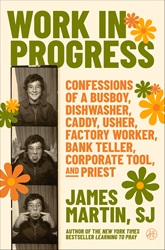
Review of All the Blues in the Sky, by Renée Watson

All the Blues in the Sky

by Renée Watson

Bloomsbury Children’s Books, 2025. 182 pages.
Review written January 27, 2026, from my own copy, given to me at ALA Annual Conference and signed by the author.
Starred Review
2026 Newbery Medal Winner

I was happy when the Newbery Medal Winner was announced – and it was a book sitting by my bed in one of my TBR piles, signed by the author. And yes, I’d heard the author speak before I got it signed at ALA Annual Conference, and I was very excited about reading it.

I was disappointed in myself that I hadn’t read it yet. (So many books, so little time! I wanted to read it right away, but there are so many books in those piles, plus award reading, plus I just blew it.)

However, the good side was that it made perfect Snow Day reading. In between walks in the snow, I lounged by the fire, and as a novel in verse, it wasn’t long before I had this beautiful book read.

Here’s the first page of the text:

I didn’t know
best friends could die.

Yes, this is a book about grief. The narrator is Sage, and on her thirteenth birthday her best friend was walking to her house and was hit by a car and died.

Sage is in a grief group after school with four other kids. Two of them lost a loved one suddenly, and two lost a loved one slowly, after a long process. Sage feels like that’s not the same, since she didn’t get a chance to say good-by.

But there are ups and downs after loss. And sometimes the sadness and happiness come at the same time. Sage wants to be a pilot, and she’s going to a program about learning to be one, and she thinks about all the different shades of blue in the sky – and all the different shades of grief.

The poetry in this book is beautiful. We feel with Sage, grieve with her, but also rejoice with her. Don’t be surprised if you find yourself shedding some tears while reading it. (Especially at the rejoicing with her part.) And the book brings us to a place where we know she’ll be able to carry on, feeling all the emotions.

An Author’s Note at the back tells us that Renée Watson lost fifteen people she loved, including her mother, in the space of two years. This didn’t surprise me, because she brings authenticity to the story. And ultimately, hope. She ends the Author’s Note and the book like this:

I hope this book gives every reader permission to feel real emotions, to admit when life is hard.
I hope this book reminds every reader that in the midst of sadness and grief, there can be joy and goodness.

And Renée models that – because out of her own deep loss, she brought forth this wonderful book.

reneewatson.net

Buy from Amazon.com

Find this review on Sonderbooks at: www.sonderbooks.com/Childrens_Fiction/all_the_blues_in_the_sky.html

Disclosure: I am an Amazon Affiliate, and will earn a small percentage if you order a book on Amazon after clicking through from my site.

Disclaimer: I am a professional librarian, but the views expressed are solely my own, and in no way represent the official views of my employer or of any committee or group of which I am part.

Subscribe for more reviews and talk about books.

Join the conversation: What did you think of this book?
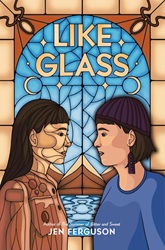
Review of Alberto Salas Plays Paka Paka con la Papa, by Sara Andrea Fajardo, illustrated by Juana Martinez-Neal

Alberto Salas Plays Paka Paka con la Papa

by Sara Andrea Fajardo
illustrated by Juana Martinez-Neal

Roaring Brook Press, 2025. 40 pages.
Review written January 23, 2026, from a library book.
Starred Review
2026 Robert F. Sibert Medal Winner

I checked out this book because it was listed on Horn Book Magazine‘s Calling Caldecott blog as a possible contender for the Caldecott Medal (which will be announced on Monday, January 26). And wow! I’d be delighted if it shows up as an honoree (even if my personal favorite is still Cat Nap, by Brian Lies).

Edited on January 26 to add: Hooray! Today this book won the Robert F. Sibert Medal for most distinguished informational book for children! (I’m a little sad Cat Nap didn’t show up in the awards – but very happy about this one.)

This is a picture book biography, and the illustrations, done by a previous Caldecott honoree, are wonderful, making us feel like the featured Alberto Salas is a friendly uncle, foraging through a beautiful countryside.

But his story is also amazing. Alberto Salas was on a decades-long quest to find wild potatoes (papas) in the Andes mountains of Peru before they were gone. Since he was from the mountains himself and spoke both Spanish and Quecha, he could ask locals for help and was better than anyone else at finding specimens.

Alberto brings specimens to the International Potato Center genebank.

Scientists study each papa’s superpowers and create new varieties that can grow everywhere, from salty swamps to icy mountain peaks, maybe even one day on Mars.

But potatoes are under threat. Temperatures are rising, bringing insects and diseases that devour them.

Alberto’s goal is to find them all – and protect them – before they’re lost for good.

The main story is told simply, explaining the importance of these potatoes and Alberto’s skill. Then eight pages of back matter fill in details.

And have you guessed? “Paka Paka” is hide-and-seek. Alberto keeps a playful spirit and plays hide-and-seek with the native potatoes – and everyone wins.

sarafajardowrites.com
juanamartinezneal.com

Buy from Amazon.com

Find this review on Sonderbooks at: www.sonderbooks.com/Childrens_Nonfiction/paka_paka.html

Disclosure: I am an Amazon Affiliate, and will earn a small percentage if you order a book on Amazon after clicking through from my site.

Disclaimer: I am a professional librarian, but the views expressed are solely my own, and in no way represent the official views of my employer or of any committee or group of which I am part.

Subscribe for more reviews and talk about books.

Join the conversation: What did you think of this book?
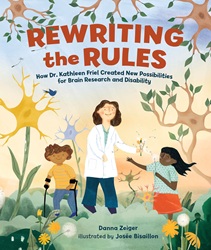
Review of The Queen’s Secret, by Jessica Day George

The Queen’s Secret

Rose Legacy, Book Two

by Jessica Day George

Bloomsbury Children’s Books, 2019. 250 pages.
Starred Review

This is the second book in a planned trilogy about a land of exiles where people can communicate with horses. And our heroine, Anthea, has an especially strong bond, able to communicate with all the horses, not only Florian, the stallion who’s bonded to her.

I enjoyed this book more than the first one. In that one, the set-up of magical telepathic communication with horses seemed a little bit too much like generic wish-fulfillment.

In this book, the set-up is done, and I enjoyed seeing the people and horses trying to work together. The horse communication seems horsey, not just the thoughts of people attributed to horses.

The Horse Brigade has the favor of the queen – but the king is not so easily won over. As the book opens, they are trying to prove themselves by carrying messages and trying to be useful in the king’s service. However, as things develop, it appears that someone is working against them.

Then an outbreak of illness starts – in the exact places where the horses had been. For a country that already thought horses bring disease, trying to win support for the Horse Brigade just became much more difficult.

The book does end on a disastrous note. We will have to wait for the next book to see how Anthea and the horses of Last Farm can overcome a major setback.

These books are perfect for fantasy-lovers who also love horses. It takes the idea of becoming one with your horse to the next level.

jessicadaygeorge.com
Bloomsbury.com

Buy from Amazon.com

Find this review on Sonderbooks at: www.sonderbooks.com/Childrens_Fiction/queens_secret.html

Disclosure: I am an Amazon Affiliate, and will earn a small percentage if you order a book on Amazon after clicking through from my site.

Disclaimer: I am a professional librarian, but I maintain my website and blogs on my own time. The views expressed are solely my own, and in no way represent the official views of my employer or of any committee or group of which I am part.

What did you think of this book?

Review of Here Comes Lolo, by Niki Daly

Here Comes Lolo

by Niki Daly

Catalyst Press, 2020. Originally published in 2019 in Great Britain. 78 pages.
Review written November 27, 2021, from a library book
Starred Review

I read these beginning chapter books about Lolo out of order, and still love every one of them. This is the first one, where Lolo is introduced. She lives with Mama and Gogo (her grandmother) in South Africa. As all good beginning chapter books, the stories about Lolo reflect the interests of a young child beginning to learn to read. What’s fun about Lolo is that living in South Africa makes her concerns a little different than they might be if she were an American child — yet her personality and adventures are relatable.

There are four short stories in the book:

“A Gold Star and a Kiss for Lolo” is about her desire to win a gold star for reading from her teacher, but the setback that happens when she does.

In “Lolo’s Hat,” Lolo falls in love with a floppy hat in a shop window — but it isn’t there when she and her Mama go back for it.

“Lolo and the Lost Ring” begins like this:

Whenever Mama, Gogo, and Lolo went for a walk, Mama would look up and say, “I love the clouds against the blue sky.” Gogo would look around and say, “I love those trees,” or “What a nice dress that woman is wearing.” Stuff like that.

Lolo liked looking at the ground where flowers grow and where there were cracks to jump over on pavements.

And that’s where she found it: a ring lying in a crack in the pavement!

“Lolo and a Dog Called Hope” is about a dog that lives next door and is being mistreated. What should she do?

Lolo deals with small problems with flare — and with the help of Mama and Gogo.

Often with beginning chapter books, I read just one to get the idea of the series. But with Lolo, I wanted to read them all.

Buy from Amazon.com

Find this review on Sonderbooks at: www.sonderbooks.com/Childrens_Fiction/here_comes_lolo

Disclosure: I am an Amazon Affiliate, and will earn a small percentage if you order a book on Amazon after clicking through from my site.

Disclaimer: I am a professional librarian, but the views expressed are solely my own, and in no way represent the official views of my employer or of any committee or group of which I am part.

What did you think of this book?

Review of Jonathan Strange and Mr. Norrell, by Susanna Clarke

Jonathan Strange & Mr. Norrell

by Susanna Clarke
read by Simon Prebble

Macmillan Audio, 2006. 32 hours, 30 minutes.
Review written November 24, 2025, from a library eaudiobook.
Originally reviewed October 26, 2004.
Starred Review
2004 Sonderbooks Stand-out: #1 Science Fiction and Fantasy

I reread (via listening) this book as part of my celebration of #Sonderbooks25 – my 25th year of writing Sonderbooks. Jonathan Strange and Mr. Norrell was my favorite new book for adults that I read in 2004.

I’m sorry to say that I wasn’t as enamored with the book as when I read it the first time – it’s definitely not my favorite book of the year this year, or even close. But I still thoroughly enjoyed revisiting the story and getting caught up in Susanna Clarke’s highly detailed alternate world. Let me talk about the good things, but also why I’m not raving about it this time around.

The book is long. The first time I read it, the only way I could bring myself to tackle it was one chapter per day while I read other books – until I got about halfway through and was more obsessed. This time around, it required two separate checkouts of the eaudiobook, with a wait in between. 32 hours! But the length is also a strength. The incredible detail – with footnotes! – of the alternate-reality England during the Napoleonic Wars is an incredible feat of world-building. Simon Prebble feels like the perfect reader for the book, reading it with the voice of a scholarly old gentleman that just suits the story perfectly.

The story takes you through first Mr. Norrell and then Jonathan Strange being the first practical magicians that England has seen in hundreds of years. We’ve got hints about the Raven King, who used to control magic in England. We’re warned about the Faery realms and see the drastic consequences when Mr. Norrell messes with fairies – but consequences that he keeps secret from everyone else. We watch those consequences play out, and we watch Jonathan Strange do magic to win the war with Napoleon – and then diverge from his teacher. And eventually, we watch the prophecy happen about the two of them bringing magic back to England. And always a nefarious fairy causing trouble behind the scenes.

The book is immersive, and listening was a great way for me to tolerate the great length. So why was I not as enraptured this time around?

First, I already knew about the amazing world-building, so I took it more for granted this time. I did notice this time the blatant racism and anti-Semitism. It probably accurately reflects attitudes in England at that time, but was still unpleasant to read about. And there was a “historical” story told about the magic of Native Americans – including footnotes – that felt like a demeaning caricature. So I do feel like I should warn about that.

But I also realized that I didn’t remember how it ended – and was kind of let down when it did. Yes, many threads come together, but I didn’t think the ending was terribly satisfying. And then I realized that I didn’t really like any of the characters much. So the world-building and the delightful scholarly tone is the best part of the book. And they do carry the book the entire 32 hours, but it wasn’t quite as wonderful as I had remembered.

All the same, if you’re ever in the mood for a great big doorstopper of a fantasy novel that is not a romantasy but does present an amazing alternate world of magic – Jonathan Strange and Mr. Norrell is worth reading. And, yes, rereading.

Buy from Amazon.com

Find this review on Sonderbooks at: www.sonderbooks.com/Fiction/jonathan_strange_and_mr_norrell.html

Disclosure: I am an Amazon Affiliate, and will earn a small percentage if you order a book on Amazon after clicking through from my site.

Disclaimer: I am a professional librarian, but the views expressed are solely my own, and in no way represent the official views of my employer or of any committee or group of which I am part.

Subscribe for more reviews and talk about books.

Join the conversation: What did you think of this book?
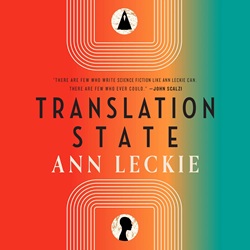
Review of Wundersmith: The Calling of Morrigan Crow

Wundersmith

The Calling of Morrigan Crow

by Jessica Townsend
read by Gemma Whelan

Hachette Audio (Little, Brown), 2018. 12 hours on 10 CDs.
Starred Review
Review written November 6, 2019, from a library audiobook

First, how did this review get buried so long in my unposted drafts? I’m not sure, but here, at last, it is.

Wundersmith is the sequel to Nevermoor: The Trials of Morrigan Crow, or I should say the second book in the series, because the story isn’t finished yet.

All her life, Morrigan Crow has been told she was cursed, and any misfortune that happened to anyone around her was blamed on her. In the first book, she learned that she’s actually a Wundersmith – an amazing gift with the ability to manipulate Wunder, and she’s brought to Nevermoor, a magical place that folks on the outside don’t even know about, and she competes to become part of the Wundrous Society.

In the second book, she’s officially part of the Wundrous Society and ready to begin her classes with the eight other members of her unit. They’re supposed to be like her new brothers and sisters.

But things don’t go like the reader expects. Suppose in the Harry Potter books that Voldemort had a particular powerful gift and was still in power outside Hogwarts. And then suppose Harry was the first wizard to have that exact same gift in one hundred years. Would people be willing to actually train him in his gift?

That’s the situation for Morrigan Crow. The “most evil man who ever lived” was a Wundersmith, and he has been banished from Nevermoor and his name is mentioned to frighten children. Morrigan is the first person to have this gift in a hundred years, and no one in the Wundrous Society wants to teach her “the wretched arts” that a Wundersmith uses.

The only class she’s assigned is a history of Wundersmiths, taught by an instructor who goes over and over how evil or stupid every single Wundersmith has been.

Meanwhile, her unit is told that if they tell anyone that Morrigan is a Wundersmith, they will all be expelled from the Wundrous Society. But someone starts blackmailing them, one by one, or the secret will be revealed. Do they care enough about Morrigan to keep her secret?

At the same time, various people and creatures start going missing. Is Morrigan to blame? Her patron, Jupiter North, is spending all his time working on the problem – so he’s not around for Morrigan to confide in.

The situations all work to a dramatic finish, but with hints of more problems to come.

This book is delightful, and I especially enjoyed listening to it, the narrator’s accent adding to my enjoyment. Jessica Townsend has a vivid imagination, throwing fun tidbits into the story – tricksy lanes that do strange things to you as you walk into them, a smoking room that generates different flavors of smoke, a building made of water, and so much more. I didn’t want to think too hard about how some of the things would actually work, but they were great fun to read about.

Now, there were many places in this book where, like the Harry Potter books, I firmly wished they would just tell a teacher! As with those, various motivations were given for why they didn’t, and it did all work out in the end. There was also a huge coincidence that Morrigan ended up stumbling on something that ended up being a major plot point, but all things taken together, it didn’t ruin the book.

So if you want to read another saga set in an imaginative, magical world, where a young magic user must learn how to use her power to fight evil, in the company of loyal friends – look no further! This series would also make great family listening. I can’t wait to find out what happens next!

HachetteAudio.com

Buy from Amazon.com

Find this review on Sonderbooks at: www.sonderbooks.com/Childrens_Fiction/wundersmith.html

Disclosure: I am an Amazon Affiliate, and will earn a small percentage if you order a book on Amazon after clicking through from my site.

Disclaimer: I am a professional librarian, but I maintain my website and blogs on my own time. The views expressed are solely my own, and in no way represent the official views of my employer or of any committee or group of which I am part.

What did you think of this book?

Review of Rain Reign, by Ann M. Martin

Rain Reign

by Ann M. Martin

Feiwel and Friends, 2014. 226 pages.
Review written September 16, 2024, from a library book.
Starred Review
2025 Mathical Honor Book

It took me a long time to get around to reading this highly acclaimed middle grade novel, but I’m glad I finally did.

Rose is happy to have a name that’s a homonym (Rose, rows) and to have a dog Rain whose name is a triple homonym (Rain, reign, rein). Rose is in fifth grade, and she’s on the high-functioning end of the autism spectrum. She has an aide to help her remember not to shout when someone breaks a rule, and to remind her that not everyone is interested in homonyms.

Rain lives with her father, who has trouble getting impatient with her at times, but she also has her dog Rain to turn to. Her uncle Weldon lives down the road and drives Rose to and from school. But when a hurricane hits and her father lets Rain out without her collar, Rose is distraught when she can’t find her after the storm. Could she have been swept away down the swollen creek?

But Rose makes a plan and gets help from some new friends.

The plot of this story is fairly simple, but it’s heartfelt, and does take a surprising and poignant turn at the end. Rose tells her own story, and hearing things from her perspective, we don’t think she’s weird – and we feel pain when other people do. But we also feel joy when she finds that having a loving dog can bring people together.

mackids.com

Buy from Amazon.com

Find this review on Sonderbooks at: www.sonderbooks.com/Childrens_Fiction/rain_reign.html

Disclosure: I am an Amazon Affiliate, and will earn a small percentage if you order a book on Amazon after clicking through from my site.

Disclaimer: I am a professional librarian, but the views expressed are solely my own, and in no way represent the official views of my employer or of any committee or group of which I am part.

Subscribe for more reviews and talk about books.

Join the conversation: What did you think of this book?
Review of Nobody’s Girl, by Virginia Roberts Giuffre

Nobody’s Girl

A Memoir of Surviving Abuse and Fighting for Justice

by Virginia Roberts Giuffre
read by Thérèse Plummer and Gabra Zackman

Books on Tape, 2025. 13 hours, 40 minutes.
Review written January 5, 2026, from a library eaudiobook.
Starred Review

This one was tough to listen to. I decided I wanted to hear it for myself from Virginia’s perspective, and I think I was glad I did – despite gaining some mental images I don’t want to think about.

Knowing that Virginia ended up committing suicide made it all the harder to listen to. On top of that, the book began with her writing collaborator telling us that Virginia strongly indicated that she wanted her book published, but also that Virginia’s marriage was much rockier than she paints in this memoir. I so wanted this girl to get a happy ending! But she ended up living with lots of pain for unrelated reasons (broke her neck after having encephalitis!) – and that makes her story all the harder to hear.

But something Virginia was absolutely firm about – even in emails not long before her death – was she wanted to stand up to powerful people and stop them hurting more young girls. She wanted to help other survivors find their voices.

Her story was the one we’ve heard about – she was essentially a sex slave to Jeffrey Epstein and Ghislaine Maxwell from age 16 to age 19. And after she was starting to recover, she devoted her life to bringing the powerful to account. With the money she got from Prince Andrew’s settlement, she established a nonprofit, SOAR – Speak Out, Act, Reclaim, for survivors of sex trafficking to reclaim their stories.

Even though the first half or so of the book – while she was still being trafficked – was awful to listen to, I’m glad I heard her story from Virginia’s perspective. That way I won’t imagine that she had any choice in the things she did, even though she wasn’t in chains. I’ve got a new understanding of what “grooming” entails. Since Ghislaine Maxwell was there from the start, 16-year-old Virginia thought what they were asking must be okay. After all, this woman was there joining in. When she started to get up the courage to stop doing what they asked, they showed her a photo of her much-loved little brother at his school – making clear that if she disobeyed or told anyone, they’d do something terrible to him.

Almost more tragic than her time with Epstein was the sexual abuse she got from her father from as young as 8 years old – and that he gave her to one of his friends to do the same. And then she found others who preyed on her as a teenage runaway after time at an abusive camp for troubled teens. So when Epstein and Maxwell started abusing and trafficking her, she almost didn’t know what normal was.

And these were powerful, wealthy people. Virginia doesn’t name some of them – making it clear later in the book that she was afraid what would happen to her family if she did. But so many of the men were never brought to account. (Virginia speaks about the need to remove statutes of limitations for crimes of child sex trafficking, because it takes time for survivors to recover enough to deal with what happened to them.)

On top of that, Epstein was not only interested in sex – he was also interested in power. So the people he brought to his conferences and events weren’t necessarily involved with the sex trafficking. Though Virginia’s pretty clear that anyone who came to his house couldn’t help but notice the naked pictures and naked girls and have strong clues that something was going on.

So this isn’t a book to find out who is or is not guilty. She goes into detail about Prince Andrew, since she had a famous court case with him. She also makes it clear that Ghislaine Maxwell was very much Jeffrey Epstein’s collaborator and coordinator. And her presence was what enticed so many young girls into their clutches. But most of the others to whom she was trafficked aren’t named in the book for the protection of her family. And it’s not clear how many of the other public figures who are named committed sex crimes, and which were there simply because of Epstein’s front as a power broker.

It was finally when Maxwell and Epstein asked her to have Jeffrey Epstein’s baby that Virginia determined to find a way to escape. The thought of her unborn child being controlled by those two evil people was too much for her, even though she had never learned to value her own safety that much.

In the end, I’m glad I listened to the book. I’m proud of Virginia Guiffre for finding her voice and telling her story. I hope it will give hope to other victims of sex trafficking to know they are not alone and help them find their voices. I hope it will deepen the resolve of the nation to bring justice to people who prey on children. I hope it will make powerful people think twice about using and throwing away people they don’t think have power. And I hope it will silence anyone who thinks that a 16- or 17-year-old is anything but a victim when they are used sexually this way. I also hope that Ghislaine Maxwell will go back to a regular prison for her crimes. And that the Epstein files will finally be released to the public to bring the evil out into the light and more powerful people brought to account.

So, yes, I do recommend this book. But be warned that the topic is important but not at all pleasant.

speakoutactreclaim.org

Buy from Amazon.com

Find this review on Sonderbooks at: www.sonderbooks.com/Nonfiction/nobodys_girl.html

Disclosure: I am an Amazon Affiliate, and will earn a small percentage if you order a book on Amazon after clicking through from my site.

Disclaimer: I am a professional librarian, but the views expressed are solely my own, and in no way represent the official views of my employer or of any committee or group of which I am part.

Subscribe for more reviews and talk about books.

Join the conversation: What did you think of this book?