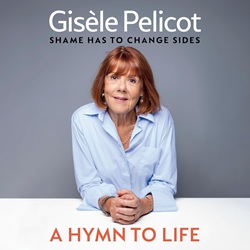
Review of A Hymn to Life, by Gisèle Pelicot

A Hymn to Life

Shame Has to Change Sides

by Gisèle Pelicot
read by Emma Thompson
translated by Natasha Lehrer and Ruth Diver

Books on Tape, 2026. 7 hours, 23 minutes.
Review written May 19, 2026, from a library eaudiobook.
Starred Review

This book mentions some horrific events – and I’m so glad I read it. I came away encouraged and emboldened and so full of admiration for Gisèle Pelicot.

Gisèle Pelicot is the famous case of a woman who was drugged and raped by her husband and offered up to other men over a period of ten years. When it came time for the trial in 2024, she made the decision not to have a closed court, as most women did. Because, as she’d heard in a slogan before, “Shame has to change sides.” Besides, she didn’t want to be shut in a room with fifty-two men who had raped her and their lawyers. Let public outcry help them begin to face up to what they had done.

The book opens in 2020 when Madame Pelicot and her husband were asked to come to the police station. From here on out, I’ll do as she did and call him Dominique, since he is not her husband any longer. Gisèle knew that he had recently been arrested for taking video up women’s skirts in a grocery store – and the police had seized his phone and computer.

After they arrived at the station, they were taken to different rooms. Gisèle didn’t realize that Dominique was being arrested. But in the room where she was taken, a compassionate police officer showed her pictures of a woman who looked like she was dead being sexually abused by Dominique and many other men. They confirmed that the woman in the pictures was Gisèle, and no, she had not consented to any of this and had no knowledge of any of this.

Of course she was in complete shock that first day. The news brought devastation to her whole family.

She also tells the story of her childhood and how they met. They both had tough childhoods – his with a sexually abusive father – and she’d always thought they’d rescued each other. Looking back, there were some red flags, but she’d thought they were just regular bumps in a marriage.

Something I appreciate about her story is that she refuses to give up all her good memories of Dominique. They had decades of what she thought was a good marriage, three children, and plenty of love and laughter between them.

I appreciated this because my own ex-husband had an affair and left me – not anywhere near as big an offense – but I, too, refuse to give up my good memories of him or deny that I was happy in those many years of our marriage. Like Gisèle, I was told plenty of lies – though, again, certainly not nearly as many – but enough to relate to her experience of having to figure out her past and what was real and what was lies.

And she was dealing with at least ten years of deception. Her mother died of a brain tumor when Gisèle was nine years old, so when she started having blackouts, she assumed she was going to die like her mother. She also had strange vaginal discharges. She saw multiple doctors and had tests run, with Dominique solicitously accompanying her – and they didn’t find any problems. But she even stopped driving because she’d had an incident in a car when she couldn’t stay on the road. And when the detectives checked her hair, they discovered traces of the poisons Dominique had been giving her. All her symptoms cleared up when he was in prison.

I was chilled by a story when, early on, she’d teased him, “You aren’t drugging me, are you?” – and he started crying that she would accuse him of such a thing, even in jest! I’ve learned that’s a common self-defense mechanism of liars. My own ex would say “How dare you accuse me of… ” such and so – and I’d always find out later that’s exactly what he’d done. As they say about Donald Trump, “Every accusation is a confession” – but at the time, when it’s your beloved husband making the accusation, it is amazingly effective at making a wife feel guilty for even a fleeting thought that he could have done anything bad.

Another thing that struck me was the compassion and dedication of the police officers who investigated and uncovered the truth of what Dominique had done. They had to go through graphic videos to compile the evidence. Would American authorities have shown the same diligence and care for sexually assaulted women or girls? The way they’re handling the Epstein files makes me not at all sure. So I appreciate that it was law enforcement who got this man – and his many recruits – put behind bars.

There were many stages in Gisèle’s healing journey, and of course she will always have work to do. But I was happy to see her spirit lighten when she found a home of her own on an island (instead of living with her kids, who were also traumatized) and made new friends in the neighborhood. And then she found a loving and compassionate man to be her new partner in life. (Or rather those new friends set them up.)

And then the biggest turning point was when she decided not to have a closed court case after all. She decided not to be ashamed of what they had done to her. Let the world know, so that these men would be ashamed. Shame has to change sides.

She knew she’d made the right choice when she started getting a flood of letters from other women. And women showed up in throngs around the courthouse to show her their love and support. Women across the world felt that she was standing up for us.

And I appreciate the title of the book. Gisèle Pelicot is a woman who celebrates life. She has not let the bullies win. Despite what was done to her, she refuses to be ashamed, and she refuses to let that ruin the rest of her life. The book ends with a joyful relishing of life – not a life without difficulties, but still a happy life.

Oh, and I love that they chose Emma Thompson to read the audiobook. I know her British accent is not a French one, but her cultivated voice gives Gisèle the elegance and grace she deserves as she tells her story of standing up for the truth.

Buy from Amazon.com

Find this review on Sonderbooks at: www.sonderbooks.com/Nonfiction/hymn_to_life.html

Disclosure: I am an Amazon Affiliate, and will earn a small percentage if you order a book on Amazon after clicking through from my site.

Disclaimer: I am a professional librarian, but the views expressed are solely my own, and in no way represent the official views of my employer or of any committee or group of which I am part.

Subscribe for more reviews and talk about books.

Join the conversation: What did you think of this book?
Review of Good Soil, by Jeff Chu

Good Soil

The Education of an Accidental Farmhand

by Jeff Chu

Convergent, 2025. 317 pages.
Review written March 24, 2026, from my own copy, purchased via Amazon.com

Good Soil is a memoir about Jeff Chu’s time as a student and worker at the Farminary – a farm owned by Princeton Theological Seminary that hosted classes.

The book is meditative about spiritual things and about issues he was dealing with in his life. His parents didn’t accept his husband, but he tried to maintain a relationship with them. He wasn’t sure what he wanted to do with his life and was looking for direction, and toward the end of his time there, his good friend Rachel Held Evans passed away, and then the friendly Farminary dog did, too.

I read this slowly, absorbing the lessons as a daily devotional reading. It helped me look at the natural world with fresh eyes. I newly appreciate how compost reminds us that even in death, there is life and nourishment.

I think most of all, I appreciate this story. It’s a story of how when Jeff Chu was at a loss, God showed up and helped him find what he needed and new friends to be with him along the path. I appreciate how working with his hands in the dirt enhanced the work and study he was doing with his mind.

byjeffchu.com
convergentbooks.com

Buy from Amazon.com

Find this review on Sonderbooks at: www.sonderbooks.com/Nonfiction/good_soil.html

Disclosure: I am an Amazon Affiliate, and will earn a small percentage if you order a book on Amazon after clicking through from my site.

Disclaimer: I am a professional librarian, but the views expressed are solely my own, and in no way represent the official views of my employer or of any committee or group of which I am part.

Subscribe for more reviews and talk about books.

Join the conversation: What did you think of this book?
Review of Strangers, by Belle Burden

Strangers

A Memoir of Marriage

by Belle Burden
read by the Author

Books on Tape, 2026. 7 hours, 3 minutes.
Review written March 31, 2026, from a library eaudiobook.
Starred Review

I recently read a fictional tale of a divorce that did not ring true for me. Maybe it was just because of different circumstances? But this memoir of divorce (Yes, it’s about the marriage – but revisiting it in light of the divorce) rang so true, it made me feel like the author is my soul sister. Yes, the circumstances had lots of differences, but the underlying emotions made me remember how it had been.

Let me also say, right up front, that she ends the book in a good place, getting on with her life, happy about who she is as an individual – and I related to that, too. I think she got there more quickly than I did – but that’s where the difference in circumstances made a difference in pace. I ended the book happy for her, but with all my sympathy to her for that tough road.

The story begins on Martha’s Vineyard during the pandemic, where Belle and her husband had decided to bring their family from New York City and sit out the danger, which of course everyone thought wouldn’t last too long.

Then one day, Belle got a text from an unknown number saying that her husband was having an affair with his wife.

When she confronted her husband (Of course it wasn’t true!), he didn’t deny it. And the next day, he left the family and went back to New York City. The other woman had attempted suicide, and he wanted to make sure she was okay. He never did come back, except to tell the kids.

After telling about the day that broke her life apart, Belle goes back and tells about their whirlwind romance that led to their marriage of twenty years and three children. When did he stop loving her? Did he ever love her? (Yes, of course he did! That’s when she pulls out all the evidence over the years – and her friends saw it clearly.) What did she do wrong? How can he leave everything he built up for their family behind?

I related to every one of those questions. Probably silly, but it made me wish I had been there to help her through them. To tell her that’s normal and no, she didn’t do anything wrong. (Even if she wasn’t perfect. A man having an affair is about the man having an affair.) I would have shown her the book The Script that helped me finally believe it wasn’t all my fault (despite what my husband said) and the book Runaway Husbands about sudden abandonment, so she’d know she wasn’t alone.

I related to the weight loss, even to doing puzzles at bedtime. My puzzles of choice were killer sudokus, and hers were jigsaw puzzles – but yes, you have to, somehow, shut off your mind. I related to the dreams of him, and the way her heart leapt when she saw him – even when her mind knew better. As she pointed out, it takes some time for your heart to get the message not to love this person anymore.

Now, there were some big differences. She was a stay-at-home mom who did some pro bono legal work before the divorce – and she got to continue to do that after the divorce. (I had to go from working part-time to working full-time, which turned out to be a wonderful thing – I love my job.) I think because her husband left right away, there was less venom between them. That’s hard in its own way, but when I found out about my husband’s affair, he told me it wasn’t an affair – he just needed a friend so went to her house at midnight to watch a movie after a work trip. (And I believed him.) Then he proceeded to continue the affair behind my back for another year and a half. I would get my hopes up that we were working things out – and then I’d find out again that he’d been with her. And then he started being as unkind to me as he possibly could so that I would not get my hopes up. All that is to say that a quick departure must be awful, but so is a long drawn-out one. And I related to her story.

And yes, I fully and completely support Belle Burden telling her story. Yes, it’s healing and positive to tell the truth. There’s enough hiding and protecting out there. Yes, this is how lives fall apart when a husband breaks his wedding vows. But also – I loved reading about how she got her feet back under her and put her life back together, found new pursuits and new work, and continued on as a strong individual.

I listened to this audiobook obsessively. Her storytelling is superb (A blight upon the student who once told her she couldn’t write!), and I felt so much kinship with the situation.

Well done, sister! May you and your children continue to thrive!

Buy from Amazon.com

Find this review on Sonderbooks at: www.sonderbooks.com/Nonfiction/strangers.html

Disclosure: I am an Amazon Affiliate, and will earn a small percentage if you order a book on Amazon after clicking through from my site.

Disclaimer: I am a professional librarian, but the views expressed are solely my own, and in no way represent the official views of my employer or of any committee or group of which I am part.

Subscribe for more reviews and talk about books.

Join the conversation: What did you think of this book?
Review of Revisionaries, by Kristopher Jansma

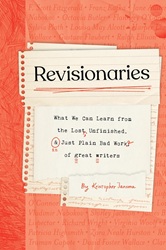
Revisionaries

What We Can Learn from the Lost, Unfinished, & Just Plain Bad Work of Great Writers

by Kristopher Jansma

Quirk Books, 2024. 320 pages.
Review written from an Advance Reading Copy I picked up at work.
Starred Review

Revisionaries is both fascinating and inspiring. It’s fascinating because it tells you about the lives of many great writers and gives you a look at their unfinished work. It’s inspiring because it takes you behind the scenes and shows you how very fallible those geniuses were. In fact, they were human just like us.

The author based this book on his long obsession with unfinished manuscripts – and his blog “Unfinished Business.”

An unfinished manuscript becomes a parting gift and a glimpse at what might have been. The discoveries I’ve made in reading them have shaped the way I write and the way I teach writing ever since. I’ve reconsidered my entire idea of literary merit – genius is not something bestowed upon a select few through gifts or talents, but something built up, over much time and effort, by those resilient enough to never stop testing new ways of creating.

What I’ve found, time and time again, is that these works show that every genius is also merely human, and subject to the same stumbles, flaws, blocks, and total failures as any first-time writer. To read these incomplete novels and to understand the stories behind them is to expose creativity as something far more interesting and accessible, even if in doing so we must dismantle the very notion of genius.

Each of the twenty-one chapters covers a different writer. They have titles suggesting a failing of that writer: “Geniuses Write Bad Drafts” covers F. Scott Fitzgerald. “Geniuses Get Off to a Bad Start” is for Louisa May Alcott. “Geniuses Often Quit” covers Jane Austen. “Geniuses Bite Off More than They Can Chew” is about Ralph Ellison. And “Geniuses Still Have to Do the Dishes” is for Sylvia Plath.

The chapters themselves are informative and interesting and give you the inside scoop on the lives of great writers. But I especially loved the page or two at the end of each chapter called “Fail Like a Genius.” It gave you something from each writer’s life that you could apply to your own writing. He suggests that, like Kafka, you change your environment if you’re getting stuck; like Louisa May Alcott, imitate the writing of others to learn the craft; like Virginia Woolf, try writing a book just for fun alongside the book you’re “seriously” writing, and like Shirley Jackson, try writing about something you hate.

I read this book slowly, because each chapter was self-contained and gave me something to think about. Since my advance reading copy is paperback, it made a good book to bring on trips and read a chapter or so in the evening to wind down – and then I didn’t always remember to unpack it. But I did love reading it (and got more consistent when I reached the final third.) It gave me both wonderful stories about the lives of great writers and the encouragement that all those great writers were human like me.

When I finished the book, I got to thinking how encouraged I was when I learned that the first novel L. M. Montgomery wrote was not the first one she published, Anne of Green Gables. No, the first one she wrote was Kilmeny of the Orchard – a book which, honestly, isn’t nearly as good. It’s a fabulous first effort, but it’s not the masterpiece of what was actually her later work. Somehow it’s good to know that even L. M. Montgomery had to learn and grow as a writer.

And that’s the effect of this book. We learn the ways that each of these literary geniuses was fully flawed and human. And therefore maybe it’s worth it to keep making an effort to make our own mark.

kristopherjansma.com

Buy from Amazon.com

Find this review on Sonderbooks at: www.sonderbooks.com/Nonfiction/revisionaries.html

Disclosure: I am an Amazon Affiliate, and will earn a small percentage if you order a book on Amazon after clicking through from my site.

Disclaimer: I am a professional librarian, but the views expressed are solely my own, and in no way represent the official views of my employer or of any committee or group of which I am part.

Subscribe for more reviews and talk about books.

Join the conversation: What did you think of this book?
Review of I Hardly Knew Me, by Nia Chiaramonte

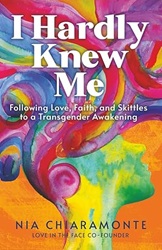
I Hardly Knew Me

Following Love, Faith, and Skittles to a Transgender Awakening

by Nia Chiaramonte

Lake Drive Books, 2025. 212 pages.
Review written January 27, 2026, from my own copy, purchased via Amazon.com
Starred Review

I Hardly Knew Me tells the coming-out journey of a Christian transgender woman. She tells her story with warmth and humor.

This isn’t a theological treatise defending her decision to come out, but it is a story explaining and showing how much her life is better, how much more authentically she presents herself, how much deeper her relationships, because she did come out.

We also see how difficult that path was. Her parents refused to acknowledge her as female, and she tells us the way different people responded, often in hurtful ways.

The book is presented as one person’s story, and it’s a story with heart.

I do think a strength of the book is giving insights on what is the most helpful way to respond when someone comes out to you.

Once I got to a point where I needed to come out to everyone, and I started coming out to more people who were emotionally unsafe, one thing was very clear to me: they didn’t know they were emotionally unsafe. Because felt safety is in the eye of the beholder – in this case, me. I told a couple of family members that they didn’t make me feel safe emotionally, and where I was able to, I told them why. It typically didn’t go over well. They thought they were creating a safe environment from their perspective.

The problem is that felt emotional safety has a very hard time existing in the presence of judgmental behavior, which you see when people start talking about religious or cultural or social rules instead of just listening. It’s judgment of someone for a life that is perceived as wrong, living a life as a trans woman in my case, and it is judgment of someone’s being. That creates an environment where emotional safety cannot exist. Thinking I know what’s best and having a judgmental attitude toward someone decimates any hope of emotional safety as it demolishes trust.

People I have come out to who have responded well and created safety for me have responded by first listening, then trusting. They trust in who I am and they trust that I know myself better than they know me. They create expanding spaces for us to find ourselves together. People who have hurt me emotionally haven’t trusted me and my own story, and in fact have projected their own insecurities about their story onto me, further destroying the possibility of building a safe space where both of us can be ourselves.

I also appreciated her insights on healthy and unhealthy boundaries:

For those who refuse to respect my boundaries, such as calling me by my actual name, they’ve in turn accused me of not respecting their boundaries. I say I can only be in a relationship if they respect and honor me by using my name and pronouns; they say they can only be in a relationship if they’re able to call me by whatever name and pronouns they choose.

This gets tricky because while these two things sound the same, there are major differences. My boundary says, “This is who I am in relationship to you, and I get to define me in that relationship. I will determine how I exist and behave in the world, and this is what I need from you.” The boundary from the one refusing to use my name says, “This is who you are in relationship to me; I get to define you and how you exist and behave in the world, and this is what I need you to be for me.” The unhealthy boundary essentially says, “My belief about you is more important than your belief about yourself, and I get to define your story so it fits with mine.” Whereas the healthy boundary says, “My belief about me and your belief about you are both important, and we each get to define our own stories.”

So you’ve got a warm coming-out story, insights into what it feels like to be transgender in today’s society, wisdom about how you can relate to transgender people in your own life – and a story that will give you a hankering for freeze-dried Skittles. (Well, it did me – I’d eaten them just before I read this book.)

Oh, and Skittles? She makes a good point: Freeze-dried Skittles and regular Skittles are both wonderful in their own way. But if you have one, expecting it to be the other, you’re going to be disappointed.

loveintheface.com
lakedrivebooks.com

Buy from Amazon.com

Find this review on Sonderbooks at: www.sonderbooks.com/Nonfiction/i_hardly_knew_me.html

Disclosure: I am an Amazon Affiliate, and will earn a small percentage if you order a book on Amazon after clicking through from my site.

Disclaimer: I am a professional librarian, but the views expressed are solely my own, and in no way represent the official views of my employer or of any committee or group of which I am part.

Subscribe for more reviews and talk about books.

Join the conversation: What did you think of this book?
Review of Who Is Government? edited by Michael Lewis

Who Is Government?

The Untold Story of Public Service

edited by Michael Lewis
read by the authors

Books on Tape, 2025. 6 hours, 43 minutes.
Review written February 19, 2026, from a library eaudiobook.
Starred Review

I listened to this audiobook because the book was on President Obama’s Summer 2025 Reading List. Listening to the audiobook was especially nice because the author of each essay read their own work, and W. Kamau Bell included audio interviews from his research.

This book is about public servants – about people who work for the federal government and the amazing work they do. I live in northern Virginia and many of my friends do awesome work for the government – so I was not surprised. It’s also true that several of my friends had to leave their jobs after Trump devastated the federal work force, so I did find myself wondering how many of the amazing people featured in this book are still employed, doing good for the country and the world.

The premise of the book is to find outstanding federal employees and highlight the good work they do, unbeknownst to most of the country. Michael Lewis asked some great writers to participate, and besides two essays from him, this book includes pieces from Casey Cep, Dave Eggers, John Lanchester, Geraldine Brooks, Sarah Vowell, and W. Kamau Bell.

Some examples of the stories I found super interesting (well, they were all really interesting) were the guy who saved tens of thousands of lives by changing mining regulations and putting an end to roof collapses in coal mines, and the IRS agent who brought down an international human trafficking ring (Can we put him on the Epstein case?), brought a drug lord to justice, and much more. One chapter wasn’t about any one person, but was about the Consumer Price Index – and the tremendous amount of work that goes into it and how important it is. Of course as a librarian, I was especially interested in the chapter that highlighted a worker at the National Archives.

This book can maybe help us recover from the devastation in our government post-Trump? It presents an uplifting vision of government that does good work, that takes care of important work that doesn’t make anyone a profit but touches lives in vitally important ways. This is what – and who – government is supposed to be.

If you live in the United States, I highly recommend this book to be informed about amazing things your government is doing – but also to hear some fascinating stories of good people doing good work.

michaellewiswrites.com

Buy from Amazon.com

Find this review on Sonderbooks at: www.sonderbooks.com/Nonfiction/who_is_government.html

Disclosure: I am an Amazon Affiliate, and will earn a small percentage if you order a book on Amazon after clicking through from my site.

Disclaimer: I am a professional librarian, but the views expressed are solely my own, and in no way represent the official views of my employer or of any committee or group of which I am part.

Subscribe for more reviews and talk about books.

Join the conversation: What did you think of this book?
Review of 107 Days, by Kamala Harris

107 Days

by Kamala Harris
read by the Author

Simon & Schuster Audio, 2025. 9 hours, 58 minutes.
Review written January 27, 2026, from a library eaudiobook.
Starred Review

This audiobook made me wistful, nostalgic, and deeply sad for what might have been, but by the end filled me with hope and determination.

The content of the book is simple to describe: Kamala Harris tells about her 107 days running for president, from the day Joe Biden called to tell her he was dropping out to the night she got the news she had lost the election.

It renewed all my wishes that she had won. She cares about people and about trying to make government work for people. In her description of her days and her thoughts and emotions, she feels like a real person – a real person who is trying to do her best with what she has.

I think I relate to Kamala because she’s only a few months younger than me. (And Tim Walz only a few months older.) She’s also a likable person – down-to-earth and genuinely trying to use government power to defend those who need help and to bring fairness to our system.

I’ve seen criticism of this book that she didn’t take responsibility for the loss. But I think she did her best with the time she had. She does admit to some mistakes, and she points out mistakes by others (perhaps more than she should have, but it feels fair). This book shows how she gave it her best shot.

I still find myself wishing she’d had a little more investigation happen to irregularities in swing states’ voting machines, but she was determined to reinstate a peaceful transfer of power and not deepen the nation’s mistrust in voting results. And that was a powerful and hard thing she did. She said that only three other vice presidents have had to certify their own defeat – and Hubert Humphrey refused and had the president of the Senate do it in his place.

And she does hold out hope at the end. This was written before ICE moved so many troops into Minneapolis, so she focuses on the midterms and reminds us that the people still have power. May that be so. And may we as the people of these United States remember that we are the foundation of this government and make our voices known.

kamalaharris.com

Buy from Amazon.com

Find this review on Sonderbooks at: www.sonderbooks.com/Nonfiction/107_days.html

Disclosure: I am an Amazon Affiliate, and will earn a small percentage if you order a book on Amazon after clicking through from my site.

Disclaimer: I am a professional librarian, but the views expressed are solely my own, and in no way represent the official views of my employer or of any committee or group of which I am part.

Subscribe for more reviews and talk about books.

Join the conversation: What did you think of this book?
Review of Annie’s Ghosts, by Steve Luxenberg

Annie’s Ghosts

A Journey Into a Family Secret

by Steve Luxenberg

Hyperion, 2009. 401 pages.
Review written October 6, 2025, from a library book.
Starred Review

It’s a fun story how I happened to read this book: I met the author!

Back in April, I gave myself a retreat at Blackwater Falls Lodge in Blackwater State Falls, West Virginia. The lodge has a large common room, with an abundance of big, round tables. Someone had started a jigsaw puzzle on one of them – a trap for me! I started working on the puzzle after dinner, before carrying out my plan of reading and writing in my room, and got hooked. Other people came to join me – among them was a nice couple. The puzzle was of a giant library, and it came out that I was a librarian – and this gentleman was a writer! His wife was a retired school librarian. He was also an associate editor for the Washington Post. Well, it was nice doing the puzzle with them – and then they invited me to play a game of Upwords with them. And instead of a “productive” evening reading and writing, I had a lovely social evening playing Upwords with this obviously highly intelligent journalist and his wife.

When I got home, I checked out his books, then decided to read the older one first. It’s taken me a long time – mostly one or two chapters per week (because I read lighter stuff at bedtime, which is my main reading time). I did not find myself forgetting what went before when I picked it up each week – it’s memorable reading – and I finally finished off the last five or six chapters in one sitting last weekend. This is by no means light reading, but it’s absorbing, and it’s super interesting.

So now let me tell you about the book this nice man wrote. It’s the story of discovering his mother had a disabled sister she kept a complete secret after she married. He first heard a rumor of it when his mother was hospitalized, and then confirmation after her death. So then began the process of researching this aunt, Annie, whom he hadn’t known about.

At first, he assumed she lived away from the family most of her life, but Annie wasn’t moved to a state institution until she was twenty-one years old. She was born with one leg shorter than the other, that wouldn’t grow properly, and had possible mental retardation and mental illness. Annie spent the rest of her life – decades – in the institution, yet his mother had told everyone she was an only child.

So this is the story of Steve Luxenberg digging up the truth. And finding out why his mother kept this secret. It gives a window into mental health care in the 1940s and how much it has changed. We even learn about the experiences of his mother’s cousin, who was the only one of her immediate family to survive a massacre in a Ukrainian village during the Holocaust.

The secret seems simple on the surface – a disabled sister who’d been put into an institution. But the story ends up being sprawling, as Steve Luxenberg works to understand his mother’s motivation in keeping the secret. This involves attitudes at the time toward mental and physical disabilities, treatment options at the time, and even politics at the time as it involved state institutions. Then there was the bureaucratic paperwork to even have access to the records, if they existed, and the effort of tracking down people who’d known his mother as a child – when her sister lived with the family – and afterward. How many of them knew of the secret? Unfortunately, many of them had already passed. He got more information piece by piece, and the book is something of a detective story, as well as a broad work of history – mixed with journalism and memoir.

The whole thing was fascinating reading, but my favorite part came in a vignette toward the end. He begins most chapters with his own memories with his mother, and this one was about playing her favorite board game with her – Upwords. That made me smile. Made me feel like I had a tiny piece of the experience of this book. And Steve Luxenberg and his wife still play Upwords.

steveluxenberg.com

Buy from Amazon.com

Find this review on Sonderbooks at: www.sonderbooks.com/Nonfiction/annies_ghosts.html

Disclosure: I am an Amazon Affiliate, and will earn a small percentage if you order a book on Amazon after clicking through from my site.

Disclaimer: I am a professional librarian, but the views expressed are solely my own, and in no way represent the official views of my employer or of any committee or group of which I am part.

Subscribe for more reviews and talk about books.

Join the conversation: What did you think of this book?
Review of Win-Win Miracles Still Happen, by Cheri Baugh Woods

Win-Win Miracles Still Happen

by Cheri Baugh Woods

Front Line Book Publishing, 2025. 264 pages.
Review written August 6, 2025, from my own copy, ordered via Amazon.com
Starred Review

Full disclosure first: I consider the author Cheri Woods a friend, via her brother Kevin, who I talked with most weeks at church for years. I was in the group that Kevin asked to pray for Cheri when her life was in danger with leukemia, I picked out verses for Kevin to send to her when she was going through treatment, and later when my niece had leukemia at 3 years old and again at 7 years old, Cheri in turn prayed for her.

So I know how miraculous Cheri’s story is, and I ordered a copy the same day I heard it had been published. And yes, I’m biased, and knew I would enjoy the book.

I’ll be honest – this book is not traditionally published, and although Cheri thanks an editor in the Acknowledgements, the presentation is not as polished as what I’m used to as a librarian. There are occasional mistakes such as quotation marks out of place and some repetitive spots. However, I’m glad that I knew I would want to read Cheri’s full story and overlooked those things – because as soon as I picked it up, I was riveted. Getting a Christian memoir traditionally published is incredibly difficult, so I’m selfishly glad that Cheri didn’t wait for that to happen so I could read her book now.

And I didn’t really know the earlier part of her story – that her first husband turned out to be a bigamist, and her second husband passed away when she was 32 years old. From seeing her journey with cancer, I was not surprised to see her faith shine through in her entire story, as God brought her through all of those hard things.

Here’s how Cheri explains the title in her Introduction:

I am here to declare that my cornerstone remains intact. Through all my circumstances and experiences, I learned to rely on the strength, power, and mercy that God so generously gives each of us through our faith.

I began living a Win-Win life, which meant that no matter what came my way, even if that meant my death, I WIN!

If God chose to keep me here on the earth, I win, because it shows me He still has need of me. My purpose for living is not over, and he has more for me to do for the glory of His kingdom.

If God chose to take me home, I WIN again because to be absent from the body is to be present with the LORD. That is the ultimate win.

My hope is that my life’s events may be an encouragement and an inspiration for you to keep going as you encounter your own struggles and difficulties. I pray that as you read, you will grab hold and tap into God’s energy, his forever-loving lifeline, and begin to live your own Win-Win life.

Reading this book is like hearing from an encouraging friend with strong faith. Her story is amazing – I wouldn’t believe it if someone tried to put it into a novel – and it’s lovely to see how God’s hand has been on her life all along.

Cheri had to retire early from her career as a teacher and school administrator when she got a bone marrow transplant and a new immune system. So let me encourage you to purchase her book – the money will go to someone who can use it and deserves it. It’s not every day that you “meet” someone who’s been through incredible difficulties who has such a sunshiny spirit of God’s love. This book will not only keep you reading, it will bless and inspire you.

Buy from Amazon.com

Find this review on Sonderbooks at: www.sonderbooks.com/Nonfiction/win_win_miracles_still_happen.html

Disclosure: I am an Amazon Affiliate, and will earn a small percentage if you order a book on Amazon after clicking through from my site.

Disclaimer: I am a professional librarian, but the views expressed are solely my own, and in no way represent the official views of my employer or of any committee or group of which I am part.

Subscribe for more reviews and talk about books.

Join the conversation: What did you think of this book?
Review of A Woman of No Importance, by Sonia Purnell

A Woman of No Importance

The Untold Story of the American Spy Who Helped Win World War II

by Sonia Purnell
read by Juliet Stevenson

Books on Tape, 2019. 13 hours, 54 minutes.
Review written July 8, 2025, from a library eaudiobook.
Starred Review

I wish I remembered what prompted me to put this amazing nonfiction audiobook on hold, because it was a great tip. I don’t do a great job of reading big thick nonfiction tomes, but as an audiobook, it kept my interest all the way.

The author researched one of the most important spies of World War II, Virginia Hall. Yes, she was American, from Baltimore – but most of the time she did her spying for the British Special Operations Executive (SOE) before the United States even entered the war.

Not only did Virginia Hall face obstacles and being underestimated and dismissed because she was a woman – she was also disabled, an amputee with a wooden leg. Those things kept her from getting to go far in the U.S. diplomatic corps, so when World War II started, she found work with the SOE.

She was in “free” France under the Vichy government for most of the war, building more and more networks in the Resistance, sending more and more information to the Allies, and helping the cause more and more. She was the sort who wouldn’t let them send her back to safety, even when it became apparent the Germans were figuring out who was causing them so much trouble.

All along the way, she faced frustrations because her assessments and requests weren’t given the weight due her experience – because she was a woman. But still, her expertise and skills made her incredibly effective and helpful for the Allied cause.

The story is riveting – especially the bulk of it where she is working in war-time France. It’s truly amazing how much she accomplished right under the noses of her enemies. This book helped me understand that her many years of service and the wide variety of ways she helped the Allied cause.

soniapurnell.com

Buy from Amazon.com

Find this review on Sonderbooks at: www.sonderbooks.com/Nonfiction/woman_of_no_importance.html

Disclosure: I am an Amazon Affiliate, and will earn a small percentage if you order a book on Amazon after clicking through from my site.

Disclaimer: I am a professional librarian, but the views expressed are solely my own, and in no way represent the official views of my employer or of any committee or group of which I am part.

What did you think of this book?