Review of Dad and the Dinosaur, by Gennifer Choldenko, illustrated by Dan Santat

Dad and the Dinosaur

by Gennifer Choldenko
illustrated by Dan Santat

G. P. Putnam’s Sons, 2017. 36 pages.
Starred Review

Nick wants to be brave like his dad. And people think that he is when he goes rock climbing and faces down a big, tough goalie on the soccer field.

But what other people don’t know is that the reason Nick can be brave is because of his companion, a toy dinosaur that goes with him everywhere. The dinosaur gives Nick the courage of a dinosaur.

So when the dinosaur falls out during a soccer game, Nick loses all his courage.

But it turns out that Dad knows exactly what to do.

This is a charming story of a kid who admires his father and wants to be like him – and a father who knows how to treat his son’s feelings with deep respect.

The illustrations are perfect. While Nick is holding his dinosaur, we see a shadowy dinosaur in the background, big and bold and brave. When Nick has lost the dinosaur, the world is a scarier place, with tentacles coming up from under a manhole cover ready to pull him down.

Together the story and illustrations hit just the right note. We see a kid who’s brave like his amazing dad, with the help of his friend the dinosaur.

gennifercholdenko.com
dantat.com
penguin.com/children

Buy from Amazon.com

Find this review on Sonderbooks at: www.sonderbooks.com/Picture_Books/dad_and_the_dinosaur.html

Disclosure: I am an Amazon Affiliate, and will earn a small percentage if you order a book on Amazon after clicking through from my site.

Source: This review is based on a library book from Fairfax County Public Library.

Disclaimer: I am a professional librarian, but I maintain my website and blogs on my own time. The views expressed are solely my own, and in no way represent the official views of my employer or of any committee or group of which I am part.

What did you think of this book?
Review of Peas and Carrots, by Tanita S. Davis

Peas and Carrots

by Tanita S. Davis

Alfred A. Knopf, New York, 2016. 279 pages.
Starred Review

Here’s a contemporary novel about a teen in foster care. It’s been years since Dess has lived with her baby brother. She got kicked out of her last foster home and has been in group homes ever since. But now, when she asks to see her brother – she ends up getting placed in the home he’s in. There’s even a sister who is fifteen, just like Dess.

Just because two teens are the same age doesn’t mean they’ll get along. The book alternates perspectives between white-skinned Dess and African-American Hope, her new foster sister.

Here’s their meeting from Dess’s perspective:

The girl looks right at me, and her eyes get all wide. She’s darker than Foster Lady and shorter, but thick like her, with a crinkly mess of puffy hair in a sloppy bun. She’s all baby fat and big cow eyes, which I’m about to slap out of her damn head if she doesn’t stop staring at me.

“What are you looking at?” I snarl at the same time that she blurts out, “Um . . . I’m Hope. Hi.”

And here it is from Hope’s perspective:

So this was Austin’s real sister – his birth sister. This girl, with her pale-blue eyes and dragon-lady nails, looked nothing like Austin, whose skin was a sandy brown, whose eyes were a dark hazel, and whose hair was tightly furled golden-brown curls. Hope searched for any trace of resemblance to Austin’s sharp-chinned, round-headed adorableness in the single wary eye, ringed hard with liner, that glared out at her from beneath the sweep of stiff, blond bangs. Half siblings could still look alike, but . . . no, nothing.

Dess isn’t used to a loving family, and is skeptical of the “rule” of acting with kindness. Hope isn’t used to having a foster sister her own age who isn’t, actually, very nice to her. Then at school, Dess seems to be able to make friends more easily than Hope, which is completely disorienting for Hope.

But eventually, through the ins and outs of everyday life, the girls learn to care about even someone so different.

This story had me reading until far too late in the night. Your heart goes out to Dess, with her tough family situation, but also to Hope, just trying to be kind but also wanting to be noticed in a family that is so much about service, sometimes Hope gets overlooked.

The people, the friendships, and the school situations felt true to life. You’re pulled into caring about these girls. The reader gets to see both perspectives, and it’s beautiful to watch them slowly inch toward each other.

TanitaSDavis.com
randomhouseteens.com

Buy from Amazon.com

Find this review on Sonderbooks at: www.sonderbooks.com/Teens/peas_and_carrots.html

Disclosure: I am an Amazon Affiliate, and will earn a small percentage if you order a book on Amazon after clicking through from my site.

Source: This review is based on a library book from Fairfax County Public Library.

Disclaimer: I am a professional librarian, but I maintain my website and blogs on my own time. The views expressed are solely my own, and in no way represent the official views of my employer or of any committee or group of which I am part.

What did you think of this book?
Review of Eugenia Lincoln and the Unexpected Package, by Kate DiCamillo

Eugenia Lincoln and the Unexpected Package

Tales from Deckawoo Drive, Volume Four

by Kate DiCamillo
illustrated by Chris Van Dusen

Candlewick Press, 2017. 101 pages.
Starred Review

Tales from Deckawoo Drive is a spin-off from Kate DiCamillo’s Mercy Watson series, telling stories about the other people who live on Deckawoo Drive. I haven’t read them all, but I wasn’t lacking any knowledge I needed to thoroughly enjoy this one.

Eugenia Lincoln is an elderly lady who lives down the street from Mercy Watson, with her sister, Baby Lincoln. Here is how she’s described when the book opens:

Eugenia Lincoln was a practical person, a sensible person. She did not have time for poetry, geegaws, whoop-de-whoops, or frivolity.

She believed in attending to the task at hand.

Eugenia Lincoln believed in Getting Things Done.

Baby Lincoln, Eugenia’s younger sister, loved poetry, geegaws, and whoop-de-whoops of every sort and variety.

She was especially fond of frivolity.

“We are diametrically opposed,” said Eugenia to Baby. “You are woefully impractical. I am supremely practical.”

But then, one day, an unexpected package arrives with Eugenia’s name on it.

Naturally, there’s plenty of fuss and bother and speculation about opening the package. Inside is an accordion! Baby Lincoln has heard that they can be a pathway to great joy.

But Eugenia wants none of it! She tries to send the accordion back with no luck. She places an ad to try to give it away. Instead, a colorful character comes to her door planning to give her accordion lessons.

One thing leads to another – all in very silly ways – and it turns out that Eugenia Lincoln has a natural gift for accordion playing.

This is a wonderful beginning chapter book with an engaging story that rewards discovery, not too many words on a page, and plenty of pictures throughout. And it’s always a delight to read about a curmudgeon set on a pathway to great joy.

candlewick.com

Buy from Amazon.com

Find this review on Sonderbooks at: www.sonderbooks.com/Childrens_Fiction/eugenia_lincoln.html

Disclosure: I am an Amazon Affiliate, and will earn a small percentage if you order a book on Amazon after clicking through from my site.

Source: This review is based on a library book from Fairfax County Public Library.

Disclaimer: I am a professional librarian, but I maintain my website and blogs on my own time. The views expressed are solely my own, and in no way represent the official views of my employer or of any committee or group of which I am part.

What did you think of this book?
Review of Empowered Love, by Steven Stosny, Ph.D.

Empowered Love

Use Your Brain to Be Your Best Self & Create Your Ideal Relationship

by Steven Stosny, Ph.D.

Ixia Press, 2018. 226 pages.
Starred Review

Steven Stosny is my favorite author on relationships. If you have a relationship with a lot of anger between partners, I highly recommend Love Without Hurt (also known as You Don’t Have to Take It Anymore). I know from experience, this book really can help you transform your anger into compassion, and reinforce your own core value.

If you’re dealing with betrayal, I also recommend from personal experience the book Living and Loving After Betrayal. It will help you heal and help you move on.

This book, Empowered Love, I think will help relationships that are good get better and relationships that are sinking come up for air. This time, I can’t speak from personal experience, but I hope someday to try the ideas out!

As in his other books, he reminds the reader that we feel lovable when we are more loving, and we feel valuable when we treat others as valuable.

This book is an expansion of his work in the book Soar Above, bringing the ideas presented there into the realm of love relationships. Both books help you rise above your conditioned responses – the ways you learned to respond as a toddler, which he calls your Toddler Brain.

I realized fairly early in writing Soar Above that I had to write a separate book to accommodate the special challenges of committed love relationships. These occur on an altogether different playing field from those of work and social life. As we’ll see, many of the problems of love relationships stem from partners who behave at home in ways that might serve them well in work and social gatherings but fail miserably in love relationships. No important human endeavor makes it harder to stay consistently in the profoundest part of the brain than interactions with loved ones. The simple explanation of why this is so is that living with someone invokes a wide array of routine behaviors, running on autopilot, without forethought or conscious intention. Routine ways of behaving are likely to stimulate old emotional habits when stressors are added to the mix, such as quarreling children, urgent text messages from work, or overdue bills. The Toddler brain by habit looks for someone to blame, denies responsibility, or avoids the issue altogether.

The more subtle reason that we’re apt to invoke Toddler-brain habits in committed relationships lies at the very heart of love. The same quality that makes love wonderful – giving fully of the deepest parts of ourselves – also makes it a little scary. Most lovers have not felt so emotionally dependent and powerless over their deepest vulnerable feelings since they learned to walk. Similarities in vulnerability can fool the brain under stress and increase the likelihood of invoking Toddler-brain ways of coping in love relationships. Most of the hundreds of couples I’ve treated were fine at work and with friends, smart, resourceful, and creative. But at home they were like playground kids pointing out each other’s faults: “It takes one to know one!” Most were compassionate and kind to other people, but to each other they were opposing attorneys in a bitter lawsuit.

Like his other books, this book is rooted in value. Here’s where he talks about value in the beginning of the section on Adults in Love:

To grasp the psychological function of values, it’s useful to think in terms of the verb to value rather than the noun values. To value someone or something goes beyond regarding that person or object as important; you also appreciate certain qualities, while investing the time, energy, effort, and sacrifice necessary for successful maintenance. If you value a da Vinci painting, you focus on its beauty and design more than the cracks in the paint, and, above all, you treat it well, making sure that it is maintained in ideal conditions of temperature and humidity, with no harsh or direct lighting. Valuing loved ones requires appreciation of their better qualities and showing care for their physical and psychological health, growth, and development.

The experience of value gives a heightened sense of vitality – you feel more alive looking at a beautiful sunset, connecting to a loved one, knowing genuine compassion for another person, having a spiritual experience, appreciating something creative, committing to a cause, or identifying with a community. Valuing gives a greater sense of authenticity and often a greater sense of connection. High value investment gives meaning and purpose to life, with a stronger motivation to improve, create, build, appreciate, connect, or protect.

This isn’t a book about improving communication.

Couples whose interactions are dominated by the Toddler brain often fool themselves into thinking their high emotional reactivity – if not all their problems – is rooted in poor communication. Sadly, they find lots of reinforcement for this pervasive myth in pop psychology, where catchy notions that lack empirical support or theoretical validity reign supreme. The great cliché about intimate relationships is that they are all about communication and that communication is all about talking….

In intimate relationships, verbal communication is a function of connection, rather than the other way around. When people feel connected, they’re able to talk and listen with ease. When they feel disconnected, they tend to attack and counterattack, however cleverly hidden in verbal skills, as they blame each other for the pain of disconnection. Both partners seem to imply:

“I cannot love you until you agree with me or see things my way or express them the way I think you should.”

If partners are motivated to attack or avoid, employing even the most sophisticated communication skills will make them appear phony and manipulative. In my quarter-century of clinical practice, I have never seen skillful communication form a connection without a sincere desire to connect, nor have I seen poor communications skills or choice of words interfere with a sincere desire to connect.

Adults in love don’t try to communicate in order to connect. They connect in order to communicate.

There’s a small chapter on Metaphors, which toddlers don’t understand. If you think of your marriage with a positive metaphor, it will help you love like an adult. Several strong metaphors were given as examples, and I especially liked this one:

Love is like a musical duet. In a duet, both musicians are able to make beautiful music on their own. But together they make something greater than either can do alone: harmony.

Harmony is an appealing combination of elements in a whole. In music, it’s an arrangement of sounds pleasing to the ear. Harmony in intimate relationships is more about emotional tone and atmosphere than expressions of love or specific behaviors. It’s about both partners thriving and growing into the best musicians they can be. You stop making harmony when the Toddler brain dominates the relationship, simply because it cannot balance the drives for autonomy and connection. In the Toddler brain, all you can do is try to criticize or stonewall the violin into becoming the cello, and vice versa.

Harmony rises from partners attuned to their deepest values, which will necessarily include compassion and kindness for each other. The foundation of relationship harmony is frequent notes of compassion and kindness, focused on the long-term best interests of both partners. Focusing on compassion and kindness, rather than on being right or wrong, creates the sort of relationship harmony that keeps the drives for autonomy and connection in balance, and creates Power love.

There’s lots more here, but that gives you the idea. This is about building a relationship on compassion and valuing each other. It has many ideas for getting back on track if your relationship is going astray from that, but trying these things is going to make you feel better about yourself even if your spouse never does get on board.

If they do join you in this kind of a relationship? I do think you will soar. I hope I get to try it sometime!

compassionpower.com
Psychology Today blog: Anger in the Age of Entitlement

Buy from Amazon.com

Find this review on Sonderbooks at: www.sonderbooks.com/Nonfiction/empowered_love.html

Disclosure: I am an Amazon Affiliate, and will earn a small percentage if you order a book on Amazon after clicking through from my site.

Source: This review is based on my own copy, ordered via Amazon.com.

Disclaimer: I am a professional librarian, but I maintain my website and blogs on my own time. The views expressed are solely my own, and in no way represent the official views of my employer or of any committee or group of which I am part.

What did you think of this book?
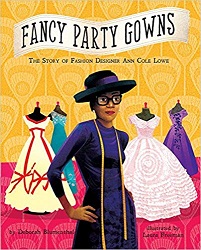
Review of Thick as Thieves audiobook, by Megan Whalen Turner, performed by Steve West

Thick as Thieves

by Megan Whalen Turner
performed by Steve West

HarperAudio, 2017. 8.75 hours on 7 discs.
Starred Review

This is now the third time I’ve read Thick as Thieves, and I don’t get tired of it. As with all of Megan Whalen Turner’s books, I discovered a few more nuances each time.

But the audiobook version has the advantage of being read by my new narrator-crush, Steve West, discovered when he read Strange the Dreamer. I could (and do) listen to his voice for hours. He delineates the characters well with different voices. Although the audio version doesn’t have a map, I didn’t feel like it was dragging as I listened to his narration – it made each episode that much more interesting.

And there’s probably not much more I need to say. This is the fifth book in one of my very favorite series. It’s got adventure and danger and characters you root for. And has an outstanding narrator as well. I do recommend reading the books in order, beginning with The Thief, but let me say that they also make outstanding family listening.

harperaudio.com

Buy from Amazon.com

Find this review on Sonderbooks at: www.sonderbooks.com/Teens/thick_as_thieves_audio.html

Disclosure: I am an Amazon Affiliate, and will earn a small percentage if you order a book on Amazon after clicking through from my site.

Source: This review is based on a library audiobook from Fairfax County Public Library.

Disclaimer: I am a professional librarian, but I maintain my website and blogs on my own time. The views expressed are solely my own, and in no way represent the official views of my employer or of any committee or group of which I am part.

What did you think of this book?
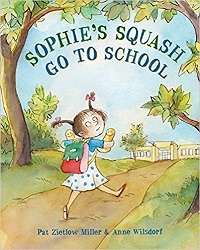
Review of Echo, by Pam Muñoz Ryan

Echo

by Pam Muñoz Ryan

read by Mark Bramhall, David de Vries, Macleod Andrews, and Rebecca Soler
music performed by Corky Siegel

Scholastic Audiobooks, 2016. 10 hours, 22 minutes, on 9 compact discs.
Starred Review
2016 Newbery Honor Book
2016 Odyssey Honor Audiobook

This is an amazing audiobook production.

The story is about an enchanted harmonica. The prologue tells of a boy lost in the woods in Germany who learns about the sisters whose spirit enchants the harmonica, and who entrust it into his care.

Then the main part of the book gives us three stories – first a boy in Germany with a musical gift but with a birthmark on his face that makes him seen as less than perfect and in danger in Hitler’s Germany. The second story is about two brothers in Pennsylvania at an orphanage after their grandmother became too frail to care for them. Mike is a talented piano player, and it seems they have a chance of a home, but something is wrong. Perhaps he can join the harmonica band that’s auditioning for new members. Then Ivy, in California, has to move to a new home, where children of Mexican heritage aren’t allowed to go to school with the other children. But she can join the orchestra.

The three stories are told completely separately, with a different narrator for each part. What they have in common is that all involve a harmonica with an especially beautiful tone that has a red M painted on it. The three stories come together in an episode at the end, and then we get an epilogue to tell a little more about the story of the boy and the three sisters who sent the harmonica out into the world.

The book is good, and won Newbery Honor. Each story has some punch to it, and each child has reason to need the encouragement that comes through the harmonica.

The audio production is exceptional! There is harmonica music throughout, as well as piano music when that’s part of the story. It adds so much to hear the songs being played.

Some producers might not have dared to add harmonica music when the text is raving about the harmonica’s glorious tone. But for the most part, the music played went perfectly with what was described. For several of the songs, they added a singer, which I wasn’t completely happy with – but that was a way to let the listener know the words, which was a nice addition for the child listener. Even though I know the words to songs such as “Brahm’s Lullaby” and “The Battle Hymn of the Republic” and “When Johnny Comes Marching Home,” an unobtrusive way to include them for kids was to have a voice along with the harmonica playing.

This is definitely a book that has much value added in audio form! A delightful listening experience.

scholastic.com

Buy from Amazon.com

Find this review on Sonderbooks at: www.sonderbooks.com/Childrens_Fiction/echo.html

Disclosure: I am an Amazon Affiliate, and will earn a small percentage if you order a book on Amazon after clicking through from my site.

Source: This review is based on a library audiobook from Fairfax County Public Library.

Disclaimer: I am a professional librarian, but I maintain my website and blogs on my own time. The views expressed are solely my own, and in no way represent the official views of my employer or of any committee or group of which I am part.

What did you think of this book?
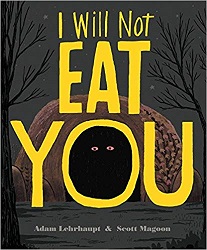
Review of Sinners in the Hands of a Loving God, by Brian Zahnd

Sinners in the Hands of a Loving God

The Scandalous Truth of the Very Good News

by Brian Zahnd

Waterbrook, 2017. 209 pages.
Starred Review

Before I’d even finished this book, I was recommending it to people as a lovely and wonderful explanation of theology of the cross that I can get behind. It’s a compassionate outlook about a loving God, not a God who’s going to blast people.

Then I read the author’s interpretation of Revelation, and I’m not sure I’m still as enthusiastic. Basically, he says that everything in Revelation is symbolic – and believes a lot of it was for that time and has already happened. I’m not sure if I agree with this take – but I’m going to have to do some reading and thinking about Revelation.

Now, I’d thought the book was about universalism when I ordered it from Amazon. It’s not, though these teachings are very compatible with universalism. The author mentions universalism but says he just doesn’t know.

However, all that said – this explanation of the theology of the cross is indeed Very Good News.

Here’s an example from the first chapter:

What I want you to know is that God’s attitude, God’s spirit, toward you is one of unwavering fatherly-motherly love. You have nothing to fear from God. God is not mad at you. God has never been mad at you. God is never going to be mad at you. And what about the fear of God? The fear of God is the wisdom of not acting against love. We fear God in the same way that as a child I feared my father. I had the good fortune to have a wise and loving father, and I had deep respect, reverence, admiration, and, perhaps, a kind of fear for my father, but I never for one moment thought that my dad hated me or would harm me. God does not hate you, and God will never harm you. But your own sin, if you do not turn away from it, will bring you great harm. The wisdom that acknowledges this fact is what we call the fear of God. Sin is deadly, but God is love.

I know some will be quick to remind me that the writer of Hebrews tells us, “It is a fearful thing to fall into the hands of the living God.” And no doubt it is. In the hands of God, there is no place to hide. We have to be honest with ourselves about ourselves. In the hands of God, we can no longer live in the disguise of our lies. In the hands of God, we have to face ourselves. And that can be terrifying. When the prodigal son returned home and fell into the arms of his father, I’m sure the boy felt afraid. We can tell by how he immediately speaks of his unworthiness: “I am no longer worthy to be called your son.” This wayward son has fallen into the hands of his father; his fate is in his father’s hands . . . and he is afraid. But there is no better place to be! This gracious father in Jesus’s parable is given to us as a picture of our heavenly Father! When the prodigal son fell fearfully into the hands of his father, forgiveness, healing, and restoration began. Just because the prodigal son felt fear as he fell into his father’s hands doesn’t mean he had anything to fear from his father. In his father’s hands was the only safe place to be. It was in the far country that the prodigal son was in danger, not in his father’s hands. When we fall into the hands of the living God, we are sinners in the hands of a loving God.

He does get his theology from the Bible, but has this word of caution:

We need to understand that the Bible is not an end in itself. The Bible is a means to an end but not the end itself. Jesus said it this way: “You search the Scriptures because you think they give you eternal life. But the Scriptures point to me!” If we see the Bible as an end in itself instead of an inspired witness pointing us to Jesus, it will become an idol. Idols are gods we can manage according to our own interests. If we want to make the Bible our final authority, which is an act of idolatry, we are conveniently ignoring the problem that we can make the Bible say just about whatever we want. In doing this we bestow a supposed divine endorsement upon our already established opinion. The historical examples of this are nearly endless; crusaders, slaveholders, and Nazis have all proved themselves adept at bolstering their ideologies with images drawn from the Bible.

About the cross itself, here is an example of his teaching:

The cross is not a picture of payment; the cross is a picture of forgiveness. Good Friday is not about divine wrath; Good Friday is about divine love. Calvary is not where we see how violent God is; Calvary is where we see how violent our civilization is. The justice of God is not retributive; the justice of God is restorative. Justice that is purely retributive changes nothing. The cross is not where God finds a whipping boy to vent his rage upon; the cross is where God saves the world through self-sacrificing love. The only thing God will call justice is setting the world right, not punishing an innocent substitute for the petty sake of appeasement.

So was the death of Jesus a sacrifice? Yes, the death of Jesus was indeed a sacrifice. But it was a sacrifice to end sacrificing, not a sacrifice to appease an angry and retributive god. Jesus sacrificed himself to the love of God manifest in forgiveness, not to the wrath of God for the satisfaction of vengeance.

There’s more here. As I said, I’m not sure yet what I think about his interpretation of the book of Revelation. But so much of this book is thoroughly encouraging and uplifting, I do heartily recommend taking a look.

waterbrookmultnomah.com

Buy from Amazon.com

Find this review on Sonderbooks at: www.sonderbooks.com/Nonfiction/sinners_in_the_hands_of_a_loving_god.html

Disclosure: I am an Amazon Affiliate, and will earn a small percentage if you order a book on Amazon after clicking through from my site.

Source: This review is based on a library book from Fairfax County Public Library.

Disclaimer: I am a professional librarian, but I maintain my website and blogs on my own time. The views expressed are solely my own, and in no way represent the official views of my employer or of any committee or group of which I am part.

What did you think of this book?
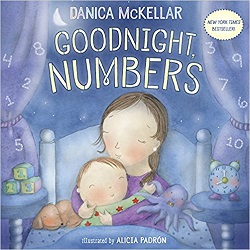
Review of Read the Book, Lemmings! by Ame Dyckman, illustrated by Zachariah OHora

Read the Book, Lemmings!

by Ame Dyckman
illustrated by Zachariah OHora

Little, Brown and Company, 2017. 36 pages.
Starred Review

This book simply makes me laugh. Ame Dyckman and Zachariah OHora know exactly how to hit my funny bone.

The end papers at the front of this book set us up. We’re in the Arctic, with several icebergs in view. A small one in front has a big sign, which says:

lemmings: small, fuzzy, illiterate rodents who share the icy North with arctic foxes and polar bears. People used to think lemmings jumped off cliffs. Now we know they don’t.

High on top of a nearby icy cliff, we see three little furry creatures. One is jumping off and saying, “Wonder what that says.”

The next is saying, “Me too!”

And the third is saying, “Ditto!”

The first page gets us right into the action. We see a ship made out of a big black whale. On its deck are a polar bear and an arctic fox, dressed as captain and crew of the ship. The three lemmings are now on deck, too, close to the edge.

Foxy found a quiet spot to read his book about lemmings. “Huh!” Foxy said. “Says here, lemmings don’t jump off cliffs.

“Jump? I’ll jump!” said a lemming.

“Me too!” said a second.

“Ditto!” said a third.

The next page shows them jumping: GERONIMO-O-O-O-O!

And that’s what the book is about. Foxy saves them after they jump into the water. He tries to get them to read the book about lemmings. But any time someone says, “Jump” – they do.

Finally, Foxy and Captain PB figure out that the lemmings don’t know how to read, although Ditto can burp the alphabet. So Foxy teaches the lemmings to read, and they learn that lemmings don’t jump off cliffs!

Of course, they do find a new way to get into trouble.

The fun of this book is the slapstick humor of the lemmings flinging themselves off cliffs and Foxy continuing to save them. The illustrations give us lots of humor and lots of variety – turning sideways at times to show us how far they’re falling. Of course, the endpapers at the back feature that same sign – modified.

I do love the Author’s Note at the back:

When I was little, I saw a movie that showed lemmings jumping off cliffs. Years later, I learned that, except in very rare cases, lemmings DON’T jump off cliffs. My first thought was, “OH NO! DID ANYONE TELL THE LEMMINGS?!” So, we made this book. You’re welcome, lemmings.

Good, silly fun.

zohora.com
lb-kids.com

Buy from Amazon.com

Find this review on Sonderbooks at: www.sonderbooks.com/Picture_Books/read_the_book_lemmings.html

Disclosure: I am an Amazon Affiliate, and will earn a small percentage if you order a book on Amazon after clicking through from my site.

Source: This review is based on a library book from Fairfax County Public Library.

Disclaimer: I am a professional librarian, but I maintain my website and blogs on my own time. The views expressed are solely my own, and in no way represent the official views of my employer or of any committee or group of which I am part.

What did you think of this book?
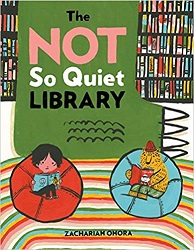
Review of Welcome, by Mo Willems

Welcome

A Mo Willems Guide for New Arrivals

by Mo Willems

Disney Book Group, 2017. 28 pages.
Starred Review

Yay! I have been invited to a baby shower, so I have a reason to purchase this book! I actually read it last year when visiting my newborn niece, but I didn’t have a chance to write a review. Now I’ve been enjoying the book before I wrap it up….

What I need to do is simply urge you to read this book. It’s brilliant. You will enjoy it.

I’ll say a little bit about it. It’s written as a sort of travel guide for a new baby, telling them what to expect. The illustrations are essentially icons, as found in manuals. It’s funny and charming.

A wonderful touch is that most pages end with the words “while we read this book together.”

Here’s a nice page at the start:

PLEASE ENJOY YOUR STAY

Many activities are available for you to enjoy,
including, but not limited to:

SLEEPING and WAKING,
EATING and BURPING,
POOPING and MORE POOPING.
[All the capitalized words have icons on the facing page.]

Other options are available upon request
and will be updated on a regular basis.

Of our current offerings, I can personally recommend
your being right here with me . . .

while we read this book together.

And here’s a nice page at the end:

CONDITIONS MAY VARY

We will strive to make your stay
as comfortable as possible. However . . .

There will be TURBULENCE.
There will be UNEXPECTED EVENTS.
There will be HUMAN ERROR.

Fortunately, we are happy to provide you LOVE

At no extra cost.

A warm and delightful book that tells newcomer what they can expect out of life, and that they have people standing by 24 hours a day, 7 days a week, to provide Love.

May this book get many chances to be read child and parent together.

pigeonpresents.com
hyperionbooksforchildren.com

Buy from Amazon.com

Find this review on Sonderbooks at: www.sonderbooks.com/Picture_Books/welcome.html

Disclosure: I am an Amazon Affiliate, and will earn a small percentage if you order a book on Amazon after clicking through from my site.

Source: This review is based on a book I purchased via Amazon.com to give away.

Disclaimer: I am a professional librarian, but I maintain my website and blogs on my own time. The views expressed are solely my own, and in no way represent the official views of my employer or of any committee or group of which I am part.

What did you think of this book?
Review of The Willpower Instinct, by Kelly McGonigal

The Willpower Instinct

How Self-Control Works, Why It Matters, and What You Can Do to Get More of It

by Kelly McGonigal, Ph.D.

Avery (Penguin), 2012. 275 pages.
Starred Review

A big thank you to my friend Kevin, who recommended this book to me more than once. When Kevin out-librarianed me and recommended it to someone else as among three books that help build leadership skills, I finally took note enough to put it on hold.

This book is similar to The Four Tendencies, by Gretchen Rubin, in that both talk about motivation and getting done the things you want to do, but The Willpower Instinct is more helpful and more comprehensive. Although The Four Tendencies has the fun side of trying to tell you something about yourself, The Willpower Instinct is more science-based, and everyone will find insights about willpower that they can use among this wealth of material.

The Four Tendencies made me think, “I’m an Upholder! I will do what I want to do!” The Willpower Instinct showed me exactly how I fool myself. For example, I learned about moral licensing and why thinking about getting up in the morning makes me feel like I can reward myself by falling back asleep.

Kelly McGonigal teaches a popular class on the science of willpower at Stanford. She offers actual science about the various self-control challenges we face.

Here’s a section from the first chapter where she explains the three parts of willpower and where she’ll go in talking about it:

“I will” and “I won’t” power are the two sides of self-control, but they alone don’t constitute willpower. To say no when you need to say no, and yes when you need to say yes, you need a third power: the ability to remember what you really want. I know, you think that what you really want is the brownie, the third martini, or the day off. But when you’re facing temptation, or flirting with procrastination, you need to remember that what you really want is to fit into your skinny jeans, get the promotion, get out of credit card debt, stay in your marriage, or stay out of jail. Otherwise, what’s going to stop you from following your immediate desires? To exert self-control, you need to find your motivation when it matters. This is “I want” power.

Willpower is about harnessing the three powers of I will, I won’t, and I want to help you achieve your goals (and stay out of trouble). As we’ll see, we human beings are the fortunate recipients of brains that support all of these capacities. In fact, the development of these three powers – I will, I won’t, and I want – may define what it means to be human. Before we get down to the dirty business of analyzing why we fail to use these powers, let’s begin by appreciating how lucky we are to have them. We’ll take a quick peek into the brain to see where the magic happens, and discover how we can train the brain to have more willpower. We’ll also take our first look at why willpower can be hard to find, and how to use another uniquely human trait – self-awareness – to avoid willpower failure.

Since self-awareness does help avoid willpower failure, reading this book, and learning the ways we trick ourselves, is a great way to build that self-awareness.

Here are some of the things that struck me as I read this book:

In the section on the physiology of self-control, we learn that in today’s world, we need a pause-and-plan response more than a fight-or-flight response.

The pause-and-plan response puts your body into a calmer state, but not too sedate. The goal is not to paralyze you in the face of internal conflict, but to give you freedom. By keeping you from immediately following your impulses, the pause-and-plan response gives you the time for more flexible, thoughtful action. From this state of mind and body, you can choose to walk away from the cheesecake, with both your pride and your diet intact.

We also learn that willpower is a muscle. It can be strengthened with exercise, but can also grow tired. When our body has energy, it will do better. There’s even a physical test – heart rate variability – which you can use to predict who will resist temptation and who will give in. The author has plenty of ideas for how you can build up your physical willpower reserve.

Then there is the chapter on moral licensing.

When you do something good, you feel good about yourself. This means you’re more likely to trust your impulses – which often means giving yourself permission to do something bad….

Moral licensing doesn’t just give us permission to do something bad; it also lets us off the hook when we’re asked to do something good. For example, people who first remember a time when they acted generously give 60 percent less money to a charitable request than people who have not just recalled a past good deed. In a business simulation, managers of a manufacturing plant are less likely to take costly measures to reduce the plant’s pollution if they have recently recalled a time when they acted ethically. . . .

Another study found that merely considering donating money to a charity – without actually handing over any cash – increased people’s desire to treat themselves at the mall. Most generously, we even give ourselves credit for what we could have done, but didn’t. We could have eaten the whole pizza, but we only ate three slices. We could have bought a new wardrobe, but we made do with just a new jacket. Following this ridiculous line of logic, we can turn any act of indulgence into something to be proud of. (Feeling guilty about your credit card debt? Hey, at least you haven’t robbed a bank to pay it off!)

I liked this insight:

To avoid the moral licensing trap, it’s important to separate the true moral dilemmas from the merely difficult. Cheating on your taxes or your spouse may be morally flawed, but cheating on your diet is not a mortal sin. And yet, most people think of all forms of self-control as a moral test. Giving in to dessert, sleeping late, carrying a credit card balance – we use them to determine whether we are being good or bad. None of these things carry the true weight of sin or virtue. When we think about our willpower challenges in moral terms, we get lost in self-judgments and lose sight of how those challenges will help us get what we want.

Another chapter talks about how attracted we are to the promise of reward – even if the reward itself doesn’t turn out to be all that wonderful. And she discusses how retailers use this to manipulate us. Make us think we’re “saving,” and we’ll spend more! But she also suggests using this on yourself – come up with a reward for your “I will” challenge, and “dopamize” the task. Suddenly, it will be much more attractive.

But another thing that leads to giving in is feeling bad.

Why does stress lead to cravings? It’s part of the brain’s rescue mission. Previously, we saw how stress prompts a fight-or-flight response, a coordinated set of changes in the body that allows you to defend yourself against danger. But your brain isn’t just motivated to protect your life – it wants to protect your mood, too. So whenever you are under stress, your brain is going to point you toward whatever it thinks will make you happy. Neuroscientists have shown that stress – including negative emotions like anger, sadness, self-doubt, and anxiety – shifts the brain into a reward-seeking state. You end up craving whatever substance or activity your brain associates with the promise of reward, and you become convinced that the “reward” is the only way to feel better.

This same chapter explains why guilt is not a good motivation to change, and why berating yourself for past failures doesn’t help.

Whatever the willpower challenge, the pattern is the same. Giving in makes you feel bad about yourself, which motivates you to do something to feel better. And what’s the cheapest, fastest strategy for feeling better? Often the very thing you feel bad about.

What’s more, when experimenters gave subjects the message not to be too hard on themselves, that everyone indulges sometimes – encouraging them to forgive themselves – subjects were far less likely to overindulge in the next part of the test.

If you think that the key to greater willpower is being harder on yourself, you are not alone. But you are wrong. Study after study shows that self-criticism is consistently associated with less motivation and worse self-control. It is also one of the single biggest predictors of depression, which drains both “I will” power and “I want” power. In contrast, self-compassion – being supportive and kind to yourself, especially in the face of stress and failure – is associated with more motivation and better self-control. Consider, for example, a study at Carleton University in Ottawa, Canada, that tracked the procrastination of students over an entire semester. Lots of students put off studying for the first exam, but not every student made it a habit. Students who were harder on themselves for procrastinating on their first exam were more likely to procrastinate on later exams than students who forgave themselves. The harder they were on themselves about procrastinating the first time, the longer they procrastinated for the next exam! Forgiveness – not guilt – helped them get back on track.

These findings fly in the face of our instincts. How can this be, when so many of us have a strong intuition that self-criticism is the cornerstone of self-control, and self-compassion is a slippery slope to self-indulgence? What would motivate these students if not feeling bad for procrastinating the last time? And what would keep us in check if we didn’t feel guilty for giving in?

Surprisingly, it’s forgiveness, not guilt, that increases accountability. Researchers have found that taking a self-compassionate point of view on a personal failure makes people more likely to take personal responsibility for the failure than when they take a self-critical point of view. They also are more willing to receive feedback and advice from others, and more likely to learn from the experience.

Another chapter looks at our tendency to believe Future Me will take care of whatever challenges come their way. It gives us some strategies for delaying gratification for a bigger reward.

Another chapter looks at how Willpower is contagious, and ways you can use this to your advantage. (Okay, maybe the people that Gretchen Rubin calls “Obligers” will benefit most from this chapter.) But yes, telling someone about your goals – or being around other people who meet goals – will help you meet those goals.

And the final chapter, “Don’t Read This Chapter,” looks at the specific challenges of willpower in “I won’t” situations. I thought this chapter was especially good for trying to eliminate thoughts you don’t want to bother you. I have a friend who had a tendency to scold me when I spent too much time thinking about my ex-husband, for example. (Thankfully, this problem is long past, but there are still times I want to change where my thoughts are going.)

This chapter confirms that self-scolding simply makes you think all the more about the forbidden thoughts.

Trying not to think about something guarantees that it is never far from your mind. This leads to a second problem: When you try to push a thought away, and it keeps coming back to your mind, you are more likely to assume that it must be true. Why else would the thought keep resurfacing? We trust that our thoughts are important sources of information. When a thought becomes more frequent and harder to pull yourself away from, you will naturally assume that it is an urgent message that you should pay attention to.

The solution is elegant and practical:

How can you find your way out of this confounding dilemma? Wegner suggests an antidote to ironic rebound that is, itself, ironic: Give up. When you stop trying to control unwanted thoughts and emotions, they stop controlling you. Studies of brain activation confirm that as soon as you give participants permission to express a thought they were trying to suppress, that thought becomes less primed and less likely to intrude into conscious awareness. Paradoxically, permission to think a thought reduces the likelihood of thinking it.

This solution turns out to be useful for a surprisingly wide range of unwanted inner experiences. The willingness to think what you think and feel what you feel – without necessarily believing that it is true, and without feeling compelled to act on it – is an effective strategy for treating anxiety, depression, food cravings, and addiction. As we consider the evidence for each, we’ll see that giving up control of our inner experiences gives us greater control over our outer actions.

So those are some of the points that stood out for me in reading this book. (I hope by writing out lots of quotations, I’ll be more likely to remember them.) Here’s a summarizing paragraph from the last chapter:

If there is a secret for greater self-control, the science points to one thing: the power of paying attention. It’s training the mind to recognize when you’re making a choice, rather than running on autopilot. It’s noticing how you give yourself permission to procrastinate, or how you use good behavior to justify self-indulgence. It’s realizing that the promise of reward doesn’t always deliver, and that your future self is not a superhero or a stranger. It’s seeing what in your world – from sales gimmicks to social proof – is shaping your behavior. It’s staying put and sensing a craving when you’d rather distract yourself or give in. It’s remembering what you really want, and knowing what really makes you feel better. Self-awareness is the one “self” you can always count on to help you do what is difficult, and what matters most. And that is the best definition of willpower I can think of.

I highly recommend this book, if you have willpower challenges, or even if you think you don’t. There are many more ideas and many more descriptions of fascinating studies all about doing what we really want to do.

kellymcgonigal.com

Buy from Amazon.com

Find this review on Sonderbooks at: www.sonderbooks.com/Nonfiction/willpower_instinct.html

Disclosure: I am an Amazon Affiliate, and will earn a small percentage if you order a book on Amazon after clicking through from my site.

Source: This review is based on a library book from Fairfax County Public Library.

Disclaimer: I am a professional librarian, but I maintain my website and blogs on my own time. The views expressed are solely my own, and in no way represent the official views of my employer or of any committee or group of which I am part.

What did you think of this book?