Review of Coyote Lost and Found, by Dan Gemeinhart

Coyote Lost and Found

by Dan Gemeinhart

Henry Holt and Company, 2024. 275 pages.
Review written April 29, 2024, from a library book.
Starred Review

This book is a follow-up to the amazing and wonderful book The Remarkable Journey of Coyote Sunrise, and the sequel is equally amazing and wonderful. I think you can enjoy the second book without reading the first, but why would you? If you have not read the book that introduces us to Coyote and her dad Rodeo, please do so as soon as possible!

As this book opens, Coyote and Rodeo have been settled down in a small town in Oregon for about a year. Coyote hasn’t exactly fit in well at her new school. And in her spare time, she likes to hang out in their old bus, Yager.

Then, one day, Coyote makes a momentous discovery. Fallen behind a bookcase, she finds a special box. And that box has her mother’s ashes in it. Coyote’s mother and her big sister and little sister all died in a car accident before the events of the first book, and those deaths were what prompted Rodeo to hit the road with Coyote. When Coyote confronts Rodeo with her discovery, he said that yes, they buried her sisters, but her mother had wanted to be cremated, and she had told Rodeo the location where he should bury her ashes in one of her favorite books.

But when Coyote goes to find the book — it isn’t there. She’s sure it was one of the books she dropped off at a thrift store somewhere on their journey last summer. But she doesn’t have the heart to tell Rodeo. One thing leads to another, and they set out again in Yager. Rodeo thinks that Coyote’s mom set them a journey, but Coyote is going back to the thrift shops from last summer, particularly the four she wasn’t able to reach by phone.

And the journey is much like the first one. Again, they pick up fellow travelers along the way. Again, they get into adventures both humorous and poignant. And again, they’re dealing with the past, but learning to look forward to the future.

This book wrenched my heart in all the best ways. You can’t find better travel companions anywhere than Coyote and Rodeo.

dangemeinhart.com
mackids.com

Buy from Amazon.com

Find this review on Sonderbooks at: www.sonderbooks.com/Childrens_Fiction/coyote_lost_and_found.html

Disclosure: I am an Amazon Affiliate, and will earn a small percentage if you order a book on Amazon after clicking through from my site.

Disclaimer: I am a professional librarian, but the views expressed are solely my own, and in no way represent the official views of my employer or of any committee or group of which I am part.

What did you think of this book?
Review of The Gift, by Edith Eger

The Gift

12 Lessons to Save Your Life

by Dr. Edith Eger
with Esmé Schwall Weigand

Scribner, 2020. 195 pages.
Review written July 15, 2021, from a library book
Starred Review

Edith Eger is a doctor of psychology and a Holocaust survivor. So when she fills a book with life lessons, she can use examples from her own life and from her patients’ lives. And you know the lessons will be helpful, even in extreme situations.

The subtitles of the twelve chapters tell you what major life issues each lesson deals with: Victimhood, Avoidance, Self-Neglect, Secrets, Guilt and Shame, Unresolved Grief, Rigidity, Resentment, Paralyzing Fear, Judgment, Hopelessness, and Not Forgiving. Her lessons and stories are practical and pointed. For example, the chapter about Judgment is titled “The Nazi In You,” and she talks about meeting an American teen in the 1980s who was wearing a brown shirt and brown boots and ranting about killing Jews and others and making America white again. She took a deep breath and said, “Tell me more.”

It was a tiny gesture of acceptance – not of his ideology, but of his personhood. And it was enough for him to speak a little of his lonely childhood, absentee parents, and severe neglect. Hearing his story reminded me that he hadn’t joined an extremist group because he was born with hate. He was seeking what we all want: acceptance, attention, affection. It’s not an excuse. But attacking him would only nourish the seeds of worthlessness his upbringing had sown. I had the choice to alienate him further, or give him another version of refuge and belonging.

Another bit I like is her tip in the chapter on hopelessness: “Don’t cover garlic with chocolate.”

It’s tempting to confuse hope with idealism, but idealism is just another form of denial, a way of evading a true confrontation with suffering. Resiliency and freedom don’t come from pretending away our pain. Listen to the way you talk about a hard or hurtful situation. It’s okay. It’s not that bad. Others have it so much worse. I don’t have anything to complain about. Everything will work out in the end. No pain, no glory! The next time you hear yourself using the language of minimization, delusion, or denial, try replacing the words with “It hurts. And it’s temporary.” Remind yourself, “I’ve survived pain before.”

I also appreciated the insight in the chapter, “There’s No Forgiveness Without Rage.” I’ve seen that in other books, with explanations of how you need to admit there’s pain and wrongdoing before you can forgive it. You need to feel the hurt rather than dismiss it. This idea There’s no forgiveness without rage. is even simpler.

Those are just a few examples of the hard-won wisdom found in this book, told with warmth and love.

dreditheger.com
SimonandSchuster.com

Buy from Amazon.com

Find this review on Sonderbooks at: www.sonderbooks.com/Nonfiction/gift.html

Disclosure: I am an Amazon Affiliate, and will earn a small percentage if you order a book on Amazon after clicking through from my site.

Disclaimer: I am a professional librarian, but the views expressed are solely my own, and in no way represent the official views of my employer or of any committee or group of which I am part.

What did you think of this book?
Review of Nature’s Ninja, by Rebecca L. Johnson

Nature’s Ninja

Animals with Spectacular Skills

by Rebecca L. Johnson

Millbrook Press, 2020. 48 pages.
Review written May 1, 2020, from a library book
Starred Review

This book was made to be booktalked to elementary age kids! I wish we were doing in-person booktalks this year, but I’m going to make a note to myself to be sure to include this book next year.

The book presents nine ninja skills, with their Japanese names, and then nine animals that demonstrate those skills in amazing ways.

I also want to say that books about animals with strange characteristics are a booktalking staple, but I hadn’t heard about any of these abilities before, except maybe the sticky feet of the gecko – but I didn’t know why they are so sticky, or about their microscopic suction cups.

The most striking skill to me was the same one the author said prompted her to write the book — shuriken-jutsu, Ninja throwing stars. It turns out that the collector sea urchin throws small parts of itself at predators. They’re shaped like mini-throwing stars, and they open and close their jaws to bite a would-be attacker.

Other animal ninjas include the sailfish with its sword-wielding skills, the alkali fly and its ability to stay dry underwater, ground spiders with their abilities to throw web silk to attack, and fish-scale geckos that easily escape by releasing their scales and skin.

Each chapter features a ninja skill and an animal or animals that demonstrate the skill. Then in “The Science Behind the Story,” we learn how scientists discovered this animal’s amazing abilities.

This book is short at only 48 pages, but it packs a lot of surprising science.

rebeccajohnsonbooks.com
lernerbooks.com

Buy from Amazon.com

Disclosure: I am an Amazon Affiliate, and will earn a small percentage if you order a book on Amazon after clicking through from my site.

Source: This review is based on a library book from Fairfax County Public Library.

Disclaimer: I am a professional librarian, but the views expressed are solely my own, and in no way represent the official views of my employer or of any committee or group of which I am part.

What did you think of this book?
*Note* To try to catch up on posting reviews, I’m posting the oldest reviews I’ve written on my blog without making a page on my main website. They’re still good books.

Review of Dragonfruit, by Makiia Lucier

Version 1.0.0
Dragonfruit

by Makiia Lucier
read by Mapuana Makia

Clarion Books, 2024. 8 hours, 12 minutes.
Review written April 29, 2024, from a library eaudiobook.
Starred Review

Makiia Lucier is a relatively new fantasy author I’m watching closely. I read her second book when I was on the Newbery committee, but it was for young adults, so I took note but I had to keep quiet about books I was reading at that time. Then later her book Year of the Reaper was a Cybils Finalist, and I was impressed with the way it handled a population traumatized by plague and war. I snapped up this new book, and got something completely different – a fantasy set in a tropical island world.

This story features 18-year-old Hanalei, whose father fled with her from the island of Tamarind ten years ago, and 19-year-old Samahtitamahenele, Sam, the prince of Tamarind. But the crown passes only to women, Sam’s grandmother is getting old, and his mother has been in a coma for ten years. So Sam needs to find a wife. But more than that, Sam is searching for Dragonfruit – the eggs of a sea dragon. The eggs of a sea dragon, dragonfruit, are said to have the power to undo a person’s greatest sorrow. But with that hope comes a warning: Every wish demands a price.

Ten years ago, Hanalei had been a page at court, and she had eaten the same poison that still keeps Sam’s mother asleep. When dragonfruit was found, her father stole it and fed it to Hana instead of leaving it for the princess. And then fled the queendom with Hana. Hana did recover, but a few days later, her father died. She’s had a hard life since then, working in the factories that process the valuable body parts of sea dragons until she was fourteen, when her hands got too big. Since that time, Hana has been studying sea dragons, sending information to the academy on the largest island.

But as the book opens, Hana warns a set of dragons so they can escape the dragoners ready to kill them. Two of the dragons escape, but Hanalei doesn’t. However, they all see by the color of the frill that this dragon is pregnant, soon to lay eggs.

Further adventures bring her back to Tamaraind. Now Sam, too, is looking for the Dragonfruit, to at last wake his mother. But so is the ruthless dragoner. And what will the price of the wish be?

The setting of this book is delightful. Some additional magic of their island is many of the teens on the island develop magical tattoos of an animal. That animal can move around on their skin and even materialize off their skin in the real world, a companion who communicates with them and is always close at hand.

There’s a gentle romance in this book – indeed, I expected more drama than I got – and no sex at all, so it feels completely appropriate for younger teens, too. Hana and Sam are almost adults and it is a coming of age book, so older teens are the main audience. The book ended at a good place, but I can’t help hoping more stories are coming about this lovely island world, the sea dragons, and these two characters coming into their own.

makiialucier.com
EpicReads.com

Buy from Amazon.com

Find this review on Sonderbooks at: www.sonderbooks.com/Teens/dragonfruit.html

Disclosure: I am an Amazon Affiliate, and will earn a small percentage if you order a book on Amazon after clicking through from my site.

Disclaimer: I am a professional librarian, but the views expressed are solely my own, and in no way represent the official views of my employer or of any committee or group of which I am part.

What did you think of this book?
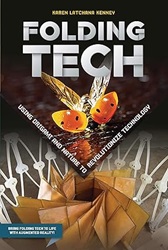
Review of The Enigma Girls, by Candace Fleming

The Enigma Girls

How Ten Teenagers Broke Ciphers, Kept Secrets, and Helped Win World War II

by Candace Fleming

Scholastic Focus, 2024. 371 pages.
Review written April 29, 2024, from a library book.
Starred Review

We’ve all heard stories about Alan Turing breaking the Enigma code in World War II, right? But did you know that literally thousands of girls under the age of 21 were also involved in monitoring enemy communications during World War II?

In this book, the title tells us that we’re tracking ten of those teenage girls, but honestly my one quibble with the book was that I couldn’t keep them straight at all. She was still introducing new characters toward the end of the book. But what made the book amazing despite that was the picture it gave of code breaking and intelligence gathering as the war progressed and what a large operation it grew to be, and how important. And taking the perspective of teenage girls who worked in this field brings home how many ordinary people were caught up in the effort.

The book progresses chronologically. It sounds like early on, they’d figured out how Enigma worked. Every day the settings changed, so every day they’d work on breaking the code. Once the code was broken, the cryptographers moved on to something else, and they had machines where girls would type in the messages with the new settings, and decoded messages would come out.

Then later in the war, they used giant computers that were programmed by connecting and disconnecting actual wires. In another department they’d figure out the settings, then they had the girls set up and run the machine. Another department translated messages from German and Italian. Another department indexed the messages on 3×5 cards to be able to understand the messages better. Other girls were hired to check radio frequencies and listen for messages and transcribe what they heard. According to a chart, by the end of the war, 2,237 men and 6,758 women worked at Bletchley Park, and most of those women were under 21 years old.

This book makes all of that fascinating. I liked the short chapters with lots of photographs. Yes, it was hard to keep track of so many characters, but it did give the idea that many young women were working there, doing many different jobs. And they worked in total secrecy, unable to tell their family and friends what important war work they were doing. I was impressed that the Germans never knew that their codes had been broken, and the valuable intelligence gathered definitely helped win the war. I now very much want to visit the Bletchley Park Museum some day.

This book is written for kids ages 8 through 12, and I think older kids (and adults like me) will be intrigued by this story of ordinary young women using their talents to win a war.

candacefleming.com
scholastic.com/ScholasticFocus

Buy from Amazon.com

Find this review on Sonderbooks at: www.sonderbooks.com/Childrens_Nonfiction/enigma_girls.html

Disclosure: I am an Amazon Affiliate, and will earn a small percentage if you order a book on Amazon after clicking through from my site.

Disclaimer: I am a professional librarian, but the views expressed are solely my own, and in no way represent the official views of my employer or of any committee or group of which I am part.

What did you think of this book?
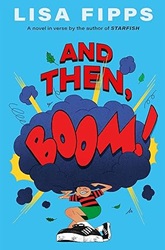
Review of Lucky Duck, by Greg Pizzoli

Lucky Duck

by Greg Pizzoli

Alfred A. Knopf, 2024. 40 pages.
Review written April 30, 2024, from a library book.
Starred Review

Lucky Duck has the feel of a classic picture with elements from the beginning that are important in the end. And it shows that luck is all in your perspective.

As the book opens, Susan Duck is complaining about her bad luck because the skates she ordered are two sizes too big.

But then a wolf comes to her door in a tuxedo proclaiming that it’s her lucky day! She’s won a big, shiny, new soup pot!

This gets Susan feeling lucky for a few hours – until her kitchen light bulb burns out. But then the wolf comes by and says she’s won lots of onions – perfect for making soup!

And so it continues. Susan Duck has a set of banal little things go wrong, making her feel unlucky. But after each one, the wolf comes by with another “prize” – which happen to be ingredients for soup.

The astute reader will figure out where this is going. But when the wolf declares himself ready for duck soup – suddenly each one of the things that went wrong works together to thwart the wolf in silly but effective ways.

And Susan Duck ends the day feeling lucky indeed.

This is the sort of picture book that makes me miss doing preschool storytimes. I can just hear the kids shouting warnings as I read it. Any kid who has this read to them is lucky indeed.

gregpizzoli.com
rhcbooks.com

Buy from Amazon.com

Find this review on Sonderbooks at: www.sonderbooks.com/Picture_Books/lucky_duck.html

Disclosure: I am an Amazon Affiliate, and will earn a small percentage if you order a book on Amazon after clicking through from my site.

Disclaimer: I am a professional librarian, but the views expressed are solely my own, and in no way represent the official views of my employer or of any committee or group of which I am part.

What did you think of this book?
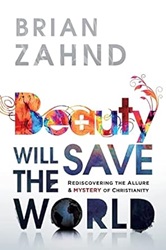
Review of Ink Knows No Borders, edited by Patrice Vecchione and Alyssa Raymond

Ink Knows No Borders

Poems of the Immigrant and Refugee Experience

edited by Patrice Vecchione and Alyssa Raymond
foreword by Javier Zamora
afterword by Emtithal Mahmoud

Seven Stories Press, 2019. 183 pages.
Review written May 18, 2020, from a library book
Starred Review

Ink Knows No Borders is a collection sixty-four poems by skilled poets with stellar credentials – who are all immigrants or children of immigrants and many have been refugees.

Our library has this in the young adult section, but there’s no reason old adults wouldn’t enjoy these poems as well.

There’s a wide variety in the poems – in style, form, and the ethnicity of the authors. But they’re all well-crafted poems, and they’re all hard-hitting. They each succeed in shining a light on one aspect of the immigrant experience. I had considered very few of these aspects before.

I read this book slowly, a poem or two per day. They made me think – and they helped me feel empathy for those who have had to leave their homes to come to America.

Here’s a bit of what the editors say at the front of the book:

Ink Knows No Borders celebrates the lives of immigrants, refugees, exiles, and their families, who have for generations brought their creative spirits, resilience and resourcefulness, determination and hard work, to make this land a home. They have come from the Philippines, Iran, Mexico, Russia, Vietnam, El Salvador, Sudan, Haiti, Syria, you name it. Enter the place of these poems, bordered only by the porousness of paper, and you’ll find the world’s people striving and thriving on American soil….

These poets know that the pen holds a secret, a secret that can only be uncovered by putting that pen to paper, in a crowded coffee shop or some solitary place, maybe in the middle of night or when the dawn won’t let you sleep, inspired, as you are, by birdsong or your own song. They know that “This story is mine to tell.” These lived stories, fire-bright and coal-hot acts of truth telling, are the poet’s birthright – and a human right.

Whether you were born in this country or another, whether you came here with the help of a “coyote,” crammed in a too-small boat, or with a visa and papers in order, whatever your skin color or first language may be, whomever you love, writing poems is a way to express your most authentic truths, the physical ache of despair, the mountaintop shout of your joy. Writing poetry will help you realize that you are stronger than you thought you were and that within your tenderness is your fortitude.

Not only does ink know no borders; neither does the heart.

patricevecchione.com
sevenstories.com

Buy from Amazon.com

Find this review on Sonderbooks at: www.sonderbooks.com/Teen_Nonfiction/ink_knows_no_borders.html

Disclosure: I am an Amazon Affiliate, and will earn a small percentage if you order a book on Amazon after clicking through from my site.

Source: This review is based on a library book from Fairfax County Public Library.

Disclaimer: I am a professional librarian, but the views expressed are solely my own, and in no way represent the official views of my employer or of any committee or group of which I am part.

What did you think of this book?
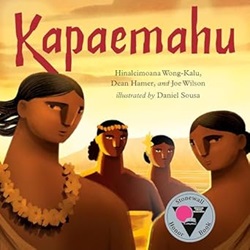
Review of The First Dinosaur, by Ian Lendler

The First Dinosaur

How Science Solved the Greatest Mystery on Earth

by Ian Lendler

Margaret K. McElderry Books (Simon & Schuster), 2019. 220 pages.
Review written May 29, 2020, from a library book
Starred Review

The First Dinosaur told all about the discovery and study of dinosaurs – how scientists finally figured out that giant creatures like nothing they’d ever seen before even existed. I had no idea the large number of people and long sequence of discoveries it took.

The main part of the book begins in 1676 in Oxfordshire, England, when a man named Dr. Plot discovered a large fossilized bone.

Humans have been wondering over fossils for thousands of years, but the reason this book starts with this particular fossil is because of what Dr. Plot did next.

He examined it closely. He measured and described it in detail (weight, size, composition). He even illustrated it . . . and then he recorded all this information in a book.

Plot may not have understood fossils, but because of this record we are able to look back and identify what it truly was – the thighbone of a megalosaur.

Plot had created the first scientific illustration and description of a dinosaur bone.

He didn’t come up with this idea on his own. It was one of the fundamental techniques of a new method of thinking that was spreading all over Europe at the time. Its name was Science, and it was the key to unraveling the mystery of “the formed stones.”

The book continues from there, talking about how fossil collections became popular, and eventually museums. Then people began to look more closely at these fossils they discovered. But through it all, a big obstacle was the idea that creatures might have lived long ago that are not alive on earth today.

There were many colorful figures involved in the new science of geology and eventually in paleontology. I like the story of William Buckland looking after a hyena to discover that they tore apart bones exactly the way that bones in a cave were torn apart – and their poo is shaped the same way as some strange rocks in the same cave.

I was surprised how many people it took to finally realize these bones belonged to a species not identified before, and to give them the name dinosaurs — and that was as recent as 1842.

The book finishes up by showing how dinosaurs captured the popular imagination with the Crystal Palace Exhibition and giant dinosaur replicas created by Waterhouse Hawkins.

This fascinating book gives a window into how science works and how sometimes visionaries have to think beyond what they’ve been taught. It also gives credit to those who changed their minds when the evidence showed them they were wrong.

simonandschuster.com/kids

Buy from Amazon.com

Disclosure: I am an Amazon Affiliate, and will earn a small percentage if you order a book on Amazon after clicking through from my site.

Source: This review is based on a library book from Fairfax County Public Library.

Disclaimer: I am a professional librarian, but the views expressed are solely my own, and in no way represent the official views of my employer or of any committee or group of which I am part.

What did you think of this book?
*Note* To try to catch up on posting reviews, I’m posting the oldest reviews I’ve written on my blog without making a page on my main website. They’re still good books.

Review of Max in the House of Spies, by Adam Gidwitz

Max in the House of Spies

A Tale of World War II

by Adam Gidwitz

Dutton Children’s Books, 2024. 320 pages.
Review written April 26, 2024, from a library book.
Starred Review

Here’s a World War II book that’s a whole lot of fun – not sure if I’ve ever said that before.

Max Bretzfeld is a Jewish boy born in Berlin, and in 1939, he got sent to England for his own safety from the Nazis. He is taken in by a rich Jewish family headed by Lord Montagu. But Max wants to get back to Berlin to protect his parents. In England, Max encounters more antisemitism and bullying at the snobbish private school where Lord Montagu’s children attend.

But what keeps this from being a sad story about an oppressed kid is that Max is a genius. He is clever with radios, he knows how to plan a serious prank, and he knows how to get the attention of Lord Montagu’s brother, who works for British Intelligence. Max wants to go back to Berlin to protect his parents – why not go as a spy?

Oh, and did I mention? Max has two immortal creatures sitting on his shoulders. A dybbuk and a kobold joined Max when he left Germany. Only Max can see them and talk with them. They are less than thrilled about him going back to Germany.

The majority of this book is about Max’s training to be a spy. It’s unorthodox training for an unorthodox spy. And yes, all along the way, the adults question their choice about sending a Jewish child back to Nazi Germany.

So what we end up with is a cross between a spy novel and The Great Brain. Like I said, a whole lot of fun. And the Author’s Note at the back reveals that he took great pains to get historical details right, and inserted many actual historical people into the tale.

The first page of this book is a wonderful introduction to Max, so I’m going to copy out the whole thing here:

Once there was a boy who had two immortal creatures living on his shoulders.

This was the fourth most interesting thing about him.

The first most interesting thing about Max – that was his name – was that he was a genius. He could make a working radio from the junk at the bottom of a trash can, and he could usually predict what someone was going to say ten minutes before they said it.

The second most interesting thing about Max was that, when he was eleven years old, his parents sent him away from Germany, where he was born and grew up, to England. All by himself. Even though he’d never been there, didn’t know anyone there, and barely spoke any English.

The third most interesting thing about Max was that, when he got to England, he fell in with spies. Real, honest-to-goodness spies. A lot of them.

And the fourth most interesting thing about him was that he had two immortal creatures living on his shoulders.

The story does not end with this volume, even though it comes to a good stopping place. I’m definitely hooked and want to find out what will happen to this resourceful kid next.

adamgidwitz.com
Penguin.com/kids

Buy from Amazon.com

Find this review on Sonderbooks at: www.sonderbooks.com/Childrens_Fiction/max_in_the_house_of_spies.html

Disclosure: I am an Amazon Affiliate, and will earn a small percentage if you order a book on Amazon after clicking through from my site.

Disclaimer: I am a professional librarian, but the views expressed are solely my own, and in no way represent the official views of my employer or of any committee or group of which I am part.

What did you think of this book?
Review of The 1619 Project, created by Nikole Hannah-Jones

The 1619 Project

A New Origin Story

created by Nikole Hannah-Jones
edited by Caitlin Roper, Ilena Silverman, and Jake Silverstein
read by a full cast

One World/Ballantine, 2021. 18 hours, 57 minutes.
Review written 2/4/24 from a library eaudiobook.
Starred Review

I have intended to read this book since the day it came out. Putting it in my eaudiobook queue was the key to it finally happening.

And it was so much more than I expected. Instead of one continuous book of history, this is a collection that includes eighteen essays about the significance of slavery to every part of American life combined with thirty-six poems and works of fiction highlighting key moments in our history.

This audiobook is the work of multiple authors and multiple narrators, all coming together in one epic tale.

Because of the multiple authors, the book turned out to be a little repetitive, but I learned a lot as I listened, and repetition probably helped me to retain what I heard. 1619 is the date that the first slave ship came to Virginia. This book talks about how slavery shaped our nation from the beginning, and continues to affect us from Reconstruction to the present. The essays, stories and poems help the reader understand that’s not at all a far-fetched claim.

I can see why white supremacists would want to erase this work of history with its conclusions. My own eyes were opened to historical events I was never taught about in school.

You don’t have to agree with everything you’ll find here, but surely this powerful voice should be heard. Surely this side of our joint history, too, should be illuminated. This book isn’t about silencing white voices. But it is about acknowledging the impact of Black people who were brought to our shores against their will and became uniquely American.

1619 Project Website

Buy from Amazon.com

Find this review on Sonderbooks at: www.sonderbooks.com/Nonfiction/1619_project.html

Disclosure: I am an Amazon Affiliate, and will earn a small percentage if you order a book on Amazon after clicking through from my site.

Disclaimer: I am a professional librarian, but the views expressed are solely my own, and in no way represent the official views of my employer or of any committee or group of which I am part.

What did you think of this book?