I love my job as a Children’s Librarian. I feel completely blessed to have it.
I was a math major in college. I did and still do love math. I’m definitely good at it. So you major in what you’re good at, right? Honestly, I don’t regret that decision. I also don’t regret getting my Master’s degree as soon as I finished my Bachelor’s. I don’t (really) regret that I dropped out of the PhD program I was in and “settled” for my Master’s.
When I got married as soon as I finished classes and had a baby one year later, being able to teach college math was a good skill to have. My husband, a musician, ended up joining the Air Force to have a nice steady job, and I followed him around the country, quickly finding a part-time job teaching night classes at a local community college at each place. I could take care of my son during the day, and my husband could be with him in the evenings when I was teaching.
So I can’t complain. But teaching math is definitely not what I love about math! And community college students do not tend to be there because they want to. And I am an introvert, so getting in front of the classes the first day of each semester was always a bit of an ordeal. (Wow! I just realized that now, 14 years after teaching my last class, it has been quite awhile since I last had a nightmare about having to start teaching a new course and not being prepared!)
When we moved to Germany in 1996, my husband got better pay (Cost of Living Allowance and Overseas Housing Allowance), so I was able to quit teaching, and I was thrilled. My second son was two years old at the time, and I loved being home with him.
Then a friend who was working at the base library went back to the States, and they split her job into two half-time positions. I almost didn’t apply, because I so enjoyed being at home, but then our car broke down and I realized that if we ever had to buy another car I would have to find a job. Why not apply for one I knew I would love?
So began my love relationship with libraries!
The job at Sembach Library was absolutely perfect for me. A small library, we kept losing librarians, and the positive side of that was I got to do more and more interesting things. My favorite was choosing the books to order for the Book Rental Collection and the Children’s Book Plan. Nothing made me feel better than a big box of McNaughtons arriving for me to process! I joked that I got the shakes when I went two weeks without one.
And that was where I started writing Sonderbooks. I was reading so many more books than I ever did before, with so many interesting ones going past me that I couldn’t resist. But I was forgetting the details, and I really wanted to tell my friends about them. So first I started an e-mail newsletter, which eventually became a website, which eventually also grew this blog.
I felt a real sense of calling working at the library. I love all aspects: ordering and cataloging books, finding great books and matching them to people who love them, helping people research obscure questions, and even sorting and shelving the books. Yes, I feel I was born to be a librarian.
I worked at Sembach Library for eight years. Then my husband’s assignment in Germany was due to end. I had been wondering if I should stay with libraries. It seems a no-brainer now, but I also had a dream of becoming a writer, and I thought maybe I should take some time off work and finally get a book finished and published.
Then, in a long, arduous, heart-breaking, devastating process, my husband decided his heart wasn’t in our marriage any more. He told me he was getting a divorce.
The next morning I woke up and it dawned on me: I would become a librarian. I would get a Master’s in Library Science. So I could stay in libraries, find a full-time job, and, I hoped, make a decent living on my own. (I hadn’t worked full-time since 1989.)
My husband got himself sent to Japan, and I came to Herndon, Virginia, where two of my best friends since third grade (in California!) lived. While I was getting my degree through online classes with Drexel University, I got a job in the second-closest library to my home, Sterling Public Library in Loudoun County, as a half-time info assistant in the children’s department. I loved it.
Then my husband came back to America, — to Virginia, but three hours away– stopped getting the dual housing allowance, and drastically cut his support. I desperately needed a full-time job. In December 2007, I finished my Master’s in Library and Information Science, and in February 2008, I was the Youth Services Manager at Herndon Fortnightly Library, the very closest library to my home. What’s more, I had applied for a position at a library 45 minutes away — but when I got to the interview, they said they were actually interviewing for librarians at three different libraries — and one was Herndon.
So — I really was NOT meaning to tell that whole story when I started writing this blog entry. The point is this: I love my job. It was a total gift from God. I feel I was born to be a librarian. I love what I do, and think of it as a ministry, besides being lots of fun and exactly what I enjoy and am good at.
Mind you, there are other aspects of librarianship that I like very much. I wouldn’t mind a job that had more regular hours and maybe less public service and more backroom tasks. But I do feel this job was a gift from God, and if it is taken away from me, I’m sure He can meet my needs and give me a new wonderful job.
It’s budget cuts that might cause me to lose my job. 16 Librarian I positions (and a whole lot of other positions) are being cut. Choosing who will go is based entirely on seniority, so I have no way of knowing if I will get to stay or not. There are 10 positions already vacant, but if they were mostly people hired after me, that won’t do me any good.
Even if I don’t lose my job, I’m upset about the budget cuts. Having reduced library service will greatly hurt the poor, job hunters, kids who need library computers or library books to do their homework, and young mothers learning to build early literacy skills in their little ones — especially the ones who wouldn’t have been doing it anyway. Every single day we serve people learning English, homeless people, people doing schoolwork, home schoolers, adults needing reference information, and so many more. Closing the libraries and reducing service will be a definite negative impact in the county. This budget cut was a very bad decision.
And please, as the cuts go into place, please let your Board of Supervisors representative know the negative impact! They claimed that people didn’t complain about the budget cuts last year, so they were sure no one would mind if they did more. Of course, people learning English and people too poor to afford their own computer aren’t usually the sort who do lots of talking to members of the Board of Supervisors.
And they told us the RIF notices were coming out on Wednesday. So my suspense would finally end. But today they said they’re running behind, and RIF notices won’t come out until next Monday or Tuesday.
So — I’ve been working hard for the last couple months searching for job openings and applying. I’ve applied to fourteen librarian or research jobs that I think I would do well, would enjoy, and that would pay better! So far ten are still viable, though no interviews yet.
But that’s what’s been slowing me down on writing reviews. Or weighing in on current Kidlitosphere topics, like writing about the Top 100 Children’s Novels (and which I’ve read and love) or writing about why I only review books I like — but still think I can call them “reviews” and not simply “recommendations.”
I’ve got a pile of books here that I need to review and turn in so I can check out more books! Tonight I’m going to try to write a few more reviews, but wait to post them to the main site another night. I want to get caught up. Though I may have blown my chances of doing that tonight by writing this long set of musings.
Enough! Let me write some more reviews!
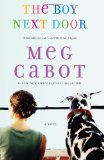 The Boy Next Door