Review of Little Thieves, by Margaret Owen

Little Thieves

by Margaret Owen
read by Saskia Maarleveld

Macmillan Audio, 2021. 14 hours.
Review written October 31, 2022, from a library eaudiobook
Starred Review
2022 Cybils Finalist, Young Adult Speculative Fiction
2022 Sonderbooks Stand-out: #1 Teen Fantasy Fiction

Oh, this book is so, so good! I listened to it while on a road trip four hours away to New River Gorge National Park and found myself looking forward to spending more time in the car, almost more mesmerized by the audiobook than I was by the stunning autumn leaves. The narrator did a wonderful job weaving the spell, and I was hooked from the very beginning.

The book begins with a dark tale:

Once upon a time, on the coldest night of midwinter, in the darkest heart of the forest, Death and Fortune came to a crossroads.

They’ve come to the crossroads to meet with a woman and her four-year-old child. The mother believes her child is bad luck. The woman was a thirteenth child, and this child is her thirteenth. So that is how Vanja gets Death and Fortune as her godmothers.

But then we fast forward twelve more years. Vanja is wearing the face of a princess, and she’s planning a jewel heist at the house party of another noble family.

We learn that for a year, Vanja has been masquerading as the princess whom she once served, using the princess’s enchanted pearls that give her a beautiful appearance and play on the desires of those who look upon her. She’s betrothed to the margrave of Boern, but he has been away at war for a year, so she’s had charge of his castle.

As she pulls off the elaborate jewel heist, at the end of the first chapter we read:

Once upon a time, there was a girl as cunning as the fox in winter, as hungry as the wolf at first frost, and cold as the icy wind that kept them at each other’s throats.

Her name was not Gisele, nor was it Marthe, nor even Pfennigeist. My name was — is — Vanja. And this is the story of how I got caught.

I saw on the flap that this book is a retelling of “The Goose Girl,” and for a little while, I was faintly horrified to find myself sympathizing with the horrible maid who stole the princess’s life, a princess I came to love in Shannon Hale’s version, The Goose Girl. But this is a very different retelling! I think it’s kind of funny that now two of my favorite books came from that fairy tale, but in such different versions.

In this version, the truly terrible villain is actually the margrave the princess was traveling to marry.

And as Vanja pulls off her jewel heist as the Pfennigeist, she learns that the margrave is coming home. And he’s called in the Order of the Prefects of the Godly Courts to uncover the Pfennigeist. And on her way back to the margrave’s castle, she runs afoul of another of the Lower Gods and gets cursed to slowly turn into a statue of jewels by the full moon — unless she makes up for all she has taken.

Of course, that may not be the worst thing, because now that the margrave is back, he wants to get married quickly. And what are these monsters that keep coming after his bride?

But oh, there’s so much more — I’d better not try to tell all the threads woven together and then skillfully unwound.

I will say this is a very loose retelling of the fairy tale, with many more details woven into the story. Instead of being an actual goose girl, the deposed princess works in an orphanage which in German (or something like it) is called Gosling House. A junior prefect who comes to investigate the thefts is named Conrad, and yes, a dead horse is important to the plot by the end.

Besides being a very loose retelling, it’s also much darker than Shannon Hale’s retelling, but after all, we’re pulled into sympathy with the villain of that tale — she hasn’t been treated well by the nobility, including sexual assault by the margrave when she had the appearance of a servant. (Nothing sexual is onstage, but there are some innuendoes and some dark moments.)

But oh my goodness, how well the plot is woven!

I thought of it as an alternate-reality medieval Germany, since they use a Germanic language and The Goose Girl is a fairy tale from the Brothers Grimm. So then I was pulled up short when same-sex relationships and transgender people are seen as entirely normal. Kind of pulled me out of the medieval Germany vibe. But then I laughed at myself. It was a world where the religion involved tribute to the Lower Gods, including gods of place and the gods of Death and Fortune. So without our same Scripture, why wouldn’t same-sex relationships be seen as normal?

But oh my goodness, the plot of this book is wonderful! Vanja’s set up with lots of problems — She also wants to gain enough money to get out of the Blessed Empire so she won’t have to serve one of her godmothers for the rest of her life. But she also needs to evade justice for her thefts and break the curse so she doesn’t get turned into a statue and continue to hide her true identity and stay alive despite the monstrous attacks and also try to avoid marrying the margrave.

Yes, it’s complicated, but magnificently so.

Oh, and the title? It comes from a proverb from the Blessed Empire:

The little thief steals gold, but the great one steals kingdoms;
and only one goes to the gallows.

margaret-owen.com
fiercereads.com

Buy from Amazon.com

Find this review on Sonderbooks at: www.sonderbooks.com/Teens/little_thieves.html

Disclosure: I am an Amazon Affiliate, and will earn a small percentage if you order a book on Amazon after clicking through from my site.

Disclaimer: I am a professional librarian, but the views expressed are solely my own, and in no way represent the official views of my employer or of any committee or group of which I am part.

What did you think of this book?
Review of The Chemistry of Food, by Carla Mooney

The Chemistry of Food

by Carla Mooney
illustrated by Tracy Van Wagoner

Nomad Press, 2021. 118 pages.
Review written November 19, 2022, from a library book
Starred Review

I think this nonfiction book for middle school and up is just so cool. I took a Chemistry class in high school, but this book tells me all kinds of things I didn’t know about the chemistry of food. Sure, I know the basics, but it’s interesting to hear the actual science behind many different processes. It’s illustrated with photographs and diagrams on almost every page.

Here’s what the chapters cover: The intro chapter, besides talking about food, gives some basics of chemical bonds, mixtures, solutions, and compounds. And how heat affects those things. The next chapter covers chemicals in our food, looking at water, lipids, carbohydrates, proteins, enzymes, vitamins and minerals. Next there’s a chapter on the chemical reactions of cooking: endothermic and exothermic reactions, heat conduction, caramelization, and other kinds of chemical reactions. Then comes a chapter on nutrition and how we get nutrients and energy from food. After that we get the science of flavor, and it all wraps up with a chapter on texture.

One of the big strengths of this book are the many fascinating experiments it shows you how to do. I confess I didn’t try them, but I wanted to. If there were a kid in my home, I don’t think I could resist. Some of those experiments include: putting oil and water together and watching what happens when you add dish soap, learning about protein denaturation by making lemon curd, caramelizing sugar and checking the mixture at different temperatures, figuring out how much gluten is in different flours, examining cookies baked at different temperatures and times, making ice cream in a bag with different amounts of salt and ice, and comparing different starches as thickening agents, and comparing methods for making crispy fries. They don’t tell you what’s going to happen with these experiments, which makes them all the more intriguing. They do have follow-up questions to help you think through what did happen, as well as further things to try.

I wouldn’t be surprised if this book would kickstart a kid’s interest in science. But whether or not it does, it provides a fascinating look at the science behind everyday things.

nomadpress.net

Buy from Amazon.com

Find this review on Sonderbooks at: www.sonderbooks.com/Teen_Nonfiction/chemistry_of_food.html

Disclosure: I am an Amazon Affiliate, and will earn a small percentage if you order a book on Amazon after clicking through from my site.

Disclaimer: I am a professional librarian, but the views expressed are solely my own, and in no way represent the official views of my employer or of any committee or group of which I am part.

What did you think of this book?
Review of Like, by Annie Barrows and Leo Espinosa

Like

written by Annie Barrows
illustrated by Leo Espinosa

Chronicle Books, 2022. 40 pages.
Review written November 10, 2022, from a library book
Starred Review

This picture book delighted me so much, I immediately found someone in the office to show it to. (This isn’t as easy as when I worked in a branch with other youth services staff, but it can still be done.) The book is bright and colorful, surprising and funny, and it has a great message.

Here’s how the book begins:

Hello.

You are you, and I am I. We are people.
Also known as humans. This makes us
different from most of the things on Earth.

For instance, tin cans.

We are not at all like tin cans.
We are not shaped like tin cans.
We cannot hold tomato sauce like tin cans.

If you open up our lids, nothing good happens.

We are not at all like tin cans.

The kid-narrator goes on to compare us with a swimming pool. We are a little more like a swimming pool, since we have water and chemicals and dirt inside us. But there are some big differences.

The book goes on to compare the reader with a mushroom, an excavator, and a hyena.

There are a lot of ways we are like hyenas, and those are listed in fun ways. But I like the page that talks about how we are different from hyenas:

They don’t know when their birthday is,
and if you invited a hyena over to your house next Thursday, it wouldn’t come.
Hyenas don’t make plans.

Which is fine, because if a hyena did come to your house, it might try to eat your baby brother.

So we are like hyenas in some ways,
but if you were a hyena,
you wouldn’t be like you are now.
And I would run away if I saw you.

But the rest of the book talks about how much humans are alike. We’re not exactly alike, but we’re much more alike than other things on earth.

Even if I eat raspberry Jell-O with bananas in it,
and you would never ever eat that in a million years,
I am more like you than a mushroom.

Even if you speak a language I don’t speak
you are more like me than a hyena.

And the book winds up by pointing out lots of people of different ages and shapes and looks and points out that we are all very much alike.

I am more like you than I am like most of the things on Earth.

I’m glad.

I’d rather be like you than like a mushroom.

An utterly wonderful book.

anniebarrows.com
chroniclekids.com

Buy from Amazon.com

Find this review on Sonderbooks at: www.sonderbooks.com/Picture_Books/like.html

Disclosure: I am an Amazon Affiliate, and will earn a small percentage if you order a book on Amazon after clicking through from my site.

Disclaimer: I am a professional librarian, but the views expressed are solely my own, and in no way represent the official views of my employer or of any committee or group of which I am part.

What did you think of this book?
Review of Call Us What We Carry, by Amanda Gorman

Call Us What We Carry

Poems

by Amanda Gorman

Viking, 2021. 228 pages.
Review written September 20, 2022, from my own copy, purchased via amazon.com
Starred Review

I don’t purchase a lot of poetry books, but I was so happy with this one, and I’ve spent the last few months reading a poem or two a day most days.

Amanda Gorman was the 2021 Inaugural Poet, and the stirring poem she recited that day, “The Hill We Climb,” is the final poem in this book.

The book is full of poems as moving and insightful as that one. Amanda Gorman has a way with words. The poems are full of rhymes and alliteration and word play, turning words as if they are pieces of glass, reflecting light in different ways.

These are poems about current times. Written during the thick of the pandemic, there’s plenty about pain and death and healing.

Here’s a small stanza where I underlined the middle line:

Perhaps our relationships are the very make of us,
For fellowship is both our nature & our necessity.
We are formed primarily by what we imagine.

There’s lots that’s lovely here, and lots that made me pause in meditation.

I’ll be honest — there’s a big section in the middle with “erasure poems” — poems made by erasing parts of a document, using what is left. I didn’t enjoy those poems as much. For me, they didn’t have the resonance and didn’t roll off the tongue as well. But I think she was going for the significance of the documents she chose — documents about slaves and about indigenous people treated horribly — and they definitely still have punch.

Altogether, this is a book of poems I’ll want to come back to. I’m glad I got my own copy.

We are enough,
Armed only
With our hands,
Open but unemptied,
Just like a blooming thing.
We walk into tomorrow,
Carrying nothing
But the world.

(p. 205, from “What We Carry”)

And from “The Hill We Climb”:

When day comes, we step out of the shade,
Aflame and unafraid.
The new dawn blooms as we free it,
For there is always light.
If only we’re brave enough to see it,
If only we’re brave enough to be it.

theamandagorman.com

Buy from Amazon.com

Find this review on Sonderbooks at: www.sonderbooks.com/Nonfiction/call_us_what_we_carry.html

Disclosure: I am an Amazon Affiliate, and will earn a small percentage if you order a book on Amazon after clicking through from my site.

Disclaimer: I am a professional librarian, but the views expressed are solely my own, and in no way represent the official views of my employer or of any committee or group of which I am part.

What did you think of this book?
Review of Washed Ashore, by Kelly Crull

Washed Ashore

Making Art from Ocean Plastic

by Kelly Crull

Millbrook Press, 2022. 40 pages.
Review written October 8, 2022, from a library book
Starred Review

This book is the kind I can’t resist showing to my coworkers on the spot. The art is stunning. The subject is convicting. And the overall presentation is mind-blowing.

Yes, I knew that there’s lots of plastic trash in the ocean. But this book makes you feel the magnitude.

This book documents the work of Angela Haseltine Pozzi and her organization called Washed Ashore. They make animal sculptures out of trash found in the ocean.

Washed Ashore shows large photographs of fourteen of these sculptures. They give facts about the ocean animals portrayed and how they’re affected by plastic trash. They also list tips for reducing plastic trash in the ocean. And across the bottom of each spread, there are objects for you to find in the sculptures.

It’s finding those objects that makes you look closely and get your mind blown with all the junk. It also helps you realize just how big these sculptures are. Some of the objects to look for include a cigarette lighter, sunglasses, an inhaler, a steering wheel, toothbrushes, multiple toys, shoe parts, and even the front of a stereo.

And the art itself is stunning. Looking closely and realizing what it’s made of makes the achievement all the more remarkable.

Take a look at this book. I don’t believe that you can fail to be moved.

kellycrull.com
washedashore.org
lernerbooks.com

Buy from Amazon.com

Find this review on Sonderbooks at: www.sonderbooks.com/Childrens_Nonfiction/washed_ashore.html

Disclosure: I am an Amazon Affiliate, and will earn a small percentage if you order a book on Amazon after clicking through from my site.

Disclaimer: I am a professional librarian, but the views expressed are solely my own, and in no way represent the official views of my employer or of any committee or group of which I am part.

What did you think of this book?
Review of We Are the Ashes, We Are the Fire, by Joy McCullough

We Are the Ashes, We Are the Fire

by Joy McCullough
with illuminations by Maia Kobabe

Dutton Books, 2021. 383 pages.
Review written June 8, 2021, from a library book
Starred Review

As the book opens, Em Morales learns the verdict against the college student who raped her sister after a frat party – guilty on all counts. But then comes the sentencing, and he’s sentenced to only time served.

Em feels terrible, because she urged her sister not to accept a plea deal and to go through the agony of the trial. She’s been trying to speak up for victims of sexual violence, and now it seems that she’s done more harm than good. The summer before her Senior year is starting, and she even decides to give up on journalism, which has been her life.

So now she’s at loose ends for the summer, and she starts hanging out with Jess, a nonbinary teen whose parents are splitting up and who stayed in town to try to keep them together. Jess mentions a medieval woman, Marguerite de Bressieux, and Em discovers she went to war to get vengeance for her family, who were slaughtered and raped by the Count of Orange.

Em starts writing a novel in verse about Marguerite, and Jess, an artist, begins illuminating the pages.

But Em’s dealing with a lot of anger and people are still upset with her sister for speaking up. So things that happen are far more complex than simply writing a book to get out her rage.

While I was in the middle of reading this book, someone called the library and asked me to read him a specific Wikipedia article. I did so – until I listened more closely to what he was saying and realized he was masturbating while I was talking. Having that happen when I was in the middle of reading a book about characters angry about our toxic society and the power men have over women and rape culture didn’t help.

There are a couple of good men in this book, Em’s father being one of them, so they’re not trying to say that every man is a predator. But it’s a dark book, a book about fighting back against oppression – and not a tremendously hopeful one.

Something I loved that wasn’t a main point of the book was how nicely Em modeled using they/them pronouns for Jess. She referred to Jess smoothly and consistently with they/them pronouns, not making a big deal of it, and the reader picks up on it quickly. Anyone who reads this book will find it that much easier to use the correct pronouns when they have a nonbinary friend.

This is a powerful book. It got me a little discouraged – but that’s probably more a function of what happened to me while I was reading the book than of the book itself. It is about women fighting back persistently, whether they are successful or not.

PenguinTeen.com

Buy from Amazon.com

Find this review on Sonderbooks at: www.sonderbooks.com/Teens/we_are_the_ashes.html

Disclosure: I am an Amazon Affiliate, and will earn a small percentage if you order a book on Amazon after clicking through from my site.

Disclaimer: I am a professional librarian, but the views expressed are solely my own, and in no way represent the official views of my employer or of any committee or group of which I am part.

What did you think of this book?
Review of The Secret Battle of Evan Pao, by Wendy Wan-Long Shang

The Secret Battle of Evan Pao

by Wendy Wan-Long Shang

Scholastic Press, 2022. 259 pages.
Review written from my own copy, signed by the author at ALA Annual Conference
Starred Review

The Secret Battle of Evan Pao is the first book I ordered in my new position as Youth Materials Selector for my library system, after I saw the author at ALA Annual Conference, and she told me the book had been selected for the Washington Post Kid’s Summer Book Club. Of course we needed copies for all the branches! (Alas! We had a big backlog in our Processing department, and the book was not on the shelves for readers when it was featured in the book club. I tried!)

This book is about racism and prejudice in a rural Virginia town, but it’s much more nuanced than that description suggests.

I love the main character, Evan Pao. (Though we do get chapters from the perspectives of several other kids.) Evan is a “sensitive” boy — in fact, he’s got a condition where he feels sick when someone lies to him. So he’s a good lie detector for his family. But he doesn’t understand how he never knew that his dad was going to leave their family.

As the book begins, Evan, his mother, and his sister are moving from a prosperous life in California to a run-down rental house in small-town Virginia, to be near his Uncle Joe. Evan hopes maybe in the new place he can get a dog, but he’s not optimistic.

But Evan isn’t prepared for how important the Civil War is in his new town. (I grew up in California and also moved to Virginia. I, too, thought this was strange, though it’s not nearly so extreme in northern Virginia.) He now attends Battlefield Elementary, where his class is making preparations for the annual Battlefield Day, where class member dress up as roles their ancestors may have played in the Civil War. Evan’s afraid there’s no place for him, and one kid in particular makes it clear he’s pretty sure Chinese Americans don’t belong.

But then Evan learns that Chinese Americans did have parts in the Civil War, and Evan begins to claim his place. There’s pushback, though, and it all adds up to a story that challenges everyone’s assumptions, including the reader’s.

In Wendy Wan-Long Shang’s hands, we’ve got a fantastic school story for middle grade readers that shows that history is for everyone, and you can’t make assumptions about what anyone is capable of. A great read.

scholastic.com

Buy from Amazon.com

Find this review on Sonderbooks at: www.sonderbooks.com/Childrens_Fiction/secret_battle_of_evan_pao.html

Disclosure: I am an Amazon Affiliate, and will earn a small percentage if you order a book on Amazon after clicking through from my site.

Disclaimer: I am a professional librarian, but the views expressed are solely my own, and in no way represent the official views of my employer or of any committee or group of which I am part.

What did you think of this book?
Review of The Little House of Hope, by Terry Catasús Jennings, illustrations by Raúl Colón

The Little House of Hope

by Terry Catasús Jennings
illustrations by Raúl Colón

Neal Porter Books (Holiday House), 2022. 32 pages.
Review written September 30, 2022, from a library book
Starred Review

This inspiring book made me proud to be an American, as well as blown away by a family’s joyful hospitality.

The author bases the story of Esperanza, a girl from Cuba, on her own story of her family coming from Cuba in 1961. Here’s how the book begins:

It was a little house. Una casita.

When Esperanza and Manolo and Mami and Papi
came to the United States from Cuba,
they looked and looked
for a place where they could live
that didn’t cost too much money.

And then they found it.

It was small.
It smelled like old, wet socks.
It had rickety, tattered furniture
from a church basement.

But even though they were far from home,
the family was together.
They were safe.
They were happy in la casita.

As the story goes on, we see each parent working two jobs and the children making their own breakfasts, helping with chores, and helping fix up la casita. They all work hard and begin learning English. They eat food in la casita that reminds them of Cuba.

The pictures are happy and hopeful. Since Esperanza’s name in English is “Hope,” she makes a collage with her name in both languages, and “Hope” represents what they’ve found in their new home.

And they spread that hope to others! Mami’s sister Conchita joins them, with her baby. She takes care of other people’s children during the day in la casita, and Esperanza gets to tend the baby.

Then they make room in the garage for a family who’ve made a tough trip from Mexico while they’re getting settled.

Even though there wasn’t much room,
everyone was happy in la casita.

As the book continues, we see the family happily sharing their space. Papi gets a job as an accountant, like he had back in Cuba, and Mami teaches high school Spanish. More people come through on their way to getting homes of their own.

The pictures in this book make it especially wonderful — on many spreads we see large, happy groups of people, enjoying one another.

And for everyone who comes through la casita and then goes on to their own place, Esperanza sends them on their way with a collage, which we see in the illustrations. The collage features “Esperanza” and “Hope,” and “Hope” is done in the colors of the American flag.

It wasn’t until my second time through the book that I noticed the Author’s Note at the front, which is more for the adult reader than for kids:

This book was written in anger, but with pride. Anger at a realtor who told me he never rented to Hispanics because they lived four families to a house and always destroyed the properties where they lived. In 1961, when my family first came from Cuba to the United States, we lived in una casita. Three families lived there, twelve of us during the week and fourteen on weekends when my uncle’s two sons came to stay with him. We came to the United States to regain our freedom, and in the case of my father, to avoid being jailed again. We landed with $50 for our family of four. In time we all became gainfully employed, each family finding a home of its own. And we all became citizens. From anger, I hope this book brings healing. It is dedicated with unwavering gratitude to the country that took us in, and to all immigrants who come to the United States in search of hope.

The lovely thing is that the picture book part of this book completely communicates that gratitude and hope. I didn’t know any anger was involved until I read the note — and what an effective answer this book is to that anger! She shows a family helping others out with love and joy, and no deprivation whatsoever, but only that overwhelming gratitude and hope.

HolidayHouse.com

Buy from Amazon.com

Find this review on Sonderbooks at: www.sonderbooks.com/Picture_Books/little_house_of_hope.html

Disclosure: I am an Amazon Affiliate, and will earn a small percentage if you order a book on Amazon after clicking through from my site.

Disclaimer: I am a professional librarian, but the views expressed are solely my own, and in no way represent the official views of my employer or of any committee or group of which I am part.

What did you think of this book?
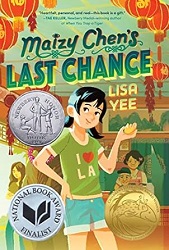
Review of Braving the Thin Places, by Julianne Stanz

Braving the Thin Places

Celtic Wisdom to Create a Space for Grace

by Julianne Stanz

Loyola Press, 2021. 170 pages.
Review written August 19, 2022, from my own copy, purchased via Amazon.com
Starred Review

Here’s how author Julianne Stanz introduces the idea of a “thin space”:

Each of us stands at the threshold of a thin place, and we are its gatekeeper.

Have you ever held a loved one’s hand as they slipped from this life and into the next? Birthed a child and felt the thin edges of God’s presence inside your being? Beheld such beauty that it took your breath away? Or been moved to tears by an image or a piece of music? If so, you have stood at the edge of a thin place, a place where God and humanity meet in a mysterious way. These moments open us to places of rawness and beauty. Something seems to break open inside us, and words are inadequate to describe what we are experiencing. We feel a sense of breakthrough as we break free of the ordinary and into the extraordinary.

This book is about making room for thin places and embracing them. The author was born in Ireland and brings the idea of thin places from the Celtic tradition.

The Celts, known for their love of threshold places at the edge of life, such as Sceilg Mhichil, a crag off the coast of County Kerry, were never afraid to explore God in the known or in the wild, barren edges of life. We should not be afraid either. The Celtic imagination considers sacred places to be “thin,” or places where the veil between the worlds of heaven and earth seems especially permeable, and the worlds discernibly close to each other. Thin spaces exist between the now and the not-yet. Entering thin spaces is an opportunity that we don’t normally have — to slow down, to pause, to look with fresh eyes, to recover a sense of wonder about the world. The pace of life moves too fast for many of us over concrete and inhospitable ground, and we are searching — for joy, forgiveness, healing, completion, and peace. God is all around if only we recognize his presence. And for those wwho do, that this space is one of rejuvenation and renewal.

This book works for personal meditation and devotional use, and it would also work for a church small group to go through together. There are 11 chapters and an Introduction. Each chapter has some open-ended questions at the end, under the headings “Breaking Open,” “Breaking Through,” and “Breaking Free.” And they start with an Irish proverb.

Julianne Stanz makes this a personal journey, illustrating it with stories from her own life. The book builds toward getting through difficulties and making a space for grace.

To be honest, I read this book when everything in my life seemed to be wonderful — having just gotten my dream job and enjoying working in it. But I know hard times will come, and I think this lovely and encouraging book will be especially helpful to take up and explore when one of those times comes. Yes, happy times can be thin places, too — but I don’t need as much help finding a good perspective on them. I enjoyed the book, but I think that if times were tougher, it might be a lifeline. I will keep it on hand.

loyolapress.com

Buy from Amazon.com

Find this review on Sonderbooks at: www.sonderbooks.com/Nonfiction/braving_the_thin_places.html

Disclosure: I am an Amazon Affiliate, and will earn a small percentage if you order a book on Amazon after clicking through from my site.

Disclaimer: I am a professional librarian, but the views expressed are solely my own, and in no way represent the official views of my employer or of any committee or group of which I am part.

What did you think of this book?
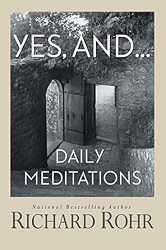
Review of If You’re a Kid Like Gavin, by Gavin Grimm and Kyle Lukoff, illustrations by J Yang

If You’re a Kid Like Gavin

The True Story of a Young Trans Activist

by Gavin Grimm and Kyle Lukoff
illustrations by J Yang

Katherine Tegen Books (HarperCollins), 2022. 36 pages.
Review written October 25, 2022, from a library book.
Starred Review

This colorful and informative picture book tells the story of Gavin Grimm, a transgender boy who went to court to be able to use the boys’ restroom at his high school.

The book is framed in a way kids can understand, talking about choices you can make and choices you can’t make.

Here’s how they explain that Gavin is transgender:

And if you’re a kid like Gavin Grimm,
you don’t choose if you’re a boy or a girl.

But if you’re transgender like Gavin Grimm,
you might choose to talk about it.

To tell your family, “I know you thought I was a girl,
but I’m really a boy on the inside.”

To say, “I can’t keep the name you gave me. We have to pick a new one.”

To be honest about who you are.

But then Gavin faced another choice: What to do about the bathrooms at school. He went to school as a boy, and no one bothered him. But they had him use a restroom in the nurse’s office. After a while, he started using the boys’ bathroom.

The principal said it was okay, and that should have been the end.

But the book portrays that there were some who didn’t like it, starting with a teacher, who told people that he was really a girl. That started everyone talking about him. Other kids bullied and laughed at him. And they made him a topic of a school board meeting. Gavin then had another choice.

Gavin chose to speak up for himself. He went to the meeting at his school and told them where he belonged. He tried to make them see that he was just a kid, not a problem to be solved.

It didn’t work.

But he still had a choice. He could have used the girls’ bathroom, which didn’t feel right. Or he could have used the bathroom his school put into a closet, one that no other kid was forced to use.

And he could have chosen to stay quiet.

The spread with his choice has a wonderful sky at sunset behind Gavin — with the colors of the transgender flag.

But when you’re a kid like Gavin Grimm, you know the only choice you have is to fight back.

To stand up for yourself.
And your right to use the bathroom as yourself.
And your right to be in school as yourself.

Then it talks about how Gavin worked with the ACLU to continue to fight his own case and to try to help other transgender kids, too.

I wish that this book were only of historical interest! It helps kids understand why transgender kids want to be who they know themselves to be. And it encourages kids to make the choice to stand for what’s right. Even while acknowledging they shouldn’t have to.

harpercollinschildrens.com

Buy from Amazon.com

Find this review on Sonderbooks at: www.sonderbooks.com/Childrens_Nonfiction/if_youre_a_kid_like_gavin.html

Disclosure: I am an Amazon Affiliate, and will earn a small percentage if you order a book on Amazon after clicking through from my site.

Disclaimer: I am a professional librarian, but the views expressed are solely my own, and in no way represent the official views of my employer or of any committee or group of which I am part.

What did you think of this book?