Review of The Mad Wolf’s Daughter, by Diane Magras

The Mad Wolf’s Daughter

by Diane Magras

Kathy Dawson Books (Penguin), 2018. 280 pages.
Starred Review
Review written April 7, 2018, from a book sent by the publisher
2018 Sonderbooks Stand-out:
#2 Historical Children’s Fiction

As this book begins, Drest tries to warn her brother and her father that she sees boats coming to their lair, but they’re convinced she’s dreaming. They know different when attackers burst upon them.

Her father, the war band leader, gets her to flee and hide. But she sees him and all her brothers taken away. She is determined to save them – even if it means reviving the knight who got thrown down a cliff by one of the other knights.

This is a wonderful historical fiction novel – set in medieval Scotland about a young girl who’s small but fierce and resourceful. Her brothers have trained her well. But she only has six days to get to the castle to save her family, and her journey is not uneventful.

You come to love Drest’s fierce, fighting spirit, which is tempered by compassion for those who need help.

Here’s where Drest approaches the knight at the base of the cliff:

Tears sprang to Drest’s eyes. “Your toad-witted people took my da and my brothers. And I didn’t throw you down here; one of your own men did.”

The young knight’s voice quivered. “What a filthy lie. Those are my most faithful men.”

His despair gave Drest courage. She crept closer. “Maybe some of them, but not the one who was up on the cliff with you. I watched him fight and push you down here.” The mist was thickening around them. Drest looked back to find the trail. “Do you know where they’ve taken my da?”

The young knight’s eyes widened. “To Faintree Castle. Do you even know who we are?”

“Nay,” said Drest, “why should I?”

“Everything in this part of the lowlands – including this headland – belongs to Faintree Castle.”

“Is that the truth? Strange. I’ve always known that my da owned this headland and all the lowlands.”

That’s only the beginning of Drest’s surprising adventures.

Fair warning is that while this book finishes at a good stopping-place, not everything is resolved, so I trust there will be more adventures to come. But this book has enough to make this lass become a legend.

dianemagras.com
penguin.com/middle-grade

Buy from Amazon.com

Find this review on Sonderbooks at: www.sonderbooks.com/Childrens_Fiction/mad_wolfs_daughter.html

Disclosure: I am an Amazon Affiliate, and will earn a small percentage if you order a book on Amazon after clicking through from my site.

Disclaimer: I am a professional librarian, but I maintain my website and blogs on my own time. The views expressed are solely my own, and in no way represent the official views of my employer or of any committee or group of which I am part.

What did you think of this book?
Review of The Stuff of Stars, by Marion Dane Bauer, illustrated by Ekua Holmes

The Stuff of Stars

by Marion Dane Bauer
illustrated by Ekua Holmes

Candlewick Press, 2018. 36 pages.
Starred Review
Review written September 25, 2018, from a library book
2019 Coretta Scott King Illustrator Award
2018 Sonderbooks Stand-out:
#2 General Picture Books

The Stuff of Stars is a gorgeous and glorious book.

The book is an extra large square, so it’s got a weighty presence. All the pages use marbled papers in swirly patterns. The front cover has the title in gold-sparkled lettering like star clusters.

Here’s how the book begins, on black paper with other dark swirled colors and one white dot:

In the dark,
in the dark,
in the deep, deep dark,
a speck floated,
invisible as thought,
weighty as God.
There was yet no time,
there was yet no space.
No up,
no down,
no edge,
no center.

It goes on to poetically talk about the Big Bang on the third spread. And slowly how the stars and worlds formed. Christians, there’s plenty of room to explain to your child that God’s responsible for that Big Bang.

I like when it talks about what isn’t there yet:

And throughout the cosmos
stars caught fire.
Trillions of stars,
but still no planets
to attend those stars.
And if no planets,
then no oceans,
no mountains,
no hippopotami.
No violets blooming
in a shady wood,
no crickets singing
to the night.
No day,
no night.

Next, planets are formed, and even Earth, “one lucky planet, a fragile blue ball.” And it talks about the creatures that were formed on earth, from mitochondria to sharks, daisies, and galloping horses.

And then there’s a shift of gears:

Then one day . . .
in the dark,
in the dark,
in the deep, deep dark,
another speck floated,
invisible as dreams,
special as Love.

Waiting,
waiting,
dividing,
changing,
growing.
Until at last,
YOU burst into the world.

And it builds to the cozy image of two people cuddling together, the same as on the cover.

The random list of earth’s creatures combined with the glorious swirling images is a perfect pairing.

You
and the velvet moss,
the caterpillars,
the lions.

You and the singing whales,
the larks,
the frogs.

You,
and me
loving you.
All of us
the stuff of stars.

A marvelous and wondrous book.

candlewick.com

Buy from Amazon.com

Find this review on Sonderbooks at: www.sonderbooks.com/Picture_Books/stuff_of_stars.html

Disclosure: I am an Amazon Affiliate, and will earn a small percentage if you order a book on Amazon after clicking through from my site.

Disclaimer: I am a professional librarian, but I maintain my website and blogs on my own time. The views expressed are solely my own, and in no way represent the official views of my employer or of any committee or group of which I am part.

What did you think of this book?
Review of Nothing But the Blood of Jesus, by J. D. Myers

Nothing But the Blood of Jesus

How the Sacrifice of Jesus Saves the World from Sin

by J. D. Myers

Redeeming Press, 2017. 274 pages.
Review written from my own copy, purchased via Amazon.com.
Starred Review

For awhile now, I’ve been reading books on theology, and lately on the theology of the cross. I’m not satisfied with the view I was taught in childhood, essentially that Jesus had to save us from God. This book has a foreword by Brad Jersak, whose book, A More Christlike God, I loved on this topic, so I decided to give this one a try.

Nothing But the Blood of Jesus presents a more elaborate theological system. And it makes fascinating reading. I’m not sure whether or not I agree with every detail. I don’t want to make any theory the be-all and end-all of what I believe about God, but I think this theory has a lot of insights to offer.

The author explains the organization at the beginning of the book. There are five sections covering five key concepts. The concepts are interrelated, though, so he says you may not have a complete grasp of the first concept until you’ve read about the others. The concepts he covers are sin, law, sacrifice, scapegoat, and blood. After a chapter explaining each concept, he’s got a chapter covering the key Scripture passages that talk about that concept.

And there’s really good stuff here! It challenges what I’ve been taught. Like I said, I’m not sure if I agree with every detail. But taken as a metaphor, it does shed lots of light on certain matters of faith.

Let me see if I can summarize the overall idea: The primary sin of mankind is scapegoating and religious violence. We use religion to scapegoat and blame others for our own failings and bring peace. However, when Jesus came and lived a sinless life, we scapegoated him, too – showing that even an innocent person will get scapegoated. Jesus showed a better way, a way of love and forgiveness. He showed us that God’s way of love and forgiveness surpasses the human tendency to scapegoat and blame.

Hmm. I’m not sure I did the greatest job with that summary. Let me include some quotes that I especially like.

This is from the section on Sin:

First, God is not angry at us for our sin. While sin is a serious thing, God is not concerned about sin simply because it is sin. That is, God doesn’t tell us to stay away from sin because sin offends, hurts, or angers Him. Purely from God’s perspective, sin just isn’t that big of a deal. The reason God is concerned about sin and wants all humans to stop sinning, is not because God Himself is offended or angered by sin, but because we humans are hurt and damaged by it. Sin is an issue with God, not because it hurts Him, but because it hurts us. God loves us so much, He tells us not to sin because He doesn’t want to see us get hurt by it. When God says “Don’t” what He is really saying is “Don’t hurt yourself.”

This leads to the second truth about sin to keep in mind: God does not punish us for our sin. Yes, we may get punished for sin, but this punishment is not from God. Sin carries its own punishment. In fact, the punishment that comes from sin is the pain of sin that God wants to rescue and deliver us from. God doesn’t punish us for sin; He works to rescue us from the punishment of sin. God loves us, and doesn’t want us to experience the devastating and destructive consequences of sin, and so He warns us against sin.

Here’s a thought-provoking section in the chapter looking at Scriptures about sin. This bit is looking at John 16:8 – “And when He has come, He will convict the world of sin, and of righteousness, and of judgment.”

I believe the Holy Spirit is doing an excellent job in this task. While it is true that the world still engages in a lot of rivalry, scapegoating, and violence, the world is also waking up to the fact that such practices are wrong. In ancient civilizations, it used to be that nobody questioned scapegoating violence. It “worked” to create peace in a society, and as a result of its effectiveness, it was assumed to be fully in line with the will of the gods. But since Jesus revealed the truth about scapegoating violence to us, and since the Holy Spirit has been convicting the world of this sin, it is no longer as effective as it once was and does not create any lasting or significant peace. The world is starting to recognize that true peace only comes through forgiveness….

Strangely, while the church should be leading the world in such matters, it sometimes seems the world leads the church. Quite often, when the world is exposing scapegoat victims as innocent and crying out for forgiveness and reconciliation, the church retreats into a position of judgment, accusation, blame, and calls for death. But when we recognize that the Spirit also convicts the world of sin, we do not need to be alarmed when the world sees something wrong before we do. Instead, we can be thrilled when we see the world responding to the movement of the Spirit in their midst, and we can join other people in their efforts to end rivalry, violence, and scapegoating. We can, like Paul in the Areopagus, stand up and say, “The One whom you worship without knowing, Him I proclaim to you” (Acts 17:23).

I was impressed with the author’s discussion of the Law. He pointed out that God offered the people of Israel a covenant relationship with Him first, based on love. But they didn’t want to deal with God directly. Here’s a section from the chapter on Law:

Yet even though “Love God and love others” is a good summary of the law, this statement is still a law, and Christians are not called to live according to the law. Instead, we are invited to live within a relationship based on love. While God does want us to love Him and love others, we cannot do this until we know that we are loved unconditionally. And once we know we are loved by God, love for Him and for others flows naturally from Him through us as we live within that love. This only makes sense, for no relationship can be built on law. True relationships are always and only built on love.

Imagine if you tried to build your marriage on a checklist of responsibilities. How long would such a marriage last? Let us even assume that the “To do” list was a very good list. It included things like saying “I love you” seven times a day, hugging your spouse three times a day, and having sex once per week. On this list, men were instructed to wash the dishes for their wives on Tuesday nights, and wives were instructed to give their husbands a backrub on Fridays. Imagine that this list had 613 such commandments and you were able to do them all. Would you have a “good” marriage relationship? Well, such a marriage might be better than other marriages, but no one would be able to call it a marriage “relationship.” It would be a marriage based on a checklist; not a marriage based on love.

This is exactly how to view the law, and in fact, is exactly how the law is presented in Scripture. The law serves as a substitute when a loving relationship is not possible, but no one should ever confuse law keeping with an actual loving relationship. Though the law may teach people the sorts of things one might see in a loving relationship, even a comprehensive list of 613 items can never substitute for an actual relationship built on love. Just as laws are needed where there is no relationship, laws are not needed where a relationship of love exists. If people reject love, the only alternative is law.

Another example from marriage shows how obeying the law can actually make us behave worse:

Yet when laws are created as a way to guide people into love, some begin to think that what is obedience to the law is more important than learning to love. It’s definitely easier. Imagine a (mostly) fictional scenario where my wife explains to me that she is not feeling loved, and when I ask her to provide examples of what I can do to show love she gives me a list of three suggestions. I can buy her flowers every week, ask her about her day at dinner, and kiss her every night before bed. But if I do those things perfectly every day for the rest of my life, does this then mean that I truly love her? Not necessarily; I can do all those things and still not show love. Worse yet, I can check these items off my list, but then turn around and do unloving things such as not actually listening to her when she tells me about her day, or mechanically kissing her goodnight. In such a situation, she will not feel more loved, but less. My strict obedience to the law actually leads me to treat my wife worse than ever before.

This is exactly how it can work with all laws. Laws are initially created to help people learn to show love toward God, themselves, or others, but when obedience to these laws becomes an end in and of itself, laws can actually lead to worse behavior than ever before. This is especially true when people begin looking for loopholes in the laws which allow them to live selfishly and dangerously while still obeying the letter of the law. In the example above, although I asked my wife about her day, I didn’t actually listen to what she said, which only makes her feel worse. It would have been better if I hadn’t even asked.

Usually, as these sorts of loopholes are discovered, the human tendency is to close them with even more laws. If my wife complained (rightfully so) that although I asked about her day I wasn’t really listening, the natural human reaction would be to create an additional law to actually listen to what she said. So now we have a fourth law. But the only way to prove that I was actually listening is to summarize or paraphrase back to her what she says. This creates a fifth law. But even still, I could do this without actually caring or showing any interest. So in an attempt to show interest, a sixth law could be created in which I must ask at least three questions in response to what she was saying. Do you see what is happening here? Due to a lack of love on my part, the laws are starting to multiply. But no matter how many laws we add, they will never be able to create genuine love. Yet in an attempt to produce love where there is none, more and more laws become necessary. This is exactly what happens to all laws. When there is no love, 10 laws become 600 laws which become 6000 laws which become 60,000 pages of laws. And with every new law, the reality of genuine love becomes less and less likely.

He talks about Jesus in that light:

When Jesus healed on the Sabbath, hung out with prostitutes and sinners, or let Himself get touched by lepers, He was breaking the religious interpretation of the law while He simultaneously fulfilled the spirit in which it was intended. The law was intended to lead to love and Jesus, knowing this, showed love to everyone with whom He interacted, even if His actions went against the letter of the law as understood and taught by the religious leaders of His day. We can follow the example of Jesus in this regard when it comes to the question of the Mosaic Law.

For those who are still a bit skeptical, there are several examples from the Mosaic Law which reveal loving actions in their day, but which would nevertheless be hateful and hurtful actions in ours. Several of the laws about women and slaves, for example, were huge movements toward love in the days when the law was given and both women and slaves were treated like property. In many ways, the laws of Moses gave value and dignity to women and slaves that was unprecedented among other people and cultures of that time.

However, if we were to treat women today as the Mosaic Law stipulates they are to be treated, such behavior toward women today would be misogynistic, sexist, cruel, and mean. The law of love as exemplified in Jesus Christ has brought about better treatment of women today than anything the Mosaic Law could accomplish through law keeping.

There’s lots more to talk about in that section. But then in the part about Sacrifice, this author really shook up some of my ideas.

In the first place, he makes a strong case that sacrifices were never for God at all – they were mankind’s idea, and they are purely for humans. He makes a strong case that the Bible talks a lot about sacrifice to show us that they don’t work.

Yes, God sent His Son to die as a sacrifice, but this was not because God Himself wanted or needed the sacrifice, but because God wanted to reveal and expose to humanity once and for all the violent and sinful tendencies that reside in our own hearts. God did not want or need the death of His own Son in order to satiate His wrath toward sin and extend forgiveness to us. No, God has always loved and always forgiven all humans for all their sin, simply because that’s the kind of God He is. He doesn’t need or demand payment for sin. (In fact, if He did demand payment, then He wouldn’t be forgiving; He would be getting “paid off.”)

From the beginning of human history, we humans have engaged in rivalry, accusation, and violence, and we often do such things in God’s name. Everything in Scripture is focused on revealing this one truth to us. But it did so imperfectly, because we humans could always justify our violent behavior toward others as “carrying out God’s will against unrighteous people.” In the name of justice we justify our violent behavior toward others.

But there was no way to justify our treatment of Jesus. He did no wrong. He never sinned. There was no unrighteousness in Him deserving of death. Yet we killed Him anyway, and we did so in God’s name. We sent Jesus to the cross and we claimed that it was God’s will. But it wasn’t. It never was. Jesus allowed Himself to be sacrificed in order to reveal to us that all sacrificial violence comes from the heart of man rather than the heart of God. Jesus died to reveal to us once and for all that God does not want sacrifices. Jesus revealed that it is we who want to kill others and we who justify our violence against men and animals by blaming this violence upon God. Once we see this truth, we can see how Jesus is the sacrifice to end all sacrifices.

There’s fascinating stuff in the chapter of Scriptural passages about sacrifice. I had no idea that the Hebrew word for “tunic” in Genesis 3:21, where God makes clothes for Adam and Eve, usually refers to a linen tunic, not leather. And the word for “skin” doesn’t have to mean the skin of an animal, but can just refer to clothes used for covering. So that idea that God killed an animal to make them clothes isn’t really found in the text.

And even Cain’s offering in Genesis 4:4 may not have been a sacrifice! This author points out that it says Abel offered an animal to God, but it never says he killed the animal. In fact, at that time, humans were vegetarians, so why would Cain have even thought of killing the animal?

There’s a lot more, and he looks at the sacrificial system overall. He makes the case that this was never God’s plan, but it was a step in the right direction.

Though much of the surrounding culture practiced human sacrifice, God forbade such practices, and limited the Hebrew people to animal sacrifice only. It was not perfect, but it was a move in the right direction. We must be careful not to reverse this redemptive move by saying that through the cross of Jesus, God wanted human sacrifice after all. Such a teaching is a move backward, not forward, in the biblical revelation about sacrifice.

Then in the prophets, we find God directly saying he doesn’t want sacrifices. (See Jeremiah 7:22-23, Amos 5:21-24, Micah 6:6-8, and other passages discussed in this book.)

The basic message of the prophets regarding sacrifice is that God owns the cattle on a thousand hills. He doesn’t need us to give Him more. Besides, He prefers them alive. God is not a God of blood and death, but a God of love and life. So do you want to worship God? Do so with love and justice, grace and mercy, generosity and peace. This is what the prophets proclaim. Jesus followed this prophetic tradition by teaching similar things during His life and ministry.

In covering the gospels, he says, “Jesus is the sacrifice to end all sacrifices, not because God is finally appeased, but because the heart of man and the heart of God are both finally revealed for what they are. We condemn and kill while God loves and forgives.”

He even mentions Romans 12:1 and points out that we are asked to be a living sacrifice to God, not a dead one.

A lot of the author’s ideas come together in Part Four, about the Scapegoat. He shows that mankind has always used scapegoats. When there’s rivalry and violence, blaming a scapegoat can bring groups together.

This does not mean that scapegoats are innocent. while the scapegoat may not be guilty of everything for which they are charged, the scapegoats are also usually guilty of some of the things. But this just adds to our certainty about the scapegoat. The best scapegoats are guilty scapegoats. There are almost always a few sins for which the scapegoat truly is guilty. People point to these obvious faults as clear evidence that the scapegoat must also be guilty of all the other faults which are not so clear. The glaring character flaws convince and persuade us that “the stories must be true.” Once these obvious sins and failures are pointed out to the mob, it becomes easy to then blame the scapegoat for the numerous sins and failures for which they are innocent. The few clear failures are extrapolated out into numerous faults until the scapegoat becomes a sinner of monstrous proportions and people do not realize they are turning a person into a scapegoat. The scapegoat itself becomes invisible, and we think we are just speaking the truth, calling out evil where it is found, and crying for the expulsion of the monster from our midst.

But Jesus became the Ultimate Scapegoat.

By becoming a scapegoat victim, Jesus revealed that all the accusations thrown at the scapegoat do not actually indicate crimes of the scapegoat themselves, but instead reveal the crimes of those doing the scapegoating. Scapegoats are a mirror into our own lives, culture, and society. We do not like what we see in our hearts, or in our society and culture, and since we find it so difficult to own up to such things, we lay the blame for them on someone else…. We kill the scapegoat to drive out the sin that is in our own hearts, but the sin that is in our hearts is only strengthened and amplified through the blaming and killing of the scapegoat. This is the first truth Jesus reveals about scapegoating.

The second truth is that we use the law of God to do the exact opposite of the reasons for which the law was provided. Due to a lack of love, the law was given as a tutor, to show us what love looked like and how love acted, until the time when we could love God and love others without the law. But instead, we used the law to further our own sin. We used the law to justify our sinful behaviors of dehumanizing, condemning, and killing others. We used the law to make scapegoats. This truth was perfectly revealed through the life, ministry, and crucifixion of Jesus when the law was quoted and cited as evidence against Him.

The author says that besides all the people we make into scapegoats, we also scapegoat God. Here’s part of his explanation of that, taken from his analysis of Revelation 5:5-6:

The fact that the Lamb is slain since the foundation of the world reveals that this is the way God has always been. He has always been an innocent Lamb who allows Himself to get slain for the sake of others. He is the premier scapegoat of humanity, but as a perfectly innocent scapegoat, it is best to describe Him as a Lamb. As the scapegoated God, Jesus identifies with all scapegoated, sacrificial victims since the foundation of the world. When we kill others in God’s name, Jesus is right there, with the sacrificial victim, being killed alongside the one we condemn, accuse, cast out, expel, dehumanize, and kill, all in the name of God. Through this revelation, we once again see that we can no longer scapegoat others in God’s name, for God is not a God who blames, accuses, and condemns, but is a God who loves, forgives, and accepts. And He calls us to do the same.

The final section of this book is about Blood. First, he points out that mentioning blood in the Bible is mentioning violence.

This is a critical point to grasp, for it shows that the crucifixion of Jesus on the cross was the greatest sin humanity has ever committed. The crucifixion of Jesus on the cross was not for the purpose of appeasing the wrath of God, for how can another violent death bring pleasure to a God who is opposed to all violent deaths? No, the bloody, violent death of Jesus on the cross was the greatest human sin in a long line of human sins that stretches back to the very beginning of human history. And the death of Jesus on the cross did not appease the wrath of an angry God (for He was never angry to begin with), but rather revealed the sin and violence that is in the heart of all mankind. The violent and bloody death of Jesus on the cross reveals where violence comes from and calls us to forsake such violent ways and follow Jesus instead into love and forgiveness.

But notice what this means. It means that the violent death of Jesus was necessary. There was no other way to reveal the truth about sin and bloodshed. The truth about sin and violence which Jesus unveiled on the cross could not have been revealed in a non-violent way. We humans are blind to our own sin and our complicity in violence, and we never would have believed that it was possible for us to violently shed the blood of an innocent victim unless such sin was clearly revealed to us. But this is what Jesus did reveal through His violent and bloody death on the cross.

And now we’re building toward a summary of all these concepts.

The ultimate truth that Jesus revealed by becoming a scapegoat and then offering forgiveness is that forgiveness is the best, most successful, and most divine way of creating peace in times of conflict. Since most conflict is generated through an ever-increasing cycle of violence and retaliation, no party in a conflict is ever truly without fault. Except Jesus. He alone, among all human scapegoats in the history of the world, could have justifiably retaliated against humanity for the crimes committed against Him. Yet instead of retaliatory vengeance, when Jesus was on the cross, He turned to God and prayed, “Father, forgive them; for they know not what they do.” Accepting forgiveness for what we have done and extending forgiveness to others is God’s only divinely-sanctioned mechanism for creating peace and restoring relationships in times of conflict. The way of Jesus, which is the way of God, is the way of peace through forgiveness.

In the section on Scriptures about blood, the author taught me that there are two Greek words for forgiveness used in the New Testament. Here he’s discussing the Last Supper and Matthew 26:28 – “For this is My blood of the new covenant, which is shed for many for the remission of sins.”

One of the central benefits of the new covenant is the remission of sins. But what does this mean? People read this statement and understand Jesus to be saying that the new covenant provides forgiveness for sins. Indeed, various Bible translations have the word “forgiveness” here instead of “remission,” which only serves to support this misunderstanding.

The error can be cleared up by recognizing that there are two kinds of forgiveness in the Bible. There is conditional forgiveness (Gk. aphesis), and unconditional forgiveness (Gk. charizomai). Aphesis forgiveness is conceptually closer to deliverance, or as rescue from the damaging consequences of sin. This aphesis forgiveness is better understood as release, liberation, or remission, and refers to gaining freedom from the addicting and devastating power of sin in our lives. Charizomai forgiveness, on the other hand, is based upon grace (charis), and refers to God’s free and gracious pardon of all sin. There are no conditions whatsoever for this second type of forgiveness, and God freely extends it to all people throughout all time for all their sin.

The type of forgiveness Jesus speaks of in Matthew 26:28 is the conditional type of forgiveness; aphesis forgiveness. When this is understood, we see that Jesus is not teaching His disciples that as a result of His death on the cross, God will finally be able to forgive humans for their sin because the debt has been paid. No, God has always forgiven all people of all their sin throughout all time. But just because we are freely forgiven by God, this does not mean that we have broken free from the power of sin in our lives. This is where aphesis forgiveness comes in. Though we all have free charizomai forgiveness from God, in order to actually experience freedom from sin in our lives, we must fulfill the conditions of aphesis forgiveness.

One of these conditions is to follow Jesus into the new covenant. In Matthew 26:28, Jesus is saying that now, because of the new covenant which is enacted or inaugurated through His blood (symbolized by the cup of wine), God was now making available a new way of dealing with the addictive and destructive power of sin in human lives. God was showing a new way forward. Through the new covenant in Jesus Christ, God revealed that violence and bloodshed never cures violence and bloodshed. Instead, what is needed is unconditional love and forgiveness, which are enabled and empowered by the indwelling Holy Spirit. All of these were gifts of the new covenant which was enacted through the blood of Jesus represented by the cup of wine.

[I actually went to my Strong’s concordance and looked at which Greek words are used for forgiveness where. This author is right. Aphesis is used most often, but especially when paired with something we need to do, such as repent – for the forgiveness of sins. So we need to repent to experience freedom. But when it talks about what God has done – then charizomai is used. We are to forgive as the Lord forgave us — charizomai, freely and fully.]

Please don’t think that because I’ve gone on and on at such tremendous length and provided so many quotations that you have read all that this book has to offer. I’ve said so much because I’m trying to grasp it all more fully. But there are many fascinating points I have left out, and his overall argument is far more persuasive if you read the whole book.

Here’s a final summary paragraph:

Nothing else reveals our sin to us like the violent death of Jesus on the cross. All other sacrificial and scapegoat victims we could justify. They deserved it. They truly were guilty. We were just treating them the way they treated us. But not so with Jesus. He was “sinless” and knew no sin, but we killed Him in God’s name anyway, thereby proving that this is also what we do to others when we feel justified and righteous in killing them. Only the innocent blood of the Lamb of God could reveal this to us and also call us to put an end to it through forgiveness. For of all victims throughout history, only Jesus would have been justified in retaliation and vengeance against those who wrongfully accused and killed Him. But instead He forgave us. This shows that we too can forgive others. We can forgive as we have been forgiven. We can love as we have been loved. The way out of sin is to see how Jesus dealt with our sin against Him. Nothing and nobody else could have so clearly revealed this to us.

So, wow – this book provides a big-picture way of looking at the cross – and even all of human history – that does not involve Jesus saving us from God and doesn’t involve God demanding violence.

As you can tell, this book got me thinking and mulling over all that the author says. This is a very long review, but I’m hoping it gives you enough of a taste that you’ll be hungry for more.

RedeemingGod.com

Buy from Amazon.com

Find this review on Sonderbooks at: www.sonderbooks.com/Nonfiction/nothing_but_the_blood_of_jesus.html

Disclosure: I am an Amazon Affiliate, and will earn a small percentage if you order a book on Amazon after clicking through from my site.

Disclaimer: I am a professional librarian, but I maintain my website and blogs on my own time. The views expressed are solely my own, and in no way represent the official views of my employer or of any committee or group of which I am part.

What did you think of this book?
Review of Courting Darkness, by Robin LaFevers

Courting Darkness

by Robin LaFevers

Houghton Mifflin Harcourt, 2019. 503 pages.
Starred Review
Review written February 25, 2019, from my own copy.

When I heard that Robin LaFevers was writing another book in the world of His Fair Assassin, I put the book on pre-order from Amazon right away. Although I loved re-entering that world, and the author’s writing is still magnificent, and once again I learned things about medieval Brittany – I was a little disappointed with this book compared to the others.

First, although there was lots of sex, I didn’t think this one was as romantic as the others. One couple may have fallen in love, but they’re certainly not admitting it yet. But it also didn’t come to as good a stopping-place as each of the first three books did. There’s a lot that’s still unresolved, and the book ends on something of a cliff-hanger. Which is all the more annoying when the next book hasn’t been written yet.

But please don’t think I didn’t love reading this book. I have a feeling that I will appreciate it all the more once more books are written in this series. I still intend to preorder the next book — may that day come soon.

And back to the assassin nuns. In this book, we meet Genevieve, another girl sent out from the convent of St. Mortain, the god of death. Years ago, Genevieve was sent with Margot to the court of France and told they’d be called on when needed by the convent. They have heard nothing since. Now they’re in the household of Count Angouleme, and Margot is about to have his bastard. Then Genevieve finds someone forgotten in a dungeon….

That story is alternated with what’s going on with Sybella, who was featured in Dark Triumph. Now she has custody of her younger sisters, but her vicious brother still wants them all in his power. The Duchess of Brittany can protect them – but will she still be able to do so after she becomes Queen of France? Sybella needs to protect the duchess on her journey to reach the king, but it is probably best if the king and the power behind the throne – the king’s sister – don’t realize that Sybella is a trained assassin and a daughter of Mortain, the god of death.

And is the duchess even doing the right thing becoming Queen of France? Or has she given up her power to rule her own people?

The story is once again absorbing and fascinating. It once again is firmly based in historical fact – so that we begin to think there really may have been assassin nuns serving the Duchess of Brittany. If I was a little disappointed, it was only because I wanted another like the first three. But hadn’t I been delighted in how different each of the first three books was from the others? Also, I suspect once I get over the cliff-hanger ending – by reading the next book – I will be all the more happy with this new series.

[Ah! Amazon says it will be a Duology. So if I think of this as half of one complete story — it’s a lot more satisfying.]

And now that I’m not reading for the Newbery – I may just go back and enjoy the His Fair Assassin trilogy all over again.

robinlafevers.com
hmhco.com

Buy from Amazon.com

Find this review on Sonderbooks at: www.sonderbooks.com/Teens/courting_darkness.html

Disclosure: I am an Amazon Affiliate, and will earn a small percentage if you order a book on Amazon after clicking through from my site.

Disclaimer: I am a professional librarian, but I maintain my website and blogs on my own time. The views expressed are solely my own, and in no way represent the official views of my employer or of any committee or group of which I am part.

What did you think of this book?
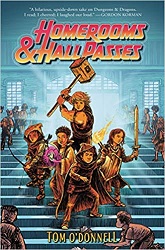
Sonderling Sunday – Das Buch der Tausend Tage

It’s time for Sonderling Sunday! That time of the week when I play with language by looking at the German translation of children’s books, sort of a Very Silly Phrasebook for Travelers.

This week, I’ll be going back to one of my favorite young adult novels, Book of a Thousand Days, by Shannon Hale, known as Das Buch der Tausend Tage in German.

It’s actually been three years since we did a Sonderling Sunday in this book! (This is far, far, too long — more than a thousand days!) We’re “Later” on Day 223, which is page 72 in the English edition, Seite 82 auf Deutsch.

The first sentence of this section is a good place to start.

“There’s a howling outside.”
= Draußen ist großer Radau.
(“Outside is large racket.”)

I like this one:
“curled up” = zusammengerollt

For once it’s shorter in German:
“the lulling song for comfort”
= das einlullende Trostlied

“poppy” = Mohn

“song of healing” = Heilgesang

She’s got picturesque sentences:
“Why does that sound dance like fingernails down my back?”
= Warum tanzt dieser Lärm wie Fingernägel über meinen Rücken?

“howl back” = zurückzuheulen

“they’ve gone quiet” = sind sie mucksmäuschenstill

“It sounds like nightmares.”
= Es klingt wie ein Albtraum.

“hissing” = faucht

“growling and snapping at me” = das knurrend nach mir schnappte

“its mouth was smeared with blood” = mit blutverschmiertem Maul

“blood hungry for battle” = um die Blutrünstigkeit für die Schlacht

“scoot away” = zurückweichen

“crouched, preparing to pounce”
= sich duckte und zum Angriff überging

“my sleek gray cat” = mein schlanker grauer Kater

“No sound from the guards.”
= Kein Geräusch von den Wachen.

“a little hiccup sound in his throat”
= leise Schluckaufgeräusche in der Kehle

“favorite bits” [to eat]
= Leckerbissen

“It’s clumpy and tastes sour”
= Er klumpt und schmeckt sauer

“And worse news” = Und noch eine schlechte Neuigkeit

“scratching and yipping and rustling”
= scharren und piepsen und rascheln

“not fit for gentry”
= für eine Adlige nicht schicklich

I’ll finish with the last sentence of Day 245:
“Rats squeal and skitter around her, and I hear her lips smack, smack, smack.”
= Die Ratten jagen quiekend um sie herum und ich höre ihre Lippen schmatzen, schmatzen, schmatzen.

Und noch eine schlechte Neuigkeit: That’s all for tonight!

Review of Snow Lane, by Josie Angelini

Snow Lane

by Josie Angelini

Feiwel and Friends, January 2018. 197 pages.
Starred Review
This review written December 7, 2017 from an advance reader copy.
2018 Sonderbooks Stand-out:
#1 Historical Children’s Fiction

I’ve often complained that I’m not really represented in children’s books, because there simply aren’t too many books with large families. I’m third of thirteen children. And even when big families are portrayed, they often romanticize them as a big barrel of fun.

The narrator of this book is Annie Bianchi, the youngest of nine kids. I like her reaction when people ask her if it’s fun to always have someone to play with.

Someone to play with? When you’re the youngest of nine kids, you aren’t a player. You’re the ball.

(I am now very frustrated I can’t post that quote on Facebook for my siblings to laugh at now in December 2017 when I’m writing this review. All in good time.)

Annie is ten years old as this book begins. Her oldest sister is nineteen, so, whew! Those kids are consistently much closer together than my family. You figure out very early on that some of her older sisters are just plain mean to her. Not cutesy mean, but abusively mean. This makes the book less pleasant, but it’s also more realistic.

The book is set in 1985. I’m not sure why it’s not set in the present. Things were mentioned that happened in 1985, such as the launching of the space shuttle Challenger and the Cabbage Patch doll craze, but that’s probably a little more fun for those of us who lived through those years than for kids today.

Not that my family was as bad as the Bianchi family, but Josie Angelini gets a whole lot of things right about big families: The overall, pervasive neglect, sibling rivalry on a whole new level, what a big sister leaning over you from an upper bunk looks like, shoes with holes in them, hand-me-down clothes, not having people over so they won’t see your house, mess on a whole new level, older siblings playing a parental role, and nobody monitoring your school assignments. Yep, I strongly suspect the author has personal experience with big families. (Sure enough – I checked her blog and she was youngest of eight. Yes, she gets it.)

Reading this book was really sad for me. Some things happened that were much worse than anything I ever faced, but some of the feelings they pulled up – let’s just say I could relate, all too well.

So the writing is brilliant. She nails the description of a big family – overall, as well as including quirky and real individual characters. But despite the tough things that happen, you can’t help but liking Annie.

Annie’s somewhat scatterbrained and has trouble reading because she’s dyslexic. But she’s a quick thinker and in the Academically Creative and Talented class. In that class, they start off fifth grade with a question about Destiny. So Annie spends the year trying to figure out her destiny. While dealing with friends and her crazy big family and how the worlds of school and home can overlap – or not.

The story does build to a crisis. Some big decisions and revelations are made. The book ends on a note of hope, and you find that you’re rooting for Annie Bianchi, who’s a good listener, a good sister, and a good friend.

josephineangelini.com
mackids.com

Buy from Amazon.com

Find this review on Sonderbooks at: www.sonderbooks.com/Childrens_Fiction/snow_lane.html

Disclosure: I am an Amazon Affiliate, and will earn a small percentage if you order a book on Amazon after clicking through from my site.

Disclaimer: I am a professional librarian, but I maintain my website and blogs on my own time. The views expressed are solely my own, and in no way represent the official views of my employer or of any committee or group of which I am part.

What did you think of this book?
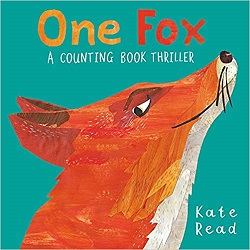
Review of So Tall Within, by Gary D. Schmidt

So Tall Within

Sojourner Truth’s Long Walk Toward Freedom

by Gary D. Schmidt
illustrated by Daniel Minter

Roaring Brook Press, 2018. 48 pages.
Starred Review
Review written October 2, 2018, from a library book
2018 Sonderbooks Stand-out:
#1 Children’s Nonfiction Picture Books

Here’s a picture book biography of Sojourner Truth, focusing on how she spoke up for Freedom.

The words used are poetic and the pictures are full of beautiful resonance.

Many spreads have a panel on the left side beginning with “In Slavery Time…” or “In Freedom Time…” along with an image.

For example, the book begins like this:

In Slavery Time, when Hope was a seed waiting to be planted,

Isabella lived in a cellar where the windows never let the sun in and the floorboards never kept the water out.

The book takes us through her many years in slavery, and then the story of how she got her freedom – and sued her former master because he sold her son out of the state of New York.

But in Slavery Time, Broken Promises were like leaves on a tree.

It tells about how she changed her name and began walking around the country speaking about Freedom and Truth.

In Slavery Time, when Tiredness stood at the doorway,

Sojourner Truth walked all the way to Washington, D. C. There she met Abraham Lincoln, and she told him he was “the best president who has ever taken the seat.”

But the panels change after emancipation.

In Freedom Time, when Hope kindled a fire in the dark and Happiness winked over the horizon,

Soujourner Truth told an audience in Massachusetts, “Children, I have come here like the rest of you, to hear what I have to say.” And what she had to say was plenty.

This book powerfully and poetically portrays a woman who rose from slavery to stand tall and change America.

mackids.com

Buy from Amazon.com

Find this review on Sonderbooks at: www.sonderbooks.com/Childrens_Nonfiction/so_tall_within.html

Disclosure: I am an Amazon Affiliate, and will earn a small percentage if you order a book on Amazon after clicking through from my site.

Source: This review is based on a library book from Fairfax County Public Library.

Disclaimer: I am a professional librarian, but I maintain my website and blogs on my own time. The views expressed are solely my own, and in no way represent the official views of my employer or of any committee or group of which I am part.

What did you think of this book?

Review of The Fifth Season, by N. K. Jemisin

The Fifth Season

The Broken Earth, Book One

by N. K. Jemisin

Orbit Books, 2015. 471 pages.
Starred Review
Winner of the 2016 Hugo Award

After the Newbery, I was ready to read something completely different. Both my adult children highly recommended the Broken Earth trilogy. They told me N. K. Jemisin was the first black woman to win the Hugo – and then the first person to win the Hugo three years in a row – with the books of this trilogy.

Tonight I finished The Fifth Season, and I had to go back to the beginning to see if I understood now what was going on at the start of the book. I think maybe, sort of? I am hoping things will be a bit less murky after book two. Which I am going to read.

This book, like much science fiction, is more cerebral than emotional. The world-building is amazing. We’ve got three plot threads going on, one of them addressing the reader as “you.” You do learn how the three threads are connected before the book ends – but it does end up having you do some rethinking.

The world here is a world that may be ending. They’ve long had “Fifth Seasons” – where ash from a volcano or some other disruption means there is a prolonged winter and little to harvest. They’ve got stonelore to tell them what to do, how to prepare. A new one is beginning, and this may be the worst ever.

This world has orogenes – people who can sense and manipulate the earth. They can raise volcanoes and still earthquakes. Earthquakes that are constantly happening in this world. Orogenes can also kill you by icing you – sucking all the energy out of an area around them and instantly freezing you to death. So they are deeply feared – and kept away from society, trained at the Fulcrum.

There are also Stone Eaters. They seem to be made of stone and can eat stone and move through stone And then there are Guardians, who can neutralize the power of orogenes. Their job is to watch over them. But if you don’t follow the rules, you’re in trouble.

The book follows a woman who was hiding her orogeny and has lost her son, a young girl being taken to the Fulcrum to be trained, and an orogene well along in her training, given a job under a new mentor – where something happens that she can’t explain and changes everything.

I’m still not sure I completely understand all that happened in this book. I need to read on…. How lovely that for once I’m reading a trilogy that’s already completely written!

Go to this book for intricate world-building and mind-blowing ideas. I have a feeling I’ll like it more as I begin to understand more of what’s going on! But I’ve definitely gotten hooked.

nkjemisin.com
orbitbooks.net

Buy from Amazon.com

Find this review on Sonderbooks at: www.sonderbooks.com/Fiction/fifth_season.html

Disclosure: I am an Amazon Affiliate, and will earn a small percentage if you order a book on Amazon after clicking through from my site.

Source: This review is based on a library book from Fairfax County Public Library.

Disclaimer: I am a professional librarian, but I maintain my website and blogs on my own time. The views expressed are solely my own, and in no way represent the official views of my employer or of any committee or group of which I am part.

What did you think of this book?
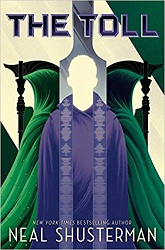
Review of We Don’t Eat Our Classmates, by Ryan T. Higgins

We Don’t Eat Our Classmates

by Ryan T. Higgins

Disney Hyperion, 2018. 40 pages.
Starred Review
Review written June 20, 2018 from library book
2018 Sonderbooks Stand-out:
#1 Picture Books – Silly Fun

Before I looked at the copy of this book that had come to the library for me, I heard my co-worker laughing over it in the next cubicle. We ended up getting everyone else in that section of the office to read it. The tone and pictures are brilliant.

I’ll give a little taste, though you really need to check this book out to see the pictures that go with it. By the way, there’s a picture of Penelope on the title page saying, “Hey kids! You will never be eaten by a T. rex. They are extinct. I promise!”

The book begins:

Penelope Rex was nervous. It’s not every day a little T. rex starts school.

She’s worried whether her classmates will be nice and how many teeth they will have. But when she gets to school:

Penelope Rex was very surprised to find out that all of her classmates were CHILDREN!

So she ate them.

Because children are delicious.

“Penelope Rex!” said Mrs. Noodleman,
“WE DON’T EAT OUR CLASSMATES! Please spit them out at once.”

So she did.

The picture of the angry children covered in drool and digestive juices is delightfully disgusting.

More pictures as Penelope tries to make friends show things like waiting at the bottom of the slide – with her mouth open. Penelope starts to notice that the other kids don’t want to get near her.

No problems-at-school book would be complete without a conversation with the parents.

When she got home, her dad asked about her first day of school.

“I didn’t make any friends!” Penelope cried. “None of the children wanted to play with me!”

“Penelope Rex,” her father asked, “did you eat your classmates?”

“Well . . . maybe sort of just a little bit.”

“Sometimes it’s hard to make friends,” said her dad. “Especially if you eat them.”

“You see, Penelope, children are the same as us on the inside. Just tastier.”

The next day, a lesson comes for Penelope in an unexpected way.

This book is too much fun! In fact, I’m sad that it came in one week after we finished booktalking this year. It’s already going on my list for next year. Very silly. Very fun. There’s nothing quite like a picture book that makes you laugh out loud.

ryanthiggins.com
DisneyBooks.com

Buy from Amazon.com

Find this review on Sonderbooks at: www.sonderbooks.com/Picture_Books/we_dont_eat_our_classmates.html

Disclosure: I am an Amazon Affiliate, and will earn a small percentage if you order a book on Amazon after clicking through from my site.

Source: This review is based on a library book from Fairfax County Public Library.

Disclaimer: I am a professional librarian, but I maintain my website and blogs on my own time. The views expressed are solely my own, and in no way represent the official views of my employer or of any committee or group of which I am part.

What did you think of this book?

Review of Leatherbound Terrorism, by Chris Kratzer

Leatherbound Terrorism

Crucified by Conservative Evangelicalism, Resurrected by Jesus

by Chris Kratzer

Grace Publishing, 2018. 197 pages.
Starred Review

I was leery of reading this book. The author comes across on Facebook as unduly angry. (I think he would say that he is properly angry.) I’m a universalist who attends an evangelical church, and I would like to think they are not so bad as the “conservative Evangelical churches” he rails against. I do love that they did not make me sign a statement of faith when I joined the church, but only asked me if I had accepted Jesus as my Lord and Savior. (I have.) They knew I’m a universalist and let me join anyway. At times, the pastor has gone out of his way to make it clear that there is no one “Christian” political view. We are a community of people who love Jesus and are trying to follow Him together – and a wide variety of political views, and, yes, even theological views are included within our body.

I don’t agree with every point of doctrine in Chris Kratzer’s book, either. But to be honest, my views seem to agree at many more points with his than they do with standard evangelical teaching, even at my own church. So I appreciated how his teaching applies those beliefs to life – and points out where evangelical theology can trap you into not living a grace-filled life.

All that is to say, I don’t believe in every point he teaches – but I found many wonderful things in this book. And I wrote a long review, because I wanted to be reminded of all that he said. (I finished reading the book a couple weeks ago.)

And things to watch out for. I’m afraid that my church, which I’ve always loved for not claiming to have the final answer on every matter of faith and conduct, for acknowledging that Christians disagree on political issues and are still Christian – is contemplating adding a “Christian Living Statement” to the bylaws that would claim some things are sinful that I strongly do not believe the Bible teaches are sinful. I think that policy would exclude and condemn people the Lord does not condemn. And it would bring us closer to the pitfalls Chris Kratzer points out in this book.

But back to the book. What the author is condemning in conservative evangelicalism is the spirit of condemnation as opposed to Grace.

That sounds contradictory – but it lines up with the one thing Jesus called people out for – religious leaders tying up heavy loads and placing them on people’s shoulders. Religious leaders saying they knew the only way to God and pointing out other people’s sins.

Jesus partied with tax collectors and sinners. Sure, he told the woman caught in adultery to go and leave her life of sin, but he wasn’t the one who dragged her before a group of judges. Mary Magdalene had seven demons cast out of her. She was an unsavory character – whom Jesus loved.

Wait, I was going to get to talking about the book!

The author tells the story of his life, including a difficult childhood in and out of the hospital with asthma, being sexually abused, and having an impossible-to-please father. As an adult, he became a conservative evangelical pastor.

Just color within the lines, give the proper responses, think and believe the right things, fight the good fight of faith, and I, too, could become “successful” and satisfactory for Jesus. Perhaps then, both my father on earth and the Father above could finally love me – perhaps, then, even I could finally love me. The ultimate trifecta of acceptance and approval was just an Evangelical “to do” list away, all leading to a position seated high above the world upon which to feel good about myself through a subtle looking-down upon others. It was all so righteous and perfect – so it seemed.

I have to say that even in a “good” evangelical church, those are exactly the temptations – “to do” list Christianity, thinking you have to do certain things or at least believe certain things to keep God from being mad at you. And then a subtle self-righteousness as much as you manage to do/believe those things.

People were now projects, Jesus was the springboard to my success, church was a platform upon which my ego could overcome my insecurities, and faith was an appearance that I hoped would convince me that I was something valuable when, deep down, I ultimately believed I was not.

This is the poison I thought was the cure.

He noticed something was wrong when a lesbian woman came to him for help.

She had been brutally condemned by nearly every person and spiritual entity in her life, and was grasping at my counsel for one last ray of hope. Yet, with every conservative Evangelical prescription and pre-packaged talking point that vomited off my lips, it all fell flat and reeked of death, leaving this beautiful person all the closer to giving up as the fading light behind her eyes was now all but snuffed out. What was “biblical” in Evangelical eyes, brought death to hers.

In a way like never before, the alarms went off inside of me, “Something is seriously wrong, this is not what I signed up for.” This whole, “hate-the-sin, love-the-sinner” crap was showing itself to be nothing like Jesus. Broken people didn’t cringe at His presence and leave defeated; instead, they clung to His every being and walked away with affirmation, freedom, and unstoppable courage.

The cat was out of the bag, and I could no longer deny it – the more conservative an Evangelical I became, the less I portrayed Jesus….

All that time, I thought I was helping people when, in fact, I was imprisoning them – declaring a mixed Evangelical gospel of conditional love that is, in fact, no Gospel at all (Galatians 1:6-7). All, while sentencing countless God-adorned people to a fear-driven, empty life of sin-management, God-appeasement, and people-judging.

This is where I agree with him. I believe that God does NOT need to be appeased. I believe that God does NOT require payment before He forgives. He forgives us because He loves us. When Jesus came to show us what God is like, humans killed Him – and He showed us that God loves and forgives, even then.

But back to the book:

All that time, I thought I knew love and how to give it, when, in truth, I knew nothing of it – receiving it, living it, sharing it. I thought loving people required doing so with careful restraint for fear you might extend too much grace and affirmation, or worst of all, catch their disease. Constantly pumping the brakes with people by restricting my love and qualifying His was indeed an unpleasant endeavor that never felt settled in my spirit. Yet, for so long, I believed that was the full extent for which God loved me – all at a safe distance, riddled with fine print.

He had a transformative experience, though, when he was in a dark place.

For the first time in my adult life, I encountered Grace – unconditional, irrevocable, unremovable, pure, undiluted Grace. It wasn’t a theology, philosophy, or new way of thinking; it was a person – Jesus. So much of what I thought and was taught was true of God, actually wasn’t. He wasn’t angry, condemning, judging, scorekeeping, disappointed, nor dismayed. He didn’t care about anything else but loving me – nothing. There was no follow up, no fine print, no bait and switch, no add-ons nor requirements. Love was “It,” the whole thing, from beginning to end – not my love for Him, but His love for me. That’s all there was, that’s all that was needed….

For sure, it didn’t happen overnight, but in a way and at a depth like never before, I tasted and saw that God was indeed good, really good, better than I ever imagined, far beyond the capacity of my Evangelical mind to conceive. I didn’t have to rationalize Him, overlook a conservative Evangelically imposed case of divine schizophrenia placed upon Him, nor prop Him up with talking points that dance around people’s doubts. He was truly good, through and through, and needed none of my conservative Evangelical snake oil to do His bidding. And best of all, now the goodness that is me, that has always been good, whole, and pure – goodness that had long been denied and imprisoned, was suddenly given freedom to live. I was alive for the first time, breathing for the first time, loving for the first time, and allowing myself to be loved for the first time. Salvation had come – Jesus is enough, I am enough, love is enough – period, full stop. I was a man awakened by Grace in just the nick of time. Everything that truly matters began its beginning, and everything else that doesn’t, started its ending.

The rest of the book is mainly about getting that message of Grace across.

Hear me, and hear me well. Whatever sense of condemnation, shame, disappointment, or lack you have towards yourself (or others), it does not come from God – it can’t. Run from any message that puts any conditions, any hell, or any distance between you and Him. Contrary to what is largely taught throughout American Christianity, all of these are constructs of religious projection and sure poison to the soul….

God is Love from top to bottom, beginning to end – inside and out. The expanse of God who is Love is boundless, limitless, unrestricted, and unrestrained. His actions and reactions to every molecule and movement of your life is always Love. God is pedal-to-the-metal in love with you – always has been, always will be.

He says that the Gospel is about Grace, not about Repentance. And I so agree with him about this!

See, the truly good news is that our unconditional, irreversible inclusion in Christ with all its benefits is the gift – there’s nothing to receive, only everything to believe. When Jesus said, “It’s finished,” He meant it. Faith is simply awakening and resting fully in this Truth – realizing it’s never been about our performance, but always about His. Any “repentance” and relational aspects of Scripture must be understood, not as admonitions for our required response, but as cues to awaken to the fullness and sufficiency of Grace that is already ours, completely and irrevocably. This difference changes everything, and makes the Gospel truly good news.

His message – and I agree with this, too – is that condemnation is not from God.

Make no mistake, Jesus didn’t die to riddle your life (or any other) with condemnation in any form. Jesus doesn’t love you to fill your heart with conditions. Jesus didn’t create heaven to lose you to the possibility of hell. For any message that declares condemnation from God or places conditions to love, falls drastically short of reflecting God and understanding Him who is Love.

I love this part. Yes, this makes people about whom others will say “See how they love one another!”

To think that I no longer had to prequalify people for love (including myself) and spiritually police the world with conditions and condemnation, brought an emancipation to my heart that was freeing me from the slavery of conservative Evangelical religiosity.

He talks about the Evangelical attitude of weaponizing the Bible – and asserting that your own interpretation of it is the very Mind of God. He reminds us, “If the writers of the Bible captured the sum, conclusion, and depth of all that is truth, there would be no need for the One Who Is Truth to reveal it and His Spirit to guide us in it.”

Evangelicals seem to be obsessed with sin – and he has some pointed things to say about how they would act if they were truly concerned about sin.

First, conservative Evangelical Christianity would be aggressively focused on their own sin, not the perceived sins of others….

Second, conservative Evangelical Christianity would be communicating far more Grace and kindness. In fact, conservative Evangelical Christians would be ascribed as undeniably being the kindest most gracious people on the planet, trumpeting the message of the pure Gospel of Grace at every opportunity – knowing and teaching that, “It is God’s kindness that leads to repentance,” and “It’s the Grace of God that teaches us to live rightly.” Sin would be taken so seriously that pure Grace would be valued as the only solution….

Third, conservative Evangelical Christianity would be truly and completely trusting the Spirit. For the Christian calling isn’t to change people, but to love them unconditionally while the Spirit does what only the Spirit can do. In the presence of perceived sin, conservative Evangelical Christians would be doing everything possible to get out of the way of the Spirit and to doubly make sure they didn’t serve as a detriment or distraction to the Spirit’s work. They would be so sensitive to this movement in people’s lives that to potentially err on the side of thwarting God’s transformative hand through fostering false guilt, shame, and condemnation, would send shivers down their spine, causing them to value restraint above all else – if it was all about sin.

And finally, conservative Evangelical Christianity would be unconditionally serving and loving to the extreme. In fact, conservative Evangelical Christianity would be declared the greatest friend a person could have, especially those labeled as “sinners.” The way conservative Evangelical Christians generously served, put their needs aside, and extravagantly loved people who have been marginalized, condemned, and demonized would be so world-renowned that people might become attracted to engage in sin or experience religious oppression just for the overwhelming love and selfless serving they would receive in response from conservative Evangelical Christians.

There’s an entire chapter called “Maybe This Is the Real Reason You Believe Being Gay Is a Sin.” Here’s a bit from that chapter:

In a Christian church-world where there are over 30,000 denominations who read the very same Bible you do, and come to thousands of different belief-conclusions on major theological issues; in a Christian church-world where elective misunderstanding and ignorance are seen as legitimate positions instead of serious problems; in a Christian church-world where there are countless, growing numbers of biblical scholars with the same love for Jesus, submissive heart for Scripture, and tenacity for Truth as you, who see the Bible as affirming LGBTQ people, not condemning them; maybe, just maybe, the real reason you believe being gay is a sin is because – you want to. It’s not the Bible saying so, it’s you saying so.

In fact, if one can be faithful to the sacred Scriptures and yet come to an LGBTQ-affirming view (which you can) instead of condemning, demonizing, and abusing a whole God-adorned population of humans, why wouldn’t you? Maybe, just maybe, the real reason is because – you don’t want to.

I must admit that I do believe there will be judgment after death. But that judgment will be for correction, not for retribution, and it will not last forever. As for hell, I’m much, much closer to Chris Kratzer’s beliefs about hell than about the evangelical belief in a place of unending torment. That, I do NOT believe in. He’s got a whole chapter on it, but these few paragraphs give a taste:

So, as difficult, foundation-shaking, and faith-unraveling as this question could potentially be, I’m still going to ask it – what if hell is nothing like you think?

What if hell (if a place at all) is actually just as Jesus alluded, a literal place (Gehenna) located in Jerusalem, associated with the valley of Hinnom that was used as the city dump where a fire was constantly kept to burn up and consume all of the city’s unwanted junk? In fact, the word Gehenna occurs 12 times in the Greek Manuscripts of the New Testament, each time being mistranslated to mean “hell” in several versions of the Bible, even though Jesus used it as a clear reference to a city dump.

What if it’s an embarrassingly huge stretch of theological abuse to determine in one moment that the admonition by Jesus to “pluck your eye out” is certainly not to be taken literally, but, yet, in the next moment, His literal use of “Gehenna” in the same sentence should somehow be unequivocally understood to refer figuratively to a real place in the bottom of the earth where people are tortured by the wrath of God in eternal flames? Really?…

What if the single word “hell” we use today and associate as “hell” (a place of fiery, eternal torture) is actually not found in the Bible – anywhere, and in no manuscripts? It’s true.

What if, in fact, much of modern Christianity’s convenient love affair with a hell of flames, wrath, and demons comes much more from the influence of Dante’s “Inferno” than ever could be derived from the true words of Jesus?

There’s more, but I find I like this image:

What if hell is the experience of religious-hearted people who despise the pure Grace of God and His unconditional love and inclusion of all people into Himself and the Kingdom? In the eternal presence of the white-hot love of God forever flowing out as a river from His throne (Daniel 7:10), their souls are scorched with frustration, rage, and torment as their self-righteousness, conditional love, and religious arrogance, bigotry, and intolerance are exposed – stripped, and rendered powerless and evil. For the same Grace and love that will be experienced as heaven by many will be a sure, torturous hell for some. Jesus forever flips over the tables, yet again, and those whom religion joyously sends to the curb are given a prized seat of bliss, and those whom religion gives elite privilege are found to be pouting and wallowing forever in religious disgust.

And I love this about God and about Jesus’ death:

What if Jesus didn’t die to forgive us, but to manifest to the world that God already had, long ago in the realm of eternity?

What if God isn’t schizophrenic after all – harboring unconditional love for humanity one moment and eternal hate the next?

What if the truth is, you can’t reject Grace – you can’t stop its presence, pursuit, favor, or blessings over your life or that of any other, you can only love it or resist it? Loving, believing, trusting Grace fills your life with heavenly rest. Not loving, believing, and trusting Grace fills your life with a hell of frustration, self-righteousness, bitterness, religiosity, judgmentalism and angst – as long as you desire.

There’s a lot more, such as why people stay away from evangelical churches. (They don’t feel loved.) I especially loved what he had to say about learning to minister to that lesbian woman from the beginning of the book:

For so long, my conservative Evangelical faith required me to pump the brakes on loving her, and to make sure I kept a safe distance. Any bit of love that I might send her way must be packaged with conditions and restrictions, lest she be led astray.

Yet, I’ll never forget the moment. It felt like the heavens did open this time when I realized I could love her without restraint or restriction, my heart was finally free. I knew in that moment, in a way like never before, that Jesus truly lived within me. For no one loves like Jesus until they love without conditions, restrictions, or restraints.

Isn’t this what your heart has been longing for, to feel the full force of Jesus living through you?

There’s a wonderful scene where he explains what happened with his teenage son. I think it beautifully symbolizes what we think God the Father is like toward us.

In the past, they’d been having some trouble, and the father made “a long, written covenant of behavioral conditions that he would have to fulfill, making sure our expectations were perfectly clear. If he was complicit, good things would result. If not, the daunting consequences were sure. I sat him down, went over the contract, and sternly pasted it on the refrigerator door, just like any good conservative Evangelical would do.”

It didn’t work out all that well. But it wasn’t long after that when Chris Kratzer had a change of heart.

One evening, with a fresh new heart and perspective, I summoned Harrison into the kitchen. I grasped the covenant off the refrigerator and tore it in half, throwing it onto the floor. I told Harrison, there will be no more punishment, conditions, nor condemnation. “We love you, and that’s the beginning and end of all that matters.” I impressed upon him my sincere apologies for being such a grace-less dad, and asked for his forgiveness. He was free to choose the course of his behaviors, not out of fear of punishment or obligation to a set of rules, but because He is loved and deserves the blessings of choosing well. You could see the surprise in his eyes and a new countenance wash over him. I kid you not, from that day forward, his heart, attitude, and behavior forever changed for the better.

That anecdote makes me wonder, Why, why, why do we think that “calling out sin” will help people come out of it?

I’ve written a long review, but there’s so much more in this book. Okay, there are some typos, and some spots less well-organized than others. But don’t let that block its powerful and needed message. It’s well worth reading, and I highly recommend it. I’ll finish with this truly Good News:

Yes, it’s true, there is a Gospel that is devoid of fiery judgment, religious condemnation, guilt-trips, “to-do” lists, love-prequalifying, and people-shaming. There is a Gospel where everyone is deemed equal, affirmed, included, and eternally loved and valued. There is a Gospel absent of an angry, vengeful God who requires the murder of His Son and the proper religious responses of His creation in order to forgive and save humanity. There is a Gospel where God loves unconditionally, because that’s who He is and can do no other. There is a Gospel that stands against all violence, abuse, and idolatry, and, yet, in all these things, is no less biblical. This Gospel is not a fad, a new theology, or some wayward heresy – it’s a person, and that person is Jesus who is pure Grace.

chriskratzer.com

Buy from Amazon.com

Find this review on Sonderbooks at: www.sonderbooks.com/Nonfiction/leatherbound_terrorism.html

Disclosure: I am an Amazon Affiliate, and will earn a small percentage if you order a book on Amazon after clicking through from my site.

Source: This review is based on my own copy, purchased via Amazon.com.

Disclaimer: I am a professional librarian, but I maintain my website and blogs on my own time. The views expressed are solely my own, and in no way represent the official views of my employer or of any committee or group of which I am part.

What did you think of this book?