Review of On Tyranny, by Timothy Snyder, illustrated by Nora Krug

On Tyranny

Twenty Lessons from the Twentieth Century

Graphic Edition

by Timothy Snyder
illustrated by Nora Krug

Ten Speed Press, 2021. Original edition published in 2017. 128 pages.
Review written January 6, 2022, from a library book
Starred Review

I think copying out the Prologue will explain well what this book is trying to do:

History does not repeat, but it does instruct. As the Founding Fathers debated our Constitution, they took instruction from the history they knew. Concerned that the democratic republic they envisioned would collapse, they contemplated the descent of ancient democracies and republics into oligarchy and empire. As they knew, Aristotle warned that inequality brought instability, while Plato believed that demagogues exploited free speech to install themselves as tyrants. In founding a democratic republic upon law and establishing a system of checks and balances, the Founding Fathers sought to avoid the evil that they, like the ancient philosophers, called TYRANNY. They had in mind the usurpation of power by a single individual or group, or the circumvention of law by rulers for their own benefit.

Much of the succeeding political debate in the United States has concerned the problem of tyranny within American society: over slaves and women, for example.

It is thus a primary American tradition to consider history when our political order seems imperiled. If we worry today that the American experiment is threatened by tyranny, we can follow the example of the Founding Fathers and contemplate the history of other democracies and republics. The good news is that we can draw upon more recent and relevant examples than ancient Greece and Rome. The bad news is that the history of modern democracy is also one of decline and fall. Since the American colonies declared their independence from a British monarchy that the Founders deemed “tyrannical,” European history has seen three major democratic moments: after the First World War in 1918, after the Second World War in 1945, and after the end of communism in 1989. Many of the democracies founded at these junctures failed, in circumstances that in some important respects resemble our own.

He continues to talk about the rise of fascism, Nazism, and communism in the twentieth century.

We might be tempted to think that our democratic heritage automatically protects us from such threats. This is a misguided reflex. In fact, the precedent set by the Founders demands that we examine history to understand the deep sources of tyranny, and to consider the proper responses to it. Americans today are no wiser than the Europeans who saw democracy yield to fascism, Nazism, or communism in the twentieth century. Our one advantage is that we might learn from their experience. Now is a good time to do so.

This book presents twenty lessons from the twentieth century, adapted to the circumstances of today.

The first lesson is “Do not obey in advance.” The first example is that several countries taken over by Hitler started persecuting Jews before they were ordered to.

Some other notable lessons are: “Remember professional ethics.” (Doctors should not be willing to experiment on prisoners, for example.) “Be wary of paramilitaries.” “Be reflective if you must be armed.” “Be kind to our language.” “Believe in truth.” “Learn from peers in other countries.” “Listen for dangerous words.”

The lesson “Be a patriot.” contrasts patriotism with nationalism. “A nationalist encourages us to be our worst, and then tells us that we are the best.”

A patriot, by contrast, wants the nation to live up to its ideals, which means asking us to be our best selves. A patriot must be concerned with the real world, which is the only place where their country can be loved and sustained. A patriot has universal values, standards by which they judge their nation, always wishing it well – and wishing that it would do better.

The Epilogue contrasts the politics of inevitability, eternity, and history.

The politics of inevitability is “the sense that history could move in only one direction: toward liberal democracy.” Communism had a similar politics of inevitability, though theirs was that history was moving toward an inevitable socialist utopia.

The politics of eternity are “concerned with the past, but in a self-absorbed way, free of any real concern with facts. Its mood is a longing for past moments that never really happened during epochs that were, in fact, disastrous.”

Eternity politicians bring us the past as a vast misty courtyard of illegible monuments to national victimhood, all of them equally distant from the present, all of them equally accessible for manipulation. Every reference to the past seems to involve an attack by some external enemy upon the purity of the nation. National populists are eternity politicians.

I was a little surprised that his first examples of that were politicians advocating for Brexit in the United Kingdom and the National Rally in France. But yes, he does include “Make America great again.”

He says it’s easy to go from the politics of inevitability to the politics of eternity.

The only thing that stands between them is history itself. History allows us to see patterns and make judgments. It sketches for us the structures within which we can seek freedom. It reveals moments, each one of them different, none entirely unique. To understand one moment is to see the possibility of being the cocreator of another. History permits us to be responsible: not for everything, but for something.

The illustrator put many photographs from tyrannies in the twentieth century in these pages, along with disturbing images that will help the words strike home. The book was clearly updated in 2021, since it includes many statements from the Trump presidency and the events of January 6, 2021.

The result is a powerful book of history with warnings for today.

tenspeed.com

Buy from Amazon.com

Find this review on Sonderbooks at: www.sonderbooks.com/Nonfiction/on_tyranny.html

Disclosure: I am an Amazon Affiliate, and will earn a small percentage if you order a book on Amazon after clicking through from my site.

Disclaimer: I am a professional librarian, but the views expressed are solely my own, and in no way represent the official views of my employer or of any committee or group of which I am part.

What did you think of this book?
Review of Fly, Girl, Fly! by Nancy Roe Pimm, illustrated by Alexandra Bye

Fly, Girl, Fly!

Shaesta Waiz Soars Around the World

by Nancy Roe Pimm
illustrated by Alexandra Bye

Beaming Books, Minneapolis, 2020. 44 pages.
Review written November 14, 2020, from a library book

This picture book biography tells the story of Shaesta Waiz, who was born in Afghanistan and came to America as a refugee with her family when she was a little girl. As a child, she had a lot of fears, including a fear of riding in an airplane. But after overcoming that fear on a trip to see her cousin in Florida, Shaesta decided to become a pilot.

Shaesta went on to fly solo around the world. But she made her trip distinctive by making many stops along the way to speak to girls about all that they can grow up to accomplish, including a stop in her native Afghanistan.

Shaesta decided she would not just fly all the way around the world. She’d also meet with young people everywhere. She’d get them excited about careers in science, technology, engineering, and math to chase down dreams of their own!

Shaesta ended up being the first woman from Afghanistan and the youngest woman in history to fly a single-engine aircraft around the world.

This is a fascinating and inspiring story about someone I wouldn’t have heard of otherwise. It’s great to read about a refugee girl who followed her dreams and did something big.

beamingbooks.com

Buy from Amazon.com

This review is only on the blog.

Disclosure: I am an Amazon Affiliate, and will earn a small percentage if you order a book on Amazon after clicking through from my site.

Disclaimer: I am a professional librarian, but the views expressed are solely my own, and in no way represent the official views of my employer or of any committee or group of which I am part.

What did you think of this book?
Review of Too Bright to See, by Kyle Lukoff

Too Bright to See

by Kyle Lukoff

Dial Books for Young Readers, 2021. 188 pages.
Review written February 19, 2022, from a library book
Starred Review
2021 National Book Award Finalist
2021 Cybils Finalist, Elementary/Middle Grade Speculative Fiction
2022 Stonewall Award Winner
2022 Newbery Honor Book

Too Bright to See is a ghost story, but I don’t have a Paranormal category in my Children’s Fiction page, so I think I’ll list it under “Contemporary” rather than under “Fantasy,” because it’s a Contemporary story that also has ghosts. This is the first Stonewall Award Winner (for LGBTQ-content books) to also receive Newbery recognition, and the first transgender author to receive Newbery recognition. When I was talking about the book to coworkers I said, sadly only half-joking, to read it before it gets banned. (The question is, how current are the book banners? Do they realize new children’s books are being published all the time?)

The story is simple and heart-warming. As it begins a kid called Bug is dealing with the recent loss of their uncle. They had lived with their mother and uncle in an old haunted house in Vermont. Bug has always been able to sense ghosts in the house — cold spots and unexplained winds and the like. But the ghosts had never paid any attention to Bug — until now.

Bug becomes convinced their uncle is trying to tell them something. But how can they figure out what? In the meantime, Bug’s best and only friend Mo wants to get ready for middle school. She asks to be called Moira and buys fancier clothes and starts practicing wearing makeup and nail polish. Bug wants no part of it, but wonders if something is wrong that they feel that way.

Knowing the author is trans, I was pretty sure where this plot was going, and I wasn’t wrong. But I did think it was handled in a nice way. And those around Bug handled it well, too, in a book about middle school approaching that was refreshingly free from bullying. This is how such a thing should go — and how nice to read such a book.

But all you need to tell kids is that this book is about “a kid being haunted by the ghost of their dead uncle into figuring out something important.” That’s how the author summarizes the plot. I’m not a big ghost story fan, but this book will work for kids who like very gentle hauntings. And of course any book about middle school approaching is going to deal with friendships and family and adjustments and about figuring out who you really are in the context of all that. This book does not disappoint.

kylelukoff.com
penguin.com/kids

Buy from Amazon.com

Find this review on Sonderbooks at: www.sonderbooks.com/Childrens_Fiction/too_bright_to_see.html

Disclosure: I am an Amazon Affiliate, and will earn a small percentage if you order a book on Amazon after clicking through from my site.

Disclaimer: I am a professional librarian, but the views expressed are solely my own, and in no way represent the official views of my employer or of any committee or group of which I am part.

What did you think of this book?
Review of Fallout, by Steve Sheinkin, read by Roy Samuelson

Fallout

Spies, Superbombs, and the Ultimate Cold War Showdown

by Steve Sheinkin
read by Roy Samuelson

Listening Library, 2021. 8 hours
Review written 2/22/22 from a library eaudiobook
Starred Review
2022 Young Adult Excellence in Nonfiction Award Finalist

Fallout is a nonfiction book about the Cold War, leading up to the Cuban Missile Crisis. Steve Sheinkin takes a storyteller’s approach, telling you the stories of key figures, including many I’d never heard of before. Among others, these included a U2 pilot who got shot down over Russia, a Russian spy who tried to establish a network in New York City beginning soon after World War II, a paper boy who found a nickel that had been hollowed out to hold microfilm, and a Russian chief of staff of a submarine fleet who ordered a submarine captain and first officer not to launch a nuclear torpedo — after the world thought hostilities were ended, but the sub hadn’t heard about it.

The book is gripping and engaging and full of facts from witnesses. Although it takes place before I was born, I remember the climate when nuclear war seemed highly likely, even doing a drop and cover drill at my desk as a child, and being told by my parents that you could never trust the Russians.

Steve Sheinkin begins right after World War II and the development of bombs whose destructive force is hard to even imagine. He progresses through the space race and the rise of Castro and the development of the U2 program to fly over the Soviet Union. We hear about Khruschev’s ruthless rise to power as well as John F. Kennedy’s.

The one catch to this amazing audiobook is that my timing wasn’t good. I listened to it as Putin was threatening to invade Ukraine. Learning how several lucky coincidences saved us from World War III during the Cuban Missile Crisis, and learning that all-out nuclear war would mean the end of human life on earth as we know it — all made it disturbing to have Russia threatening war again, even in a different part of the world.

stevesheinkin.com
listeninglibrary.com

Buy from Amazon.com

Find this review on Sonderbooks at: www.sonderbooks.com/Teen_Nonfiction/fallout.html

Disclosure: I am an Amazon Affiliate, and will earn a small percentage if you order a book on Amazon after clicking through from my site.

Disclaimer: I am a professional librarian, but the views expressed are solely my own, and in no way represent the official views of my employer or of any committee or group of which I am part.

What did you think of this book?
Review of All the Greys on Greene Street, by Laura Tucker

All the Greys on Greene Street

by Laura Tucker

Viking, 2019. 307 pages.
Review written January 9, 2020, from a library book

All the Greys on Greene Street is set in Soho in 1981, and tells the story of twelve-year-old Olympia. Olympia is an artist, and she likes to sketch in grey. Both her parents are artists – her mother makes sculptures from found objects, and her father restores old works of art.na

But recently Olympia’s life has been uprooted. Her father ran off to France a week ago with a Frenchwoman he was working with, and her mother has gone to bed – and won’t get up.

The family lives in a loft in the same building as their studio, and her father’s partner is still working there. This book is the story of Olympia’s carrying on – and still making art – while no one is taking care of her. Her mother had an episode like this before, and Olympia’s not sure what she’ll do if she tells anyone. Her father is unreachable and left a note that some people think what he did was wrong – there’s something more going on with his disappearance than she realized.

Meanwhile, Ollie’s two friends, Richard and Alex, don’t know what’s going on with her mother, but they continue their quirky friendships.

This book is interesting because of Olympia’s thoughtful personality, navigating life when it’s tricky, and making art.

penguin.com/middle-grade

Buy from Amazon.com

This review is only on the blog.

Disclosure: I am an Amazon Affiliate, and will earn a small percentage if you order a book on Amazon after clicking through from my site.

Disclaimer: I am a professional librarian, but I maintain my website and blogs on my own time. The views expressed are solely my own, and in no way represent the official views of my employer or of any committee or group of which I am part.

What did you think of this book?
Review of Miss Benson’s Beetle, by Rachel Joyce

Miss Benson’s Beetle

by Rachel Joyce
read by Juliet Stevenson

Random House Audio, 2020. 12 hours, 4 minutes.
Review written June 5, 2021, from a library eaudiobook
Starred Review

I read Miss Benson’s Beetle because of a recommendation from the “Silent Book Club” Facebook group of it as a Feel-Good Read. The book delivered! This is a delightful and quirky novel about following your dreams.

It’s 1950. Miss Benson has lived through two world wars. She’s been teaching domestic science at a school for girls for twenty years. One day an incident makes her realize that the girls and the staff are laughing at her, in all her frumpiness. She throws it all off and decides to revive her childhood dream. She’s going on an expedition in search of the Golden Beetle of New Caledonia. It has been seen by some, but no specimens have been gathered, so as far as science is concerned, it doesn’t exist.

Since she doesn’t speak French, she advertises for an assistant. That doesn’t go quite as planned, but eventually she and an assistant head off on an ocean liner toward New Caledonia, in search of the golden beetle.

This book never goes for a likely plot. In fact, the things that happen border on ridiculous. But I’ve read that readers can tolerate coincidences that make things difficult for the characters, because that feels like life. What they can’t tolerate are coincidences that solve the characters problems. And yes, Miss Benson’s careful planning gets mostly stymied. The difficulties she faces are outrageous and completely win the reader’s sympathy.

Fortunately, Miss Benson has a companion who won’t let her give up on her vocation.

I should say that I do bear a grudge against the author for something that happened at the end, but this book still qualifies as a Feel-Good Read. It’s in a category all by itself, not a romance, not exploring issues, not helping you know more about a historical period. But it’s a book that’s full of a wild seize-the-day sort of joy, about an ordinary older lady throwing off convention and following her calling.

Buy from Amazon.com

Find this review on Sonderbooks at: www.sonderbooks.com/Fiction/miss_bensons_beetle.html

Disclosure: I am an Amazon Affiliate, and will earn a small percentage if you order a book on Amazon after clicking through from my site.

Disclaimer: I am a professional librarian, but the views expressed are solely my own, and in no way represent the official views of my employer or of any committee or group of which I am part.

What did you think of this book?
Review of The Incredible Yet True Adventures of Alexander von Humboldt, by Volker Mehnert, illustrated by Claudia Lieb

The Incredible yet True Adventures of Alexander von Humboldt

The Greatest Inventor-Naturalist-Scientist-Explorer Who Ever Lived

by Volker Mehnert
illustrated by Claudia Lieb
translated by Becky L. Crook

The Experiment, New York, 2019. First published in Germany in 2018. 112 pages.
Review written April 30, 2020, from a library book

The format of this book seems odd, since the trim size is large like a picture book, but the print is small and at a higher level of understanding, so this is a book for upper elementary and middle school kids, but it looks like a picture book at first glance. When I realized it is the translation of a German book, that made more sense, as they probably have some different conventions. I think it might find more of an audience if it were the size of a chapter book, but I did appreciate the large paintings illustrating the travels of this explorer.

I was also surprised that I hadn’t heard of Alexander von Humboldt, when I’m told that he was a huge celebrity in the 19th century. The title claims he was the greatest Inventor-Naturalist-Scientist-Explorer who ever lived. Was he the only Inventor-Naturalist-Scientist-Explorer?

But the story of his life is indeed fascinating. Most of his fame came through one expedition through South America – but that one expedition lasted years. He was so full of curiosity, he’d keep on changing plans to see the next amazing thing. When he got near volcanoes, for example, he felt compelled to climb them and even go inside the crater where possible. He climbed most of the way up what were then thought to be the tallest mountains in the world without any modern climbing equipment.

Why haven’t I heard of this explorer before? He studied geology, botany, ocean currents, mining operations, and so much more. His lectures in Paris and Berlin after his travels attracted crowds and his books were bestsellers. I suspect part of the reason is that he was Prussian, and the books he wrote were written in German. So I’m glad this book got translated so I could read his story.

theexperimentpublishing.com

Buy from Amazon.com

This review is only on the blog.

Disclosure: I am an Amazon Affiliate, and will earn a small percentage if you order a book on Amazon after clicking through from my site.

Source: This review is based on a library book from Fairfax County Public Library.

Disclaimer: I am a professional librarian, but the views expressed are solely my own, and in no way represent the official views of my employer or of any committee or group of which I am part.

What did you think of this book?
Review of Molly and the Mathematical Mysteries, by Eugenia Cheng, illustrated by Aleksandra Artymowska

Molly and the Mathematical Mysteries

Ten Interactive Adventures in Mathematical Wonderland

by Eugenia Cheng
illustrated by Aleksandra Artymowska

Big Picture Press (Candlewick), 2021. First published in 2020 in the United Kingdom. 30 pages.
Review written January 4, 2022, from my own copy
Starred Review
2022 Mathical Book Prize Honor Book, Grades 3-5

Oh, this book is delightful! It’s a lift-the-flap adventure that demonstrates intriguing mathematical oddities. I know – that doesn’t sound amazing and inviting, but this book is both of those things.

A girl named Molly gets a series of mysterious notes. We get to lift flaps and read these notes. The notes tell her what to do to get past that page. The first note, for example, tells her to open her window and turn her room inside out – at least in her imagination. Flaps open the window. Then on the next page, we’ve got an inside-out world, explaining the mathematical concept of inverses.

Some of the pages have puzzles in the flaps. An impossible staircase Molly can only escape by lifting the flaps. A maze Molly can only traverse if you lift the correct flaps. Figuring out which flaps can be folded into a cube. Weaving strips so that pink squares are hidden. Turning paper dials to reveal the correct answer. Each page has something different to figure out or uncover, and it leads you through the book along with Molly.

And the mathematical concepts are fun ones. This book helps kids think about dimensions, tiling, self-similarity, symmetry, combinations, fractals, and more. After completing Molly’s adventure, five colorful pages give the reader more mathematical information.

I had a lot of fun going through this book – and I’m an adult who already knows all the concepts. I would love to watch a kid go through it. Of course, the one drawback is that with all the flaps, this is not a good choice for a library collection. But I think a kid who had it at home would find themselves returning to it again and again.

Note: Even though this is presented as a story about Molly and is thus technically Fiction, the focus is on the mathematical concepts, so I think it fits better with Children’s Nonfiction, which is where I’ll file it.

eugeniacheng.com
candlewick.com

Buy from Amazon.com

Find this review on Sonderbooks at: www.sonderbooks.com/Childrens_Nonfiction/molly_and_the_mathematical_mysteries.html

Disclosure: I am an Amazon Affiliate, and will earn a small percentage if you order a book on Amazon after clicking through from my site.

Disclaimer: I am a professional librarian, but the views expressed are solely my own, and in no way represent the official views of my employer or of any committee or group of which I am part.

What did you think of this book?
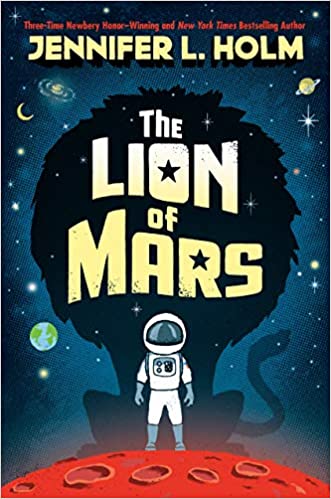
Review of The Wedding Portrait, by Innosanto Nagara

The Wedding Portrait

The Story of a Photograph and Why Sometimes We Break the Rules

by Innosanto Nagara

Triangle Square, 2017. 36 pages.
Review written August 5, 2020, from a library book

The Wedding Portrait is a picture book about activism for kids. It’s all framed by the author’s wedding portrait, which was clipped from a newspaper and features armed guards beyond the happy couple.

The author explains things in a way a child can understand:

We usually follow the rules. But sometimes, when you see something wrong – more wrong than breaking the rules, and by breaking the rules you could stop it – you may decide that you should break the rules.

Then he talks about various people in history who have broken rules to stand up for what’s right. He covers Claudette Colvin and Rosa Parks fighting segregation; Indian people making salt in defiance of the British empire; the U’wa people in Colombia standing up against oil drilling on their land; a boycott by farm workers of tomatoes; and other forms of Civil Disobedience.

Eventually, he comes to himself and his wife, who met at a protest and decided to get married at a protest against nuclear weapons.

The author defines terms along the way and provides a wide variety of examples. It’s all framed with that wedding portrait, and there’s an epilogue following up by talking about different ways of taking action.

In current times, children may have a lot of questions about protests, and this book beautifully explains why people sometimes think it’s right to break the rules.

I do like the inclusion of this paragraph in the middle of the book:

Now. I’ll bet all this is giving you some ideas, isn’t it? Do you think some of the things that you do when you’re not following the rules should be considered civil disobedience? Do you think hiding under the bed to avoid taking a bath is a kind of sit-in? Is refusing to eat your dinner a kind of boycott?

Maybe. (Maybe not.)

As you can see, this book gives you lots to talk about.

AisforActivist.com
sevenstories.com

Buy from Amazon.com

This review is only on the blog.

Disclosure: I am an Amazon Affiliate, and will earn a small percentage if you order a book on Amazon after clicking through from my site.

Disclaimer: I am a professional librarian, but I maintain my website and blogs on my own time. The views expressed are solely my own, and in no way represent the official views of my employer or of any committee or group of which I am part.

What did you think of this book?
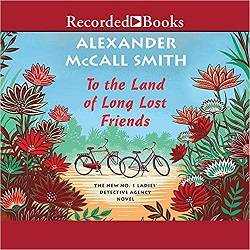
Review of A Snake Falls to Earth, by Darcie Little Badger

A Snake Falls to Earth

by Darcie Little Badger

Levine Querido, 2021. 372 pages.
Review written February 14, 2022, from a library book
Starred Review
2021 National Book Award Longlist
2022 Newbery Honor Book

Because Darcie Little Badger’s debut novel, Elatsoe, was one of my favorite books I read in 2021, I had this book all checked out ready to read as soon as I finished reading for the Cybils Awards. So I felt like I’d won the jackpot when it won Newbery Honor, and I already had it checked out.

Like Elatsoe, this book features an older teen protagonist and is on the Young Adult shelves at my library, but has no sex or graphic violence and will appeal to middle school readers as well as older teens. Also like Elatsoe, A Snake Falls to Earth is steeped in Native American tales from the author’s Lipan Apache Tribe of Texas.

This book follows two stories. One is the story of Nina, a sixteen-year-old Lipan girl who lives in Texas and is worrying about a hurricane headed for her Grandma’s house. That house is on land that has long been in their family, and Grandma gets sick if she leaves it. The story her dying great-grandmother told Nina might shed some light on the reasons why, if Nina can manage to translate it.

The other story is about one of the animal people in the Reflecting World. In his true form, Oli is a cottonmouth snake. In his false form, he’s a boy with scales in place of eyebrows. When we first meet Oli, his mother has sent him away from home, and Oli has adventures looking for a place of his own. He makes friends along the way, and when one of those friends gets in trouble, Oli is willing even to make the dangerous journey to Earth to help.

And of course those stories come together in unexpected and delightful ways when Oli makes it to Earth.

Something I loved about Elatsoe was that kids didn’t hide magical events from the adults in their lives, and that’s true in this book, too. There’s a strong sense of community, including parents and elders. Altogether, this is a magical adventure that feels like a yarn you could hear at a storyteller’s feet.

Buy from Amazon.com

Find this review on Sonderbooks at: www.sonderbooks.com/Teens/snake_falls_to_earth.html

Disclosure: I am an Amazon Affiliate, and will earn a small percentage if you order a book on Amazon after clicking through from my site.

Disclaimer: I am a professional librarian, but the views expressed are solely my own, and in no way represent the official views of my employer or of any committee or group of which I am part.

What did you think of this book?